How to Make a Small Home Feel Spacious and Cozy
Living in a small or narrow home doesn’t mean you have to sacrifice comfort or style. In fact, some of the most inviting homes are compact spaces that have been carefully arranged to feel open, calm, and warm at the same time. The key is understanding how to balance two goals that sometimes seem opposite: creating a sense of space while still making the room feel soft, personal, and lived-in.
When a small home feels cramped, the problem is usually not just the square footage. It’s often the result of heavy furniture, blocked sightlines, poor lighting, too much visual clutter, or a lack of warmth in the materials and colors. The good news is that most of these issues can be improved with thoughtful choices rather than expensive renovations.
This guide shares practical decorating strategies that help small and narrow homes feel both larger and cozier.
Table of Contents
-
- Start with a Light and Cohesive Color Palette
-
- Prioritize Furniture That Fits the Scale of the Room
-
- Keep Sightlines as Open as Possible
-
- Use Lighting in Layers
-
- Choose Multifunctional and Vertical Storage
-
- Add Soft Textiles for Warmth
-
- Bring in Mirrors Strategically
-
- Edit Belongings and Reduce Visual Clutter
-
- Create Clear Zones Without Closing Off the Space
-
- Add Personality Without Overcrowding
- Final Thoughts
1. Start with a Light and Cohesive Color Palette
Color has a powerful effect on how large or small a room feels. Light, neutral wall colors — soft white, warm beige, light gray, or pale greige — generally make walls recede and help a space feel more open. When the same or very similar tones are used throughout connected areas, the eye moves more easily from one room to the next, which creates a sense of flow.
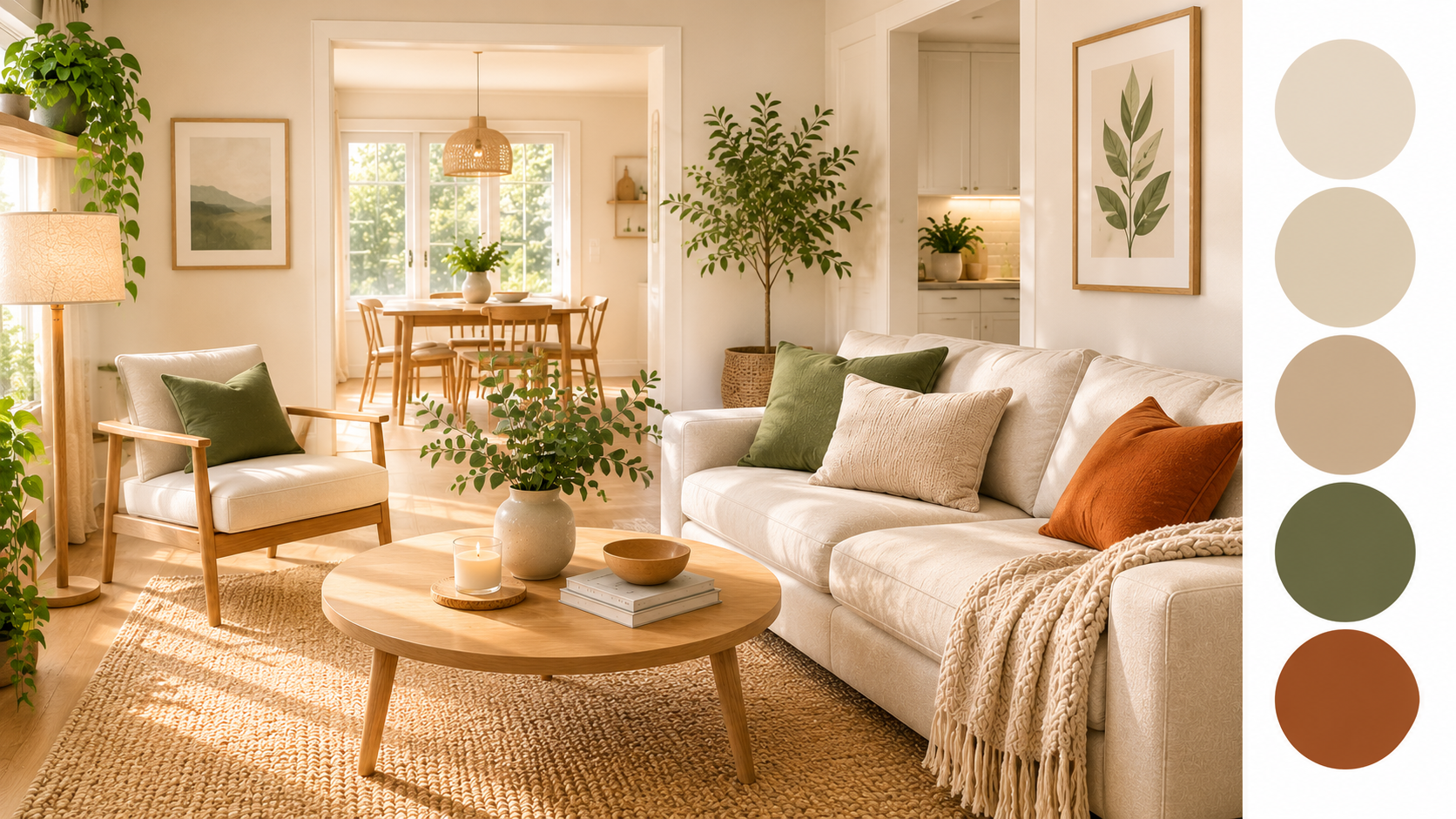
This doesn’t mean everything has to be white or sterile. You can add warmth through wood tones, soft textiles, and deeper accent colors in smaller doses. The goal is cohesion rather than stark minimalism. A consistent palette reduces visual interruption and makes the entire home feel calmer and more expansive.
Practical tip: If you want some contrast, keep larger surfaces light and introduce deeper colors through pillows, art, rugs, or one accent chair.
2. Prioritize Furniture That Fits the Scale of the Room
One of the most common mistakes in small homes is choosing furniture that is simply too large. Oversized sofas, deep sectionals, and bulky storage units can quickly make a room feel cramped, even if the rest of the design is good.
Look for pieces with a lighter visual weight: sofas and chairs with exposed legs, coffee tables that aren’t too solid or heavy, and dining chairs that can tuck fully under the table. In narrow rooms, consider apartment-scale or loveseat-sized seating instead of full-size sofas. Round or oval tables often improve traffic flow compared to sharp-cornered rectangular ones.
Real-life example: Replacing a bulky skirted sofa with a slightly smaller one that sits up on legs can instantly make a living room feel airier, even if the seating capacity stays almost the same.
3. Keep Sightlines as Open as Possible
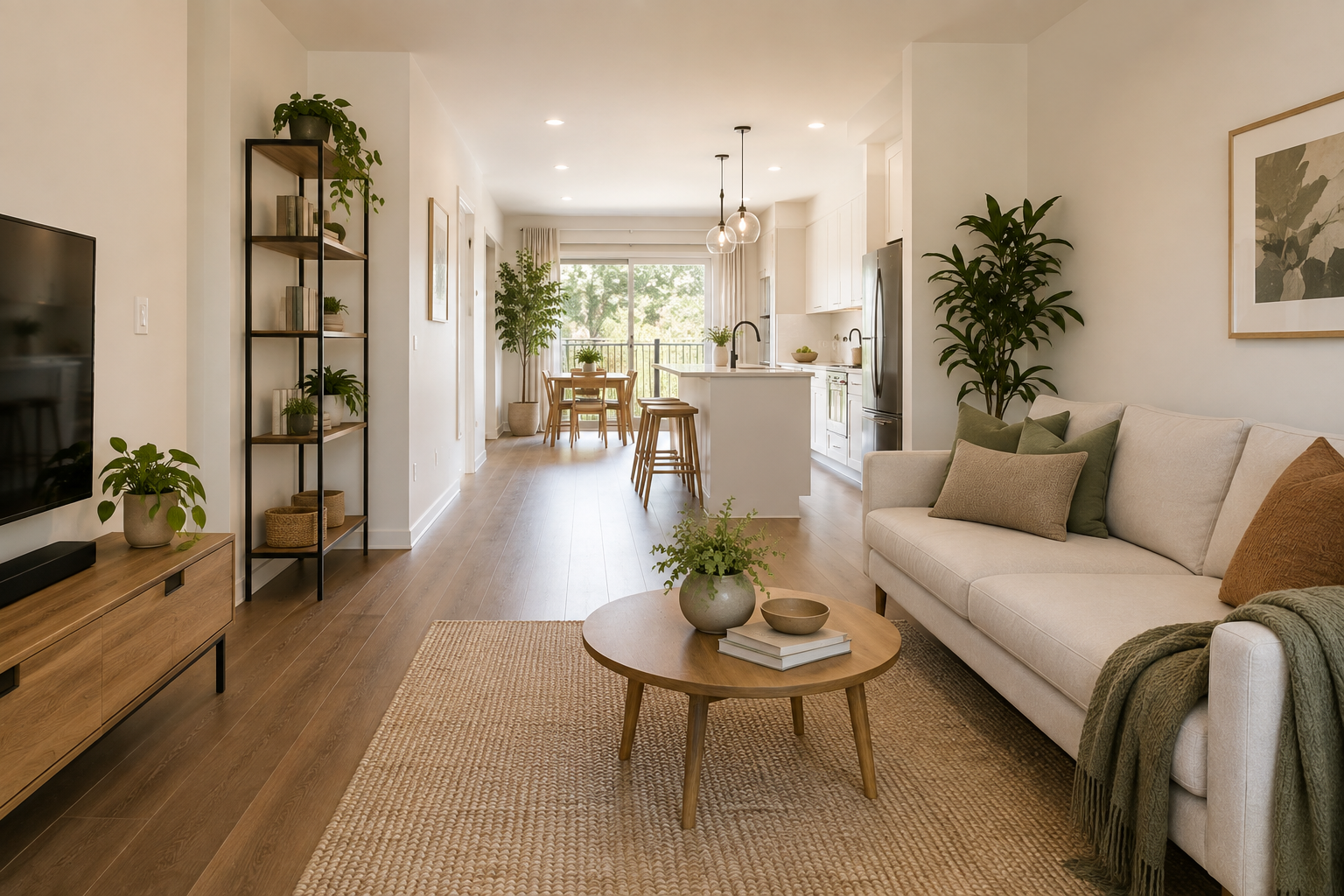
In a small or narrow home, the ability to see from one area into another makes the entire space feel larger. Avoid placing tall furniture in ways that block views across the room. Whenever possible, keep pathways clear and allow light to travel through the space.
Floating furniture slightly away from walls (when space allows) or choosing lower-profile pieces can also help. In long, narrow rooms, arranging furniture to encourage movement along the length of the room rather than blocking it in the middle usually works better.
4. Use Lighting in Layers
Poor lighting makes any space feel smaller and less inviting. Relying only on a single overhead light often creates harsh shadows and flat, unwelcoming rooms.
Instead, layer your lighting:
- Ambient light (ceiling fixtures or recessed lights)
- Task light (table lamps, floor lamps, under-cabinet lights)
- Accent light (picture lights, LED strips, candles)
Warm-toned bulbs generally feel cozier than cool white ones. In small homes, table lamps and floor lamps are especially valuable because they add both light and a sense of warmth without taking up much visual space. Multiple soft light sources make a room feel more dimensional and comfortable in the evenings.
5. Choose Multifunctional and Vertical Storage
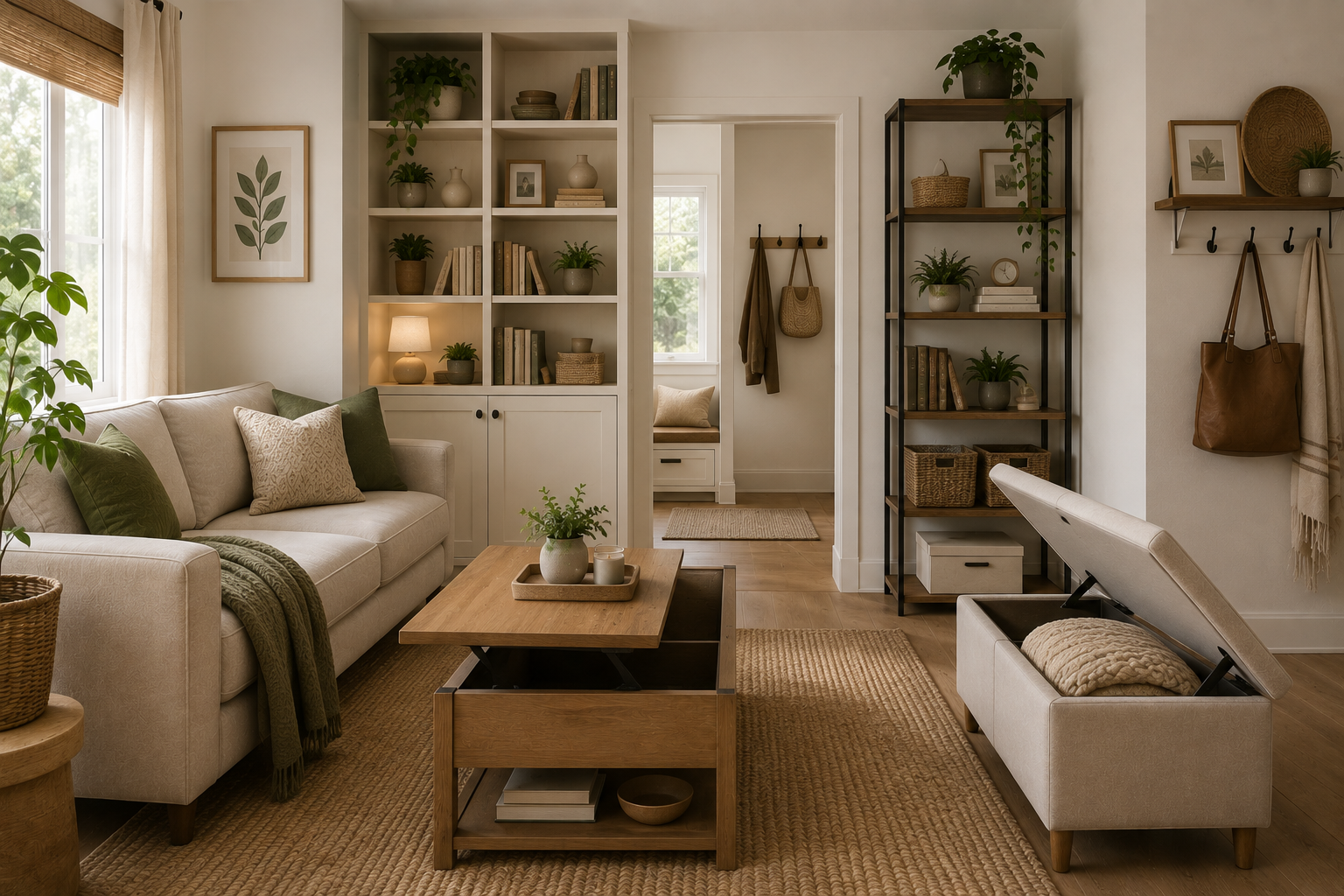
Clutter is one of the fastest ways to make a small home feel chaotic and tight. Good storage is essential, but it should work with the space rather than against it.
Prioritize pieces that serve more than one purpose: storage ottomans, benches with hidden compartments, coffee tables with shelves, or beds with drawers underneath. Vertical storage is particularly effective in small homes — tall bookcases, wall-mounted shelves, and hooks use wall space instead of precious floor area.
The goal is to give everything a logical home so surfaces can stay relatively clear. Clear surfaces help a room feel calmer and more open.
6. Add Soft Textiles for Warmth
A space can feel open but still cold if it lacks soft materials. Textiles are what make a small home feel cozy rather than sparse.
Area rugs help define zones and add warmth underfoot. Layered throw pillows, a couple of soft blankets, and curtains that reach the floor all contribute to a more inviting atmosphere. In small rooms, choose rugs that are large enough to anchor the main furniture pieces — a rug that is too small can actually make the room feel choppier.
Natural textures such as linen, cotton, wool, and wood add warmth without requiring bold patterns or dark colors that might visually shrink the space.
7. Bring in Mirrors Strategically
Mirrors are a classic tool for small spaces because they reflect light and create the illusion of depth. Placing a mirror across from a window multiplies natural light. A larger mirror on a wall can make a narrow room feel wider.
Avoid using too many small mirrors, which can sometimes look busy. One or two well-placed, appropriately sized mirrors are usually more effective. Framed mirrors that complement your existing style also add a decorative element without adding clutter.
8. Edit Belongings and Reduce Visual Clutter
Decorating a small home is as much about what you leave out as what you put in. Surfaces crowded with objects, open shelving packed with items, and too many competing patterns make a space feel restless and smaller.
Regularly editing your belongings helps. Keep only what you use or truly love, and give those items room to breathe. On open shelves, leave some empty space. On coffee tables and counters, limit decorative objects to a few intentional pieces rather than many small ones.
This kind of editing creates visual calm, which in turn makes the home feel more spacious and restful.
9. Create Clear Zones Without Closing Off the Space
Even in a studio or small open-plan home, it helps to define different activity areas — for example, sleeping, working, and relaxing. You can do this without building walls by using rugs, furniture arrangement, lighting, or a low open shelf as a gentle divider.
Clear zones make the home function better and feel more organized. At the same time, keeping those zones visually connected preserves the sense of openness. Avoid tall, solid barriers that chop the space into tiny isolated sections.
10. Add Personality Without Overcrowding
A home that feels too minimal can lack warmth, while a home that is overfilled feels chaotic. The balance is to choose a limited number of meaningful or beautiful items and give them space to stand out.
A few pieces of art, a favorite chair, personal photos in simple frames, or a plant or two can add character without creating clutter. In small homes, scale matters: one larger piece of art often works better than a cluster of many tiny ones, and one healthy plant usually looks better than several struggling small ones.
Personality comes from careful selection, not from quantity.
Final Thoughts
Making a small or narrow home feel both spacious and cozy is less about following rigid design rules and more about creating visual calm, protecting open space, and adding warmth through light, texture, and thoughtful choices.
Start with the changes that will have the biggest impact in your specific home. For many people, that means simplifying the color palette, adjusting furniture scale, improving lighting, and reducing surface clutter. From there, layer in textiles, mirrors, and personal details until the space feels open yet inviting.
A small home will never have the same proportions as a large one, but it can still feel comfortable, functional, and genuinely welcoming. With careful editing and intentional decorating, limited square footage can become one of the coziest places to live.