
Anyone who has observed a sleeping dog has likely witnessed a captivating phenomenon: paws twitching rhythmically, whiskers vibrating, and soft, muffled barks escaping from a closed snout. These subtle physical movements naturally spark curiosity among pet lovers. Is your canine companion merely experiencing involuntary muscle spasms, or are they actively replaying the day’s events in a vivid dreamscape?
For centuries, human understanding of animal cognition was constrained by guesswork. Today, modern veterinary neurology, brain wave monitoring, and behavioral science provide concrete answers. At Skylatido, exploring the intersection of animal behavior and scientific discovery helps deepen the bond between pets and their human families. The consensus among veterinary researchers is definitive: dogs do indeed dream, following neurological patterns remarkably similar to our own.
The Science of Canine Sleep: Do Dogs Actually Dream?
To determine whether dogs experience dreams, neuroscientists look directly at brain architecture and electrical activity. The central nervous systems of dogs and humans share basic structural components, particularly within the brainstem and forebrain. When researchers examine canine sleep using electroencephalograms (EEGs), the readings reveal electrophysiological patterns that mirror human brain waves during rest.
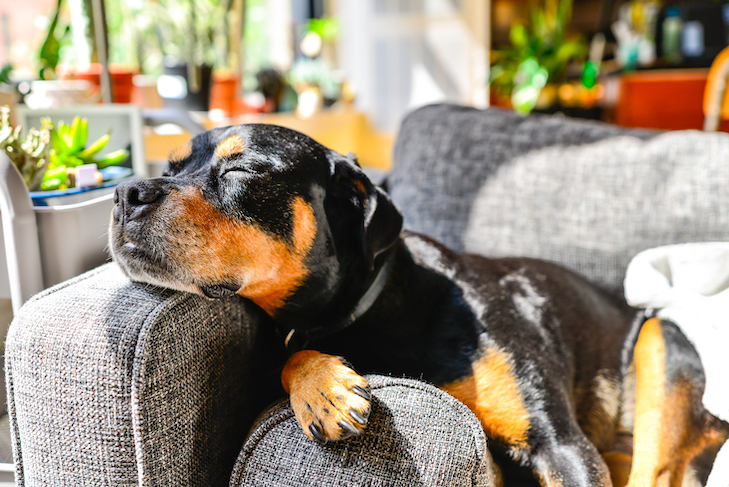
Rottweiler laying down in the couch sleeping in the sunshine.When a dog falls asleep, its brain wave activity transitions from active electrical bursts down to slow, rhythmic waves as it enters deep sleep. Eventually, the brain activity accelerates again, entering a state characterized by fast, desynchronized electrical waves. This state is identical to human dream activity. Neurologically, the canine brain processes emotions, memories, and sensory inputs in the exact same regions—such as the hippocampus and amygdala—that handle dreaming in humans.
A crucial neurological structure responsible for managing sleep safety is the pons, located in the brainstem. The pons acts as a biological inhibitor during deep sleep, sending signals to disable major motor neurons in the spinal cord. This temporary paralysis prevents both humans and dogs from physically acting out their dreams while unconscious. In scientific studies where the inhibitory function of the pons was suppressed, sleeping test subjects physically performed complex actions—such as standing, running, and hunting—while remaining completely asleep. This neurochemical safeguard proves that behind a sleeping dog’s still frame lies an active mental universe.
Understanding Dog Sleep Cycles and REM Sleep
Canine sleep architecture follows a repetitive pattern divided into non-Rapid Eye Movement (NREM) sleep and Rapid Eye Movement (REM) sleep. Understanding REM sleep in dogs requires examining how a dog transitions through these distinct stages during a typical sleep cycle.
Upon settling down, a dog enters light NREM sleep, during which breathing slows, heart rate drops, and muscle tone relaxes. After approximately 20 minutes of continuous sleep, the dog transitions into REM sleep. During REM, brain metabolic rate increases, breathing becomes irregular, and the eyes move rapidly beneath closed eyelids. This stage is where vivid dreaming occurs.
Interestingly, dog sleep cycles vary significantly based on the size, age, and physical stature of the animal:
- Small Dogs: Breeds such as Toy Poodles, Chihuahuas, and Dachshunds experience shorter, more frequent dream cycles. A small dog may enter a dreaming state every 10 minutes, with individual dream bursts lasting between 60 seconds and two minutes.
- Large Dogs: Breeds such as Mastiffs, Golden Retrievers, and Great Danes have longer sleep cycles. A large dog may only dream once every 60 to 90 minutes, but its REM periods can last up to 10 minutes at a time.
- Puppies and Senior Dogs: Age plays a major role in sleep architecture. Puppies spend a vast proportion of their total sleep time in REM sleep because their nervous systems are rapidly processing vast amounts of new daily information. Similarly, senior dogs experience elevated REM proportions as their aging cognitive systems process memories.
What Do Dogs Dream About?
Because dogs cannot directly report their nightly experiences, researchers rely on comparative memory studies, brain wave analysis, and behavioral mapping to determine what do dogs dream about. Evidence suggests that canine dreams reflect realistic, daily experiences rather than abstract concepts.
During the day, a dog absorbs immense amounts of sensory information: odors encountered on a neighborhood walk, the mechanics of retrieving a tennis ball, interactions with family members, or confrontations with unfamiliar animals. Sleep serves as a primary period for memory consolidation, during which the brain organizes, retains, and processes these waking experiences.
Neurobiological research indicates that dogs dream about standard canine activities:
- Daily Routines: Running through open spaces, exploring familiar walking paths, and fetching objects.
- Social Interactions: Playing with human family members, greeting houseguests, or interacting with other dogs.
- Instinctive Behaviors: Pointer breeds may display covert pointing behavior during REM sleep, while herding breeds like Border Collies may exhibit subtle leg movements characteristic of circling or herding livestock.
Essentially, a dog’s dream world is a mental replay of its physical life, shaped heavily by sensory inputs, emotional attachments, and breed-specific instincts.
Why Do Dogs Twitch, Whimper, or Move While Sleeping?
It is common for pet owners to wonder why do dogs twitch in their sleep when observing sudden leg paddling, whisker movements, or soft vocalizations. These movements occur almost exclusively during the REM phase of sleep.
While the pons works to suppress large muscle movements during sleep, small electrical impulses generated by the brain during vivid dreams can slip past this neurological lock. These minor electrical leaks travel down the spinal cord, causing involuntary twitches in peripheral muscles—most notably in the paws, tail, muzzle, and eyelids.
Typical physical indicators of REM sleep include:
- Paw Paddling: Rapid, rhythmic movement of the legs resembling running or swimming.
- Facial Muscle Spasms: Twitching whiskers, flaring nostrils, and subtle lip movements.
- Vocalizations: Muffled barks, quiet squeaks, whimpers, or rhythmic sighing.
- Ocular Movement: Rapid darting of the eyeballs beneath the eyelids.
These physical movements are completely natural signs of deep, restorative sleep. However, owners should distinguish between normal REM twitching and medical conditions such as seizures. Normal sleep twitches are brief, intermittent, and gentle; the dog’s body remains overall relaxed, and the animal wakes up easily if gently called. Conversely, a seizure involves rigid, locked limbs, full-body violent tremors, loss of consciousness, uncontrolled salivation, and difficulty waking.
Can Dogs Have Nightmares?
Just as human dreams incorporate both positive and distressing emotions, dogs can also experience negative dream states. Because the canine brain processes fear, anxiety, and stress using the same neural pathways as humans, bad dreams are a natural component of canine sleep behavior.
A dog experiencing a nightmare may reprocess unpleasant or frightening events from its waking life, such as traumatic veterinary visits, encounters with aggressive animals, loud noises like thunder or fireworks, or past experiences of neglect in rescue animals.
Physical indicators that suggest a dog is having a distressing dream include:
- Stiff, overly tense body posture while lying down.
- Agitated whining, distress vocalizations, or low, guttural growls.
- Heavy, rapid gasping or irregular, shallow breathing.
- Awakening suddenly with wide, hyper-alert eyes or defensive body language.
While seeing a pet in distress can be concerning, occasional bad dreams are a normal mechanism for processing emotional stress and maintaining mental health.
Should You Wake Up a Dreaming Dog?
The traditional phrase “let sleeping dogs lie” holds genuine scientific value. When a dog is immersed in a intense REM dream state—whether pleasant or distressing—waking them up suddenly can carry safety risks and disrupt critical cognitive recovery.
Disrupting a dog mid-dream triggers a strong involuntary startle reflex. When startled awake from deep REM sleep, a dog transitions instantly from unconscious imagery to physical reality without cognitive orientation. In that brief moment of confusion, even a traditionally gentle dog may fail to recognize its owner and react instinctively out of fear or defense, potentially leading to accidental bites or snaps.
If a pet owner feels compelled to wake a dog that appears to be experiencing an extreme nightmare, safety and gentleness are essential:
- Avoid Direct Physical Touch: Do not shake, pat, or grab a sleeping dog, as this strongly activates the defensive bite reflex.
- Use Low-Volume Vocalization: Softly say the dog’s name from a safe distance of several feet, gradually increasing your volume until the dog shifts out of deep sleep naturally.
- Create Ambient Disturbance: Softly clap your hands, gently open a door, or create a minor ambient sound in the room to slowly ease the dog out of REM sleep.
- Offer Reassurance Upon Waking: Once the dog opens its eyes, maintain a calm, gentle posture and offer soothing words to help them reorient to their surroundings safely.
Frequently Asked Questions About Canine Sleep
Do dogs actually experience dreams and REM sleep?
Yes. Electroencephalogram (EEG) studies confirm that dogs experience sleep cycles including NREM and REM sleep. During REM sleep, canine brain wave activity matches the pattern seen in humans during active dreaming.
What do dogs most likely dream about?
Dogs dream about daily activities and real-life memories. Scientific evidence suggests they mentally replay events such as walking, fetching, running, interacting with family members, and engaging in breed-specific behaviors.
Why do dogs twitch, whimper, or move their paws while sleeping?
These movements occur during REM sleep when subtle electrical brain signals bypass the neural inhibition mechanisms of the pons. Paws twitch, whiskers move, and dogs make quiet noises as their bodies respond mildly to mental dream imagery.
Can dogs have nightmares?
Yes, dogs can experience bad dreams. Because their brains process fear and anxiety similarly to human brains, stressful daily events, loud noises, trauma, or medical discomfort can trigger unpleasant dreams marked by whining, tenseness, or growling.
Is it safe to wake up a dog that appears to be dreaming?
It is generally best to let sleeping dogs rest undisturbed. Waking a dog abruptly during deep REM sleep can trigger an involuntary startle reflex, potentially causing disorientation or an accidental fear-based bite. If necessary, wake them softly using your voice from a safe distance.
Respecting the Science of Canine Rest
Scientific research demonstrates that canine sleep behavior is far more complex than simple unconsciousness. Through shared brain structures, defined REM sleep cycles, and physical motor responses, dogs experience a mental life during rest that mirrors human dream mechanics. From daily memory consolidation to breed-instinct processing, dreaming plays a fundamental role in maintaining a dog’s emotional resilience and physical health.
By observing these sleeping behaviors through a scientific lens, pet owners can better appreciate the inner lives of their companions. Ensuring that dogs have a safe, quiet, and comfortable space to navigate their sleep cycles undisturbed guarantees they get the quality rest required for optimal well-being.