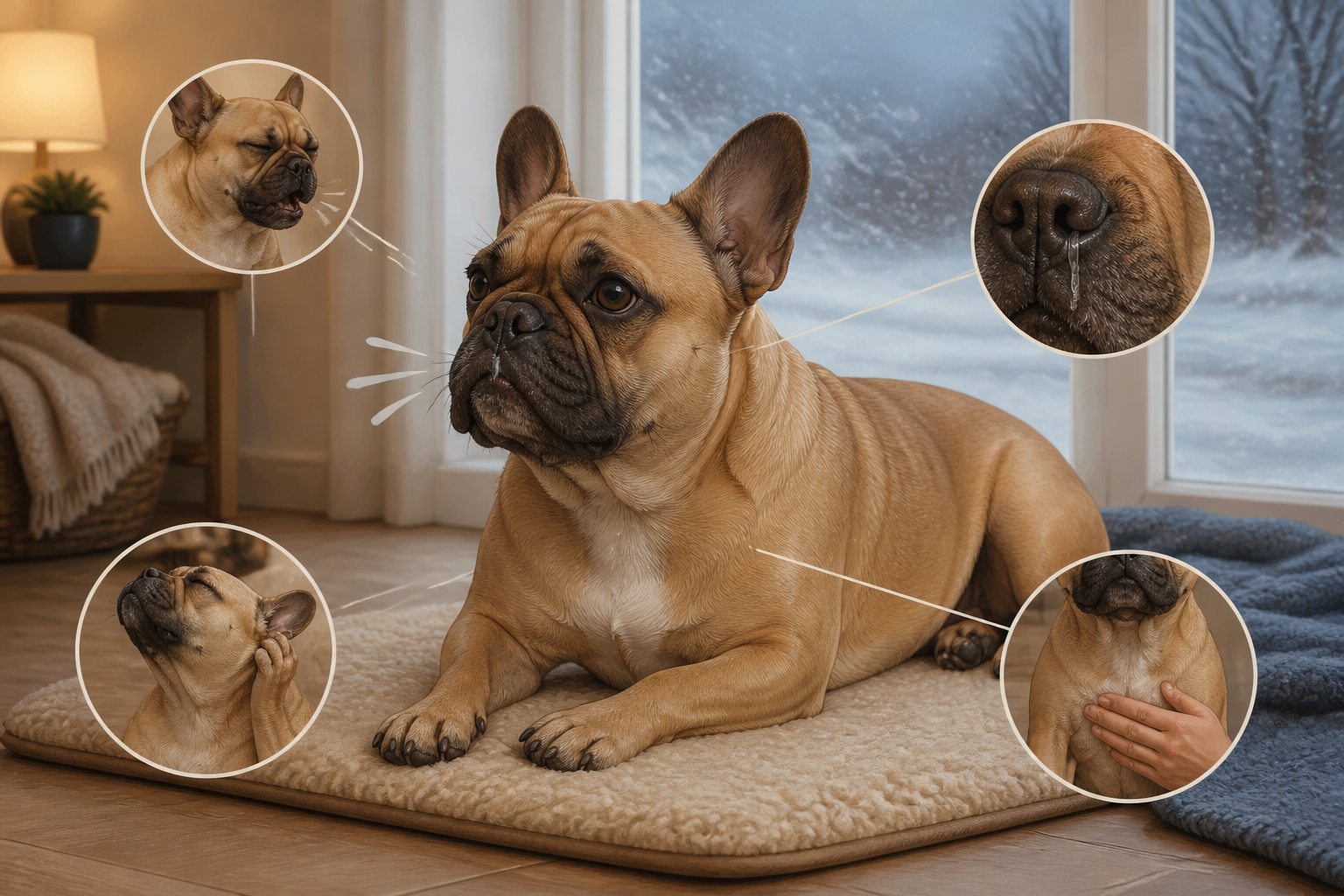
When a French Bulldog develops a cough, nasal discharge, itchy skin, shivering, or changed breathing in winter, start with three questions: Is breathing comfortable while the dog is resting indoors? Is the dog alert and eating? Has the change followed contact with other dogs, cold or wet exposure, or an irritating substance?
These answers help separate contagious illness, cold exposure, and irritation. They also guide the next step: reduce infection or cold exposure, then decide whether to monitor briefly, contact your veterinarian the same day, or seek emergency care. French Bulldogs naturally snort, snore, and sometimes reverse-sneeze, but breathing that is newly faster, louder, or more effortful should not be dismissed as a breed characteristic.
Why winter can be harder on French Bulldogs
Short-nosed anatomy can make breathing less efficient, although the degree varies between individual dogs. Cold air, mucus from an infection, excitement, and exercise may make an existing airway problem more noticeable. A dog that is comfortable indoors may struggle during a brisk walk, particularly in cold or windy conditions.
The breed’s short coat also offers limited insulation. Wind, rain, wet fur, and standing still outdoors can chill a French Bulldog faster than the temperature alone suggests. Puppies, older dogs, underweight dogs, and dogs with existing health problems may have less tolerance for cold, but any dog can become chilled when wet or exposed for too long.
Winter can also increase contact with respiratory infections when dogs spend more time in daycare, boarding facilities, grooming salons, training classes, or indoor dog parks. Smoke, strong fragrances, aerosol sprays, and visible mold can irritate the airways. Ordinary heated indoor air is not usually a serious problem by itself, but excessive dryness or dampness may add discomfort.
Common respiratory problems
Kennel cough and other contagious infections
Kennel cough is a general term for several contagious respiratory illnesses. Affected dogs often have a dry, hacking cough that may end with gagging; sneezing or a runny nose can also occur. Symptoms may begin several days after exposure to groups of dogs.
Canine influenza and other respiratory infections can look similar and may cause cough, nasal discharge, fever-like illness, tiredness, or reduced appetite. Winter does not cause these infections, but indoor group exposure can increase opportunities for transmission. Vaccines reduce the risk or severity of some infections without covering every possible cause.
If your dog develops a cough, keep it away from other dogs and avoid shared bowls until your veterinarian advises otherwise. Call the clinic before arriving so it can protect other patients. A comfortable dog with an isolated, mild cough may be monitored at home if the veterinarian agrees; rest, normal access to water, and no strenuous exercise are reasonable supportive measures. Do not force food or water if breathing is impaired.
Contact the veterinarian more urgently if the cough is worsening or accompanied by poor appetite, unusual tiredness, fever-like illness, or a change in breathing. These changes matter more than the cough alone.
Pneumonia
Pneumonia affects the lungs and may develop after a respiratory infection or after inhaling food or vomit. A worsening cough, persistent faster breathing while resting, marked lethargy, weakness, or loss of appetite should not be watched casually. Owners may not be able to distinguish pneumonia from a less serious infection at home, so these signs warrant veterinary assessment.
Skin and paw irritation
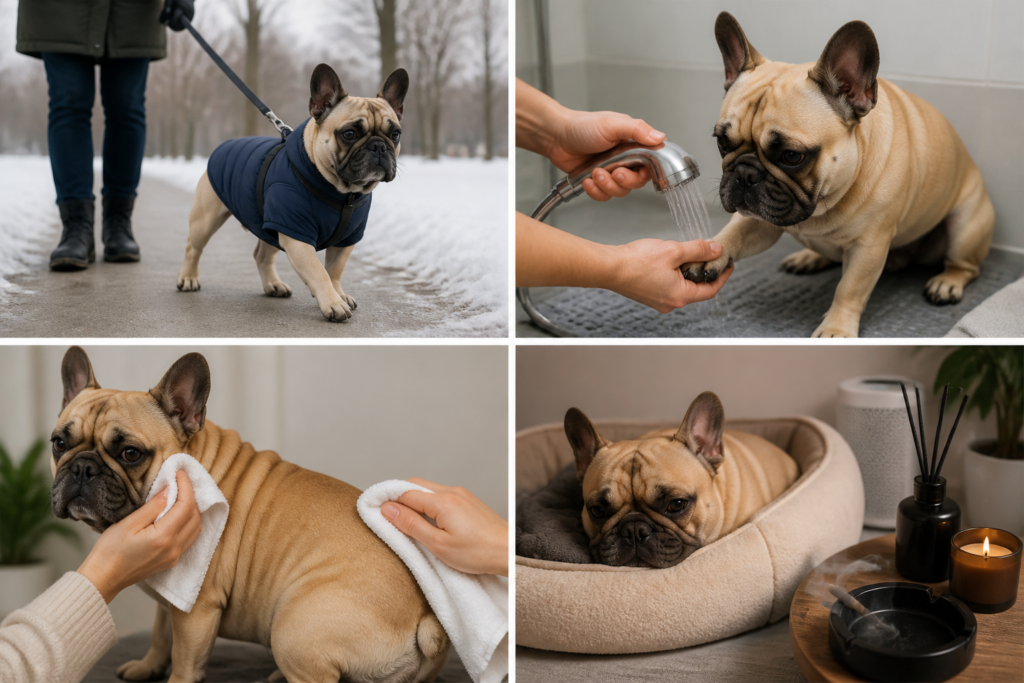
Many winter skin and paw problems result from repeated wetness, mud, salt, or de-icing chemicals rather than cold itself. French Bulldogs are also prone to irritation in their skin folds. Moisture trapped around the face, tail pocket, or other folds can contribute to yeast or bacterial overgrowth, but redness or odor alone does not identify the cause or justify a particular home treatment.
Mild redness or brief licking after a walk may improve after the area is rinsed and dried. Persistent licking, strong odor, discharge, sores, swelling, pain, bleeding cracks, or limping merits veterinary advice. Do not apply human creams, pain relievers, antifungal products, or essential oils unless your veterinarian specifically recommends them.
Cold exposure and frostbite
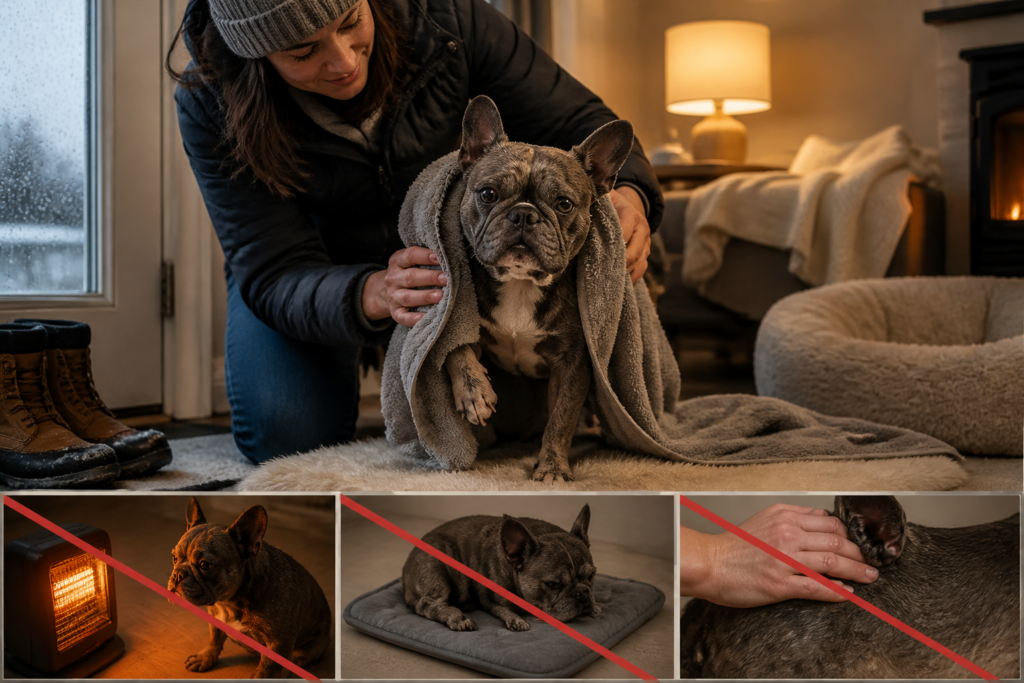
Wind, rain, wet fur, time outdoors, body condition, age, and activity all affect cold risk. Shivering, lifting the paws, slowing down, whining, or trying to return home means the outing should end. Bring the dog indoors and warm it gradually; do not push on because it is wearing a coat.
Confusion, profound sleepiness, weakness, poor coordination, collapse, or very cold, painful, pale, gray, blistered, or discolored tissue may indicate serious cold injury. Contact a veterinarian promptly. Use dry blankets and a comfortably warm room, but do not rub cold tissue or apply a heating pad, hair dryer on high heat, or direct heat from a radiator. Frostbite can become more apparent after rewarming, so initially mild-looking tissue is not necessarily unharmed.
Practical prevention in cold and damp weather
Healthy French Bulldogs do not need to stay indoors all winter. Keep outings brief and supervised, and judge conditions by the dog’s response rather than by temperature alone. Wet, windy weather can be unsafe even when the air does not feel extremely cold.
- Keep vaccinations current. Ask your veterinarian whether respiratory vaccines are appropriate for your dog’s daycare, boarding, travel, grooming, training, or other dog-to-dog exposure. Recommendations vary by lifestyle, region, and local disease activity.
- Reduce contact with sick dogs. Avoid group settings and shared bowls when respiratory illness is circulating or another dog is coughing or sneezing.
- End outings at the first sign of cold stress. Shivering, paw lifting, slowing down, or trying to turn back are reasons to go indoors, not signals to extend the walk.
- Use clothing carefully. A well-fitting coat can help with cold or wet conditions, but it must not restrict the neck, chest, airway, or movement. It cannot make prolonged exposure safe.
- Dry the dog thoroughly. Towel-dry the coat, paws, and skin folds after rain or wet walks. Pay particular attention between the toes and inside facial or tail folds.
- Clean the paws. Wipe or rinse away salt, grit, and de-icers, then check for cracks, redness, trapped debris, or swelling. Prevent persistent licking.
- Avoid strenuous exercise in cold air. This is especially important if the dog already has noisy or effortful breathing, since excitement and exertion can expose airway problems.
- Keep indoor air non-irritating. Avoid smoke, strong fragrances, aerosol sprays, and visible mold. A clean humidifier may provide comfort in very dry air, but it is not a treatment and should not make the room damp.
When symptoms need veterinary care
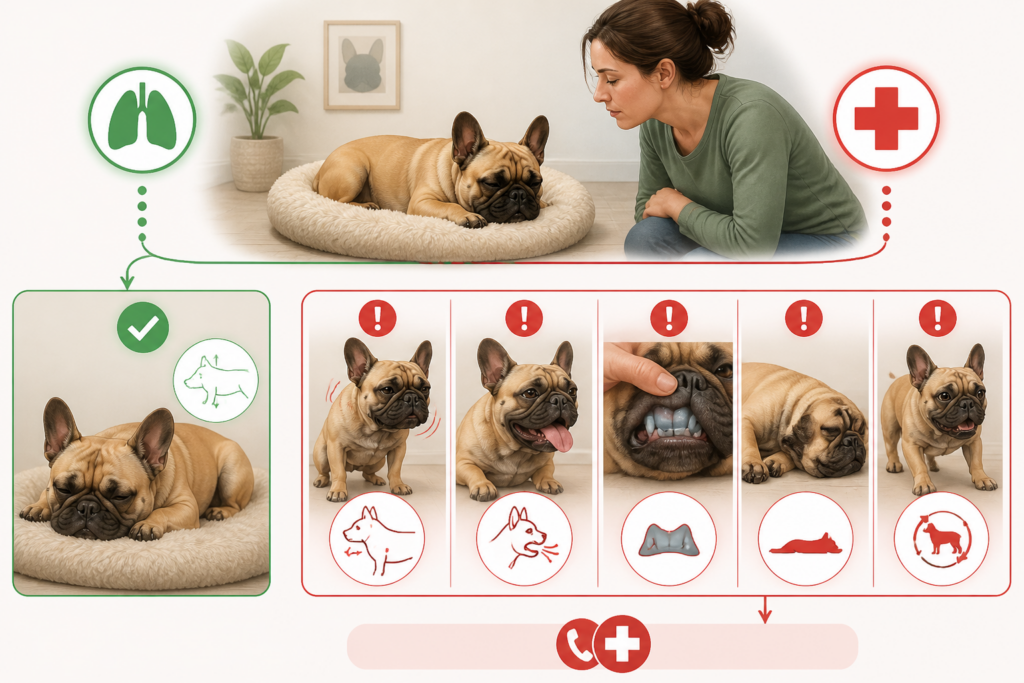
Seek emergency care immediately if your dog:
- Cannot breathe comfortably at rest or is breathing with obvious effort
- Has open-mouth breathing at rest or blue or gray gums
- Cannot settle, collapses, cannot stand, or becomes rapidly less responsive
- Has rapidly worsening breathing after coughing, exercise, or cold exposure
- Shows severe cold injury, such as confusion, profound lethargy, or markedly painful and discolored tissue
Keep the dog calm, move it gently to a warm environment, and arrange emergency care. Do not force food, water, or exercise, and do not use direct hot heat. Do not wait for the gums to change color if breathing effort or inability to settle is already present.
Contact your veterinarian the same day if your dog:
- Develops a new or persistent cough
- Is coughing and no longer eating, acting normally, or breathing as usual
- Has persistent faster breathing while resting, even without dramatic effort
- Has fever-like illness, unusual tiredness, or symptoms that are steadily worsening
- Develops persistent thick nasal discharge, especially with lethargy, poor appetite, or coughing
- Has painful skin lesions, foul odor, discharge, swelling, or difficulty walking on the paws
A mild, isolated sneeze or minor paw dryness may be monitored briefly in a bright, comfortable dog with normal appetite and breathing. Reduce cold, irritant, and dog-to-dog exposure, and arrange veterinary advice if the symptom persists or changes.
For a French Bulldog, the most useful winter check is simple: compare breathing at rest with the dog’s normal pattern, then consider appetite, energy, and progression. A cough without breathing changes may be manageable with rest and veterinary guidance; altered breathing, worsening weakness, or inability to settle calls for faster action.