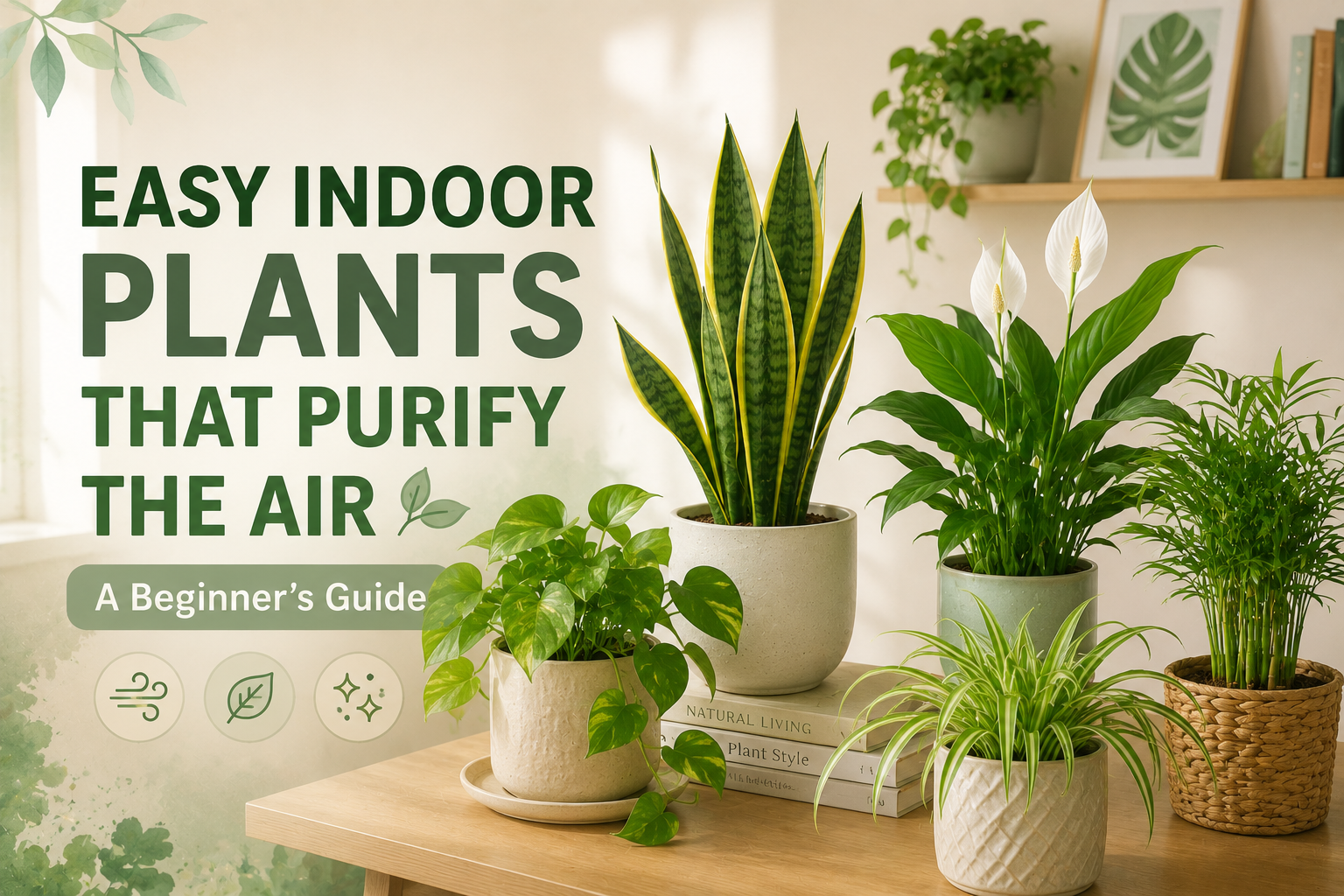
Indoor plants do more than make a room look nicer. Many of them help improve air quality by absorbing certain pollutants and releasing oxygen. At the same time, not every plant is equally forgiving. Some require bright light, frequent watering, or high humidity that most homes can’t easily provide. The best choices for most people are plants that look good, help clean the air, and can tolerate a bit of neglect.
This guide focuses on indoor plants that are widely available, relatively easy to care for, and known for their air-purifying qualities. Whether you live in an apartment with limited natural light or simply want low-maintenance greenery, these options offer a good balance of beauty and practicality.
Table of Contents
- Why Indoor Plants Matter for Air Quality
- What Makes a Plant “Easy” for Most Homes
-
- Snake Plant (Sansevieria / Dracaena trifasciata)
-
- Pothos (Epipremnum aureum)
-
- Spider Plant (Chlorophytum comosum)
-
- Peace Lily (Spathiphyllum)
-
- ZZ Plant (Zamioculcas zamiifolia)
-
- Rubber Plant (Ficus elastica)
-
- Boston Fern (Nephrolepis exaltata)
-
- Aloe Vera
- How to Choose the Right Plant for Your Space
- Basic Care Tips for Healthier Plants
- Final Thoughts
Why Indoor Plants Matter for Air Quality
Indoor air can contain volatile organic compounds (VOCs) from cleaning products, furniture, paints, and everyday household materials. Some plants have been shown in studies (including classic NASA research and later follow-ups) to help reduce levels of certain pollutants such as formaldehyde, benzene, and trichloroethylene under controlled conditions.
While a few plants won’t completely purify the air in a modern home on their own, they can contribute to a fresher environment when combined with good ventilation. They also add humidity and create a calmer, more pleasant atmosphere.
What Makes a Plant “Easy” for Most Homes
An easy indoor plant generally has these traits:
- Tolerates lower or indirect light
- Forgives occasional missed waterings
- Doesn’t require constant humidity adjustments
- Grows at a manageable rate
- Is widely available and affordable
The plants below meet most of these criteria while also offering air-purifying benefits.
1. Snake Plant (Sansevieria / Dracaena trifasciata)
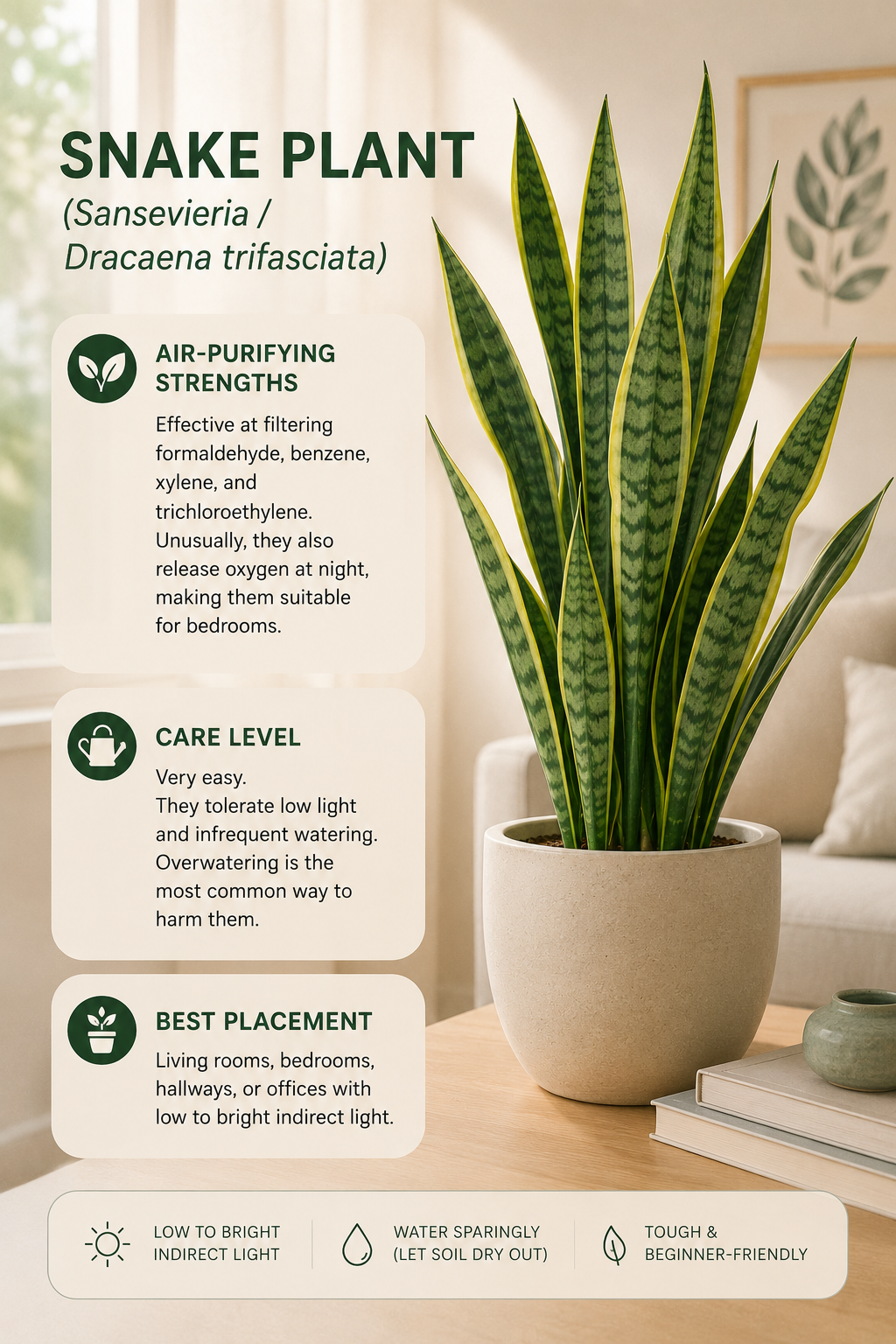
Snake plants are one of the most recommended plants for beginners. They have upright, sword-like leaves and come in several varieties, from tall and dramatic to compact and bird’s nest–shaped.
Air-purifying strengths: Effective at filtering formaldehyde, benzene, xylene, and trichloroethylene. Unusually, they also release oxygen at night, making them suitable for bedrooms.
Care level: Very easy. They tolerate low light and infrequent watering. Overwatering is the most common way to harm them.
Best placement: Living rooms, bedrooms, hallways, or offices with low to bright indirect light.
2. Pothos (Epipremnum aureum)
Pothos is a trailing vine with heart-shaped leaves that can be solid green or variegated with yellow or white. It is one of the most adaptable and forgiving houseplants available.
Air-purifying strengths: Known for helping reduce formaldehyde, benzene, and carbon monoxide levels.
Care level: Extremely easy. It grows in a wide range of light conditions and recovers well from missed waterings. It can be grown in hanging baskets, on shelves, or trained up a support.
Best placement: Bookshelves, plant hangers, desks, or any spot where its vines can trail or climb.
3. Spider Plant (Chlorophytum comosum)
Spider plants have arching green-and-white striped leaves and produce small plantlets (spiderettes) that dangle from the mother plant. They are non-toxic to pets, which makes them a popular choice for many households.
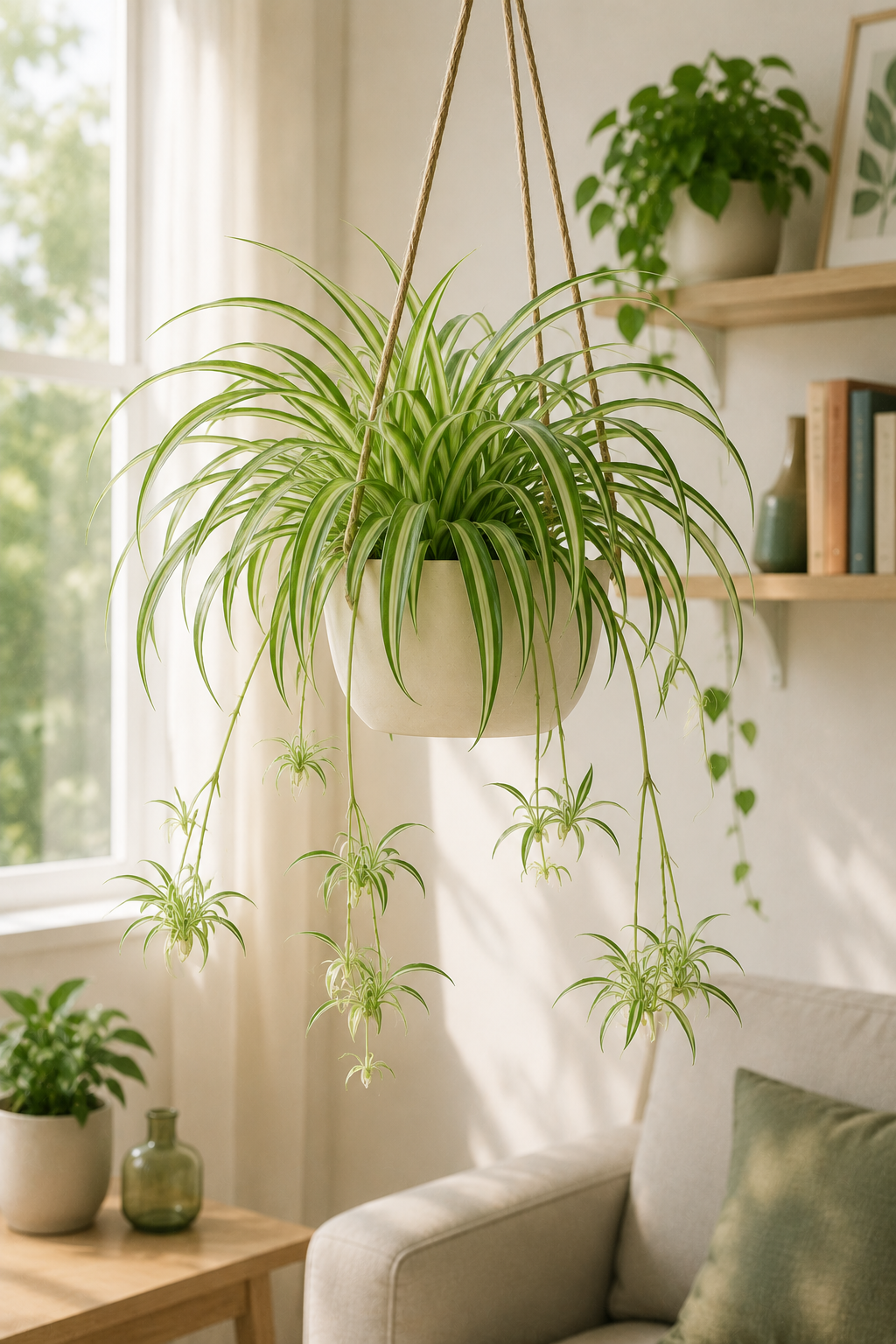
Air-purifying strengths: Effective against formaldehyde and xylene. They are also good at adapting to indoor conditions.
Care level: Easy. They prefer bright indirect light but can handle moderate light. Water when the top inch of soil feels dry.
Best placement: Hanging planters, high shelves, or plant stands where the arching leaves and plantlets can be admired.
4. Peace Lily (Spathiphyllum)
Peace lilies feature dark green leaves and elegant white spathes (the “flowers”). They are slightly more demanding than snake plants or pothos but still manageable for most beginners.
Air-purifying strengths: Known for filtering ammonia, benzene, formaldehyde, and trichloroethylene. They also add noticeable humidity to the air.
Care level: Moderate-easy. They like consistent moisture and medium to low indirect light. They will dramatically droop when thirsty, then usually recover quickly after watering.
Note: Peace lilies are toxic to cats and dogs if ingested, so place them carefully in pet households.
5. ZZ Plant (Zamioculcas zamiifolia)
The ZZ plant has glossy, dark green leaves and a naturally upright growth habit. It is one of the toughest indoor plants available and thrives on neglect.
Air-purifying strengths: Helps reduce xylene, toluene, and benzene. Its ability to survive low-light conditions makes it useful in many indoor environments.
Care level: Very easy. It stores water in its rhizomes, so it can go long periods without watering. Overwatering is the main risk.
Best placement: Low-light rooms, offices, bedrooms, or any area where other plants struggle.
6. Rubber Plant (Ficus elastica)
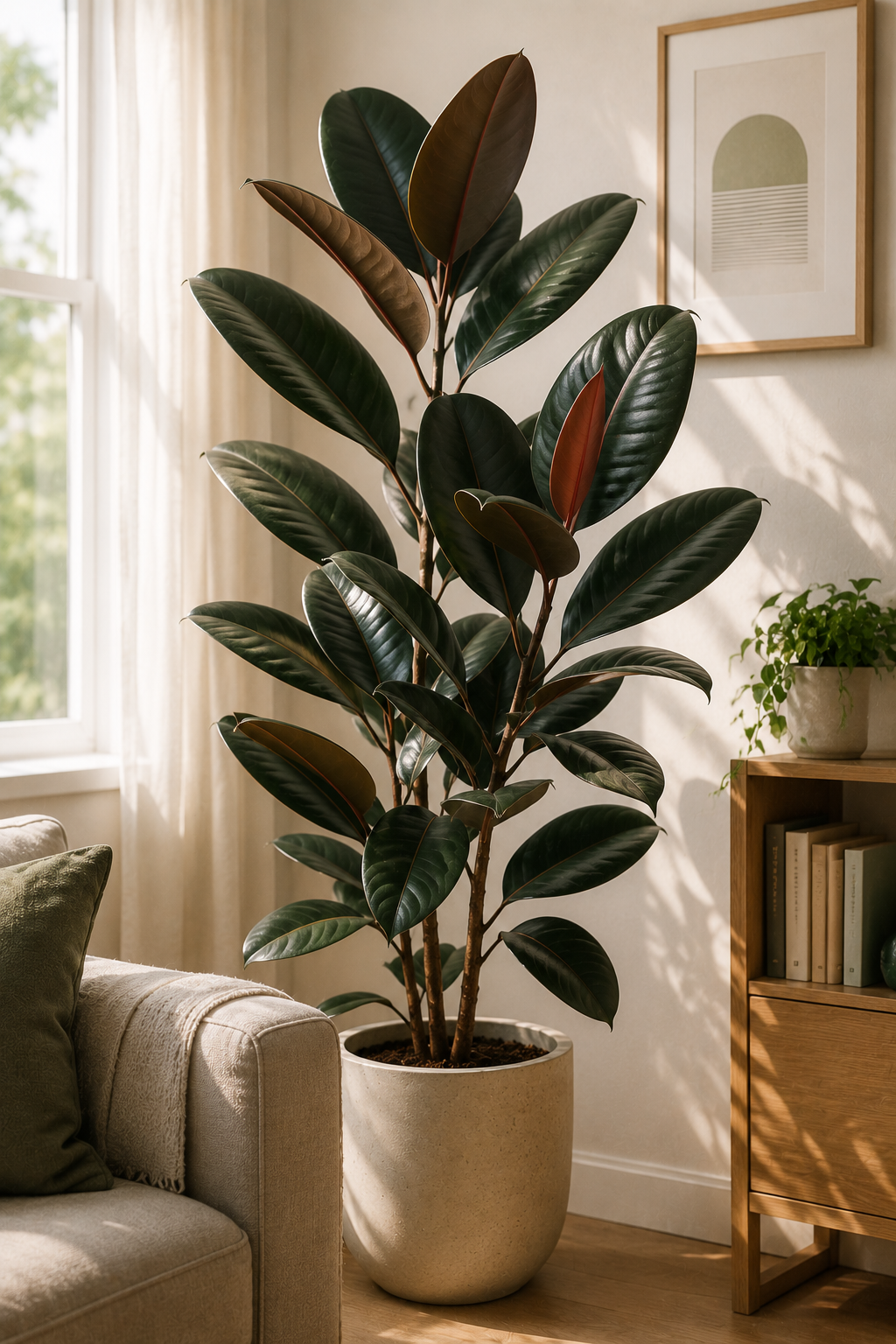
Rubber plants have large, glossy leaves that make a strong visual statement. Newer varieties come in deep green, burgundy, or variegated patterns.
Air-purifying strengths: Particularly good at removing formaldehyde from the air.
Care level: Easy to moderate. They prefer bright indirect light and regular but not excessive watering. Wipe the leaves occasionally to keep them dust-free and efficient at photosynthesis.
Best placement: Living rooms or corners where their height and bold leaves can serve as a focal point.
7. Boston Fern (Nephrolepis exaltata)
Boston ferns have soft, feathery fronds that add a lush, classic look. They are excellent natural humidifiers.
Air-purifying strengths: Effective at removing formaldehyde and xylene, and they help increase indoor humidity.
Care level: Moderate. They prefer higher humidity and consistent moisture. In dry homes, they do best in bathrooms with good light or near a humidifier.
Best placement: Bathrooms, kitchens, or rooms where humidity is naturally higher. Hanging baskets show off their arching fronds well.
8. Aloe Vera
Aloe vera is a succulent known for the soothing gel inside its leaves. It has upright, fleshy leaves with serrated edges and a clean, modern appearance.
Air-purifying strengths: Helps filter formaldehyde and benzene. It also releases oxygen at night.
Care level: Easy. It needs bright light and infrequent watering. Allow the soil to dry out fully between waterings.
Best placement: Sunny windowsills, kitchens, or bright bathrooms. Bonus: the gel can be used for minor skin irritation.
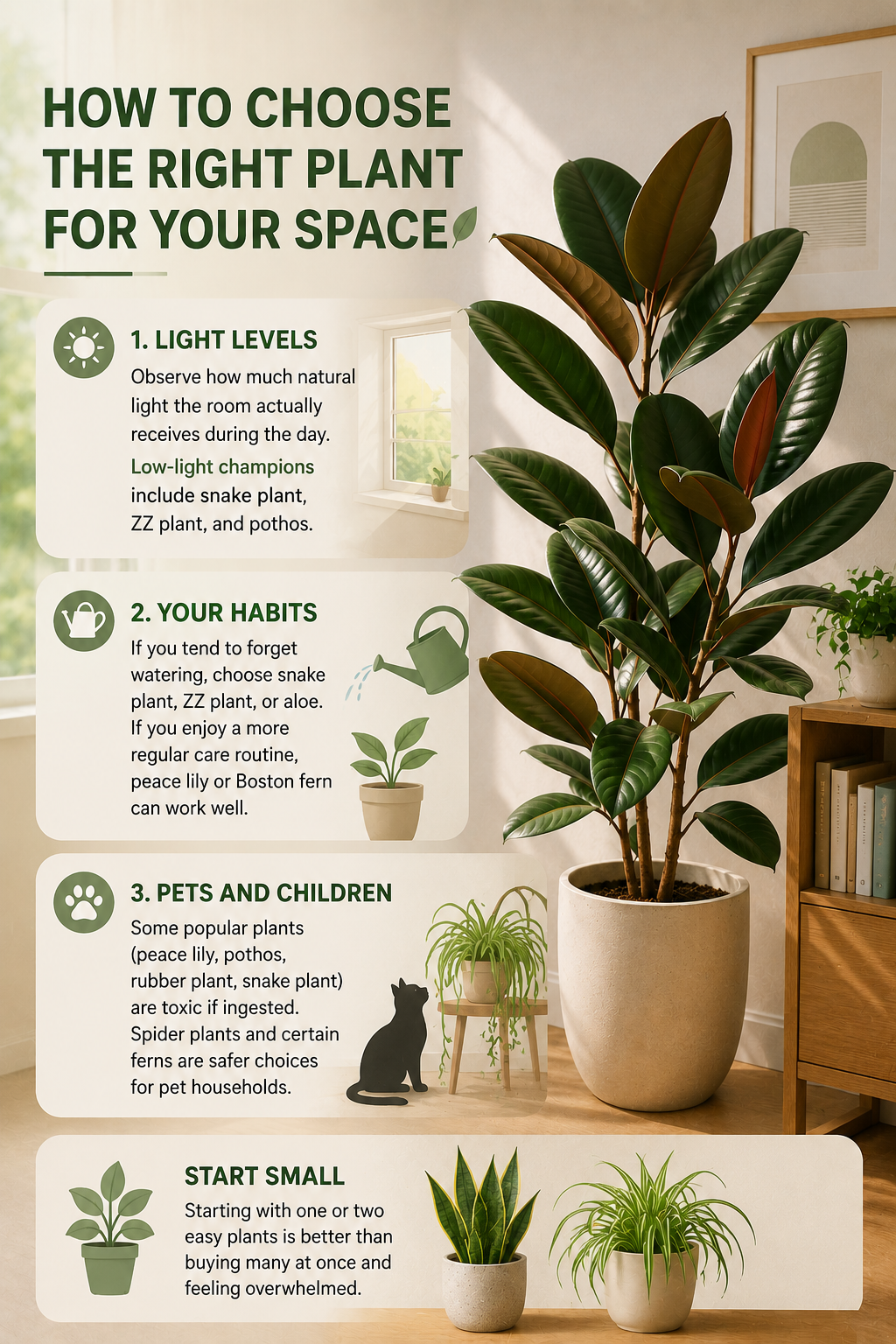
How to Choose the Right Plant for Your Space
Before buying, consider three practical factors:
- Light levels – Observe how much natural light the room actually receives during the day. Low-light champions include snake plant, ZZ plant, and pothos.
- Your habits – If you tend to forget watering, choose snake plant, ZZ plant, or aloe. If you enjoy a more regular care routine, peace lily or Boston fern can work well.
- Pets and children – Some popular plants (peace lily, pothos, rubber plant, snake plant) are toxic if ingested. Spider plants and certain ferns are safer choices for pet households.
Starting with one or two easy plants is better than buying many at once and feeling overwhelmed.
Basic Care Tips for Healthier Plants
- Most indoor plants prefer thorough watering when the top inch of soil is dry, rather than frequent light sprinkling.
- Use pots with drainage holes to prevent root rot.
- Dust leaves occasionally so the plant can photosynthesize efficiently.
- Avoid placing plants directly against cold windows in winter or next to heating vents.
- Fertilize lightly during the growing season (spring and summer) if you want faster growth; many easy-care plants do fine with minimal feeding.
Final Thoughts
You don’t need a large collection or perfect conditions to enjoy the benefits of indoor plants. A few well-chosen, easy-care varieties can improve the look of your home, contribute to fresher air, and add a calming natural element to daily life.
Start with reliable performers such as snake plant, pothos, or ZZ plant if you want the highest chance of success. Once you’re comfortable, you can experiment with peace lilies, ferns, or rubber plants for more variety.
Choose one plant that fits your light conditions and routine, bring it home, and give it a good spot. Over time, you may find that caring for even a small amount of greenery becomes one of the simplest and most rewarding parts of your indoor space.