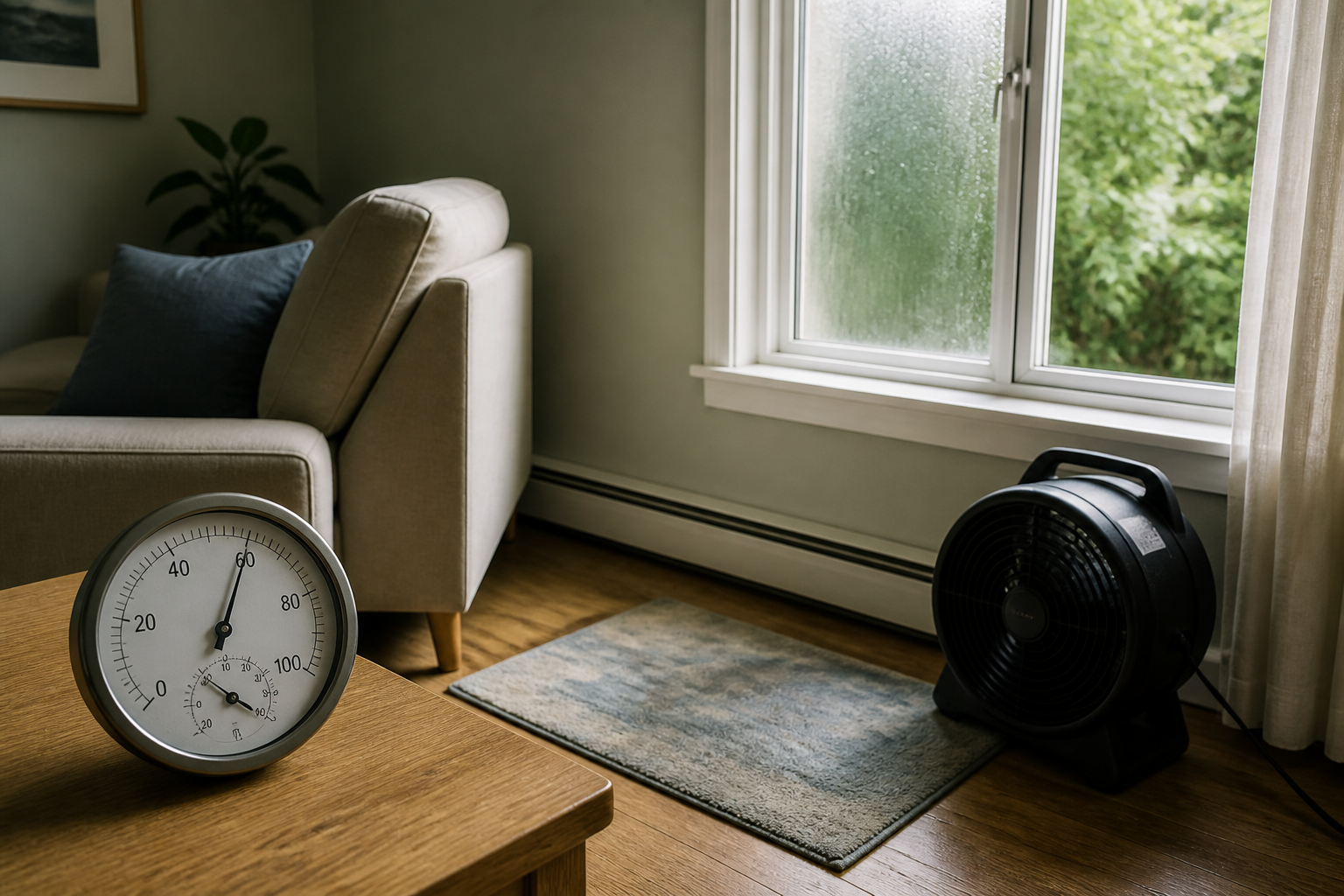
A musty smell usually means that moisture is lingering somewhere in the room. It may come from damp carpet, poor ventilation, condensation, wet laundry, a leaky pipe, mildew, or materials that have not dried properly. Air fresheners and essential oils can cover the odor briefly, but the smell will return if the damp source remains.
The most reliable natural approach is to find the moisture, dry the room and its contents, then clean the surfaces holding the odor.
Find the Source Before Treating the Smell
Start by noticing where the odor is strongest. A concentrated smell often points toward its source. Check around windows, exterior walls, ceilings, baseboards, plumbing, under sinks, behind furniture, beneath rugs, and near heating or cooling equipment.
Look for signs such as:
- Condensation on windows or walls
- Water stains or discolored patches
- Peeling paint or wallpaper
- Swollen wood, drywall, or flooring
- Damp carpet, upholstery, clothing, or bedding
- Visible mildew or mold-like growth
A small hygrometer can help identify whether humidity is contributing to the problem. Indoor relative humidity around 30% to 50% is a useful general target. If the reading stays high, particularly in a basement, bathroom, closet, or bedroom, the room may continue to smell musty even after cleaning.
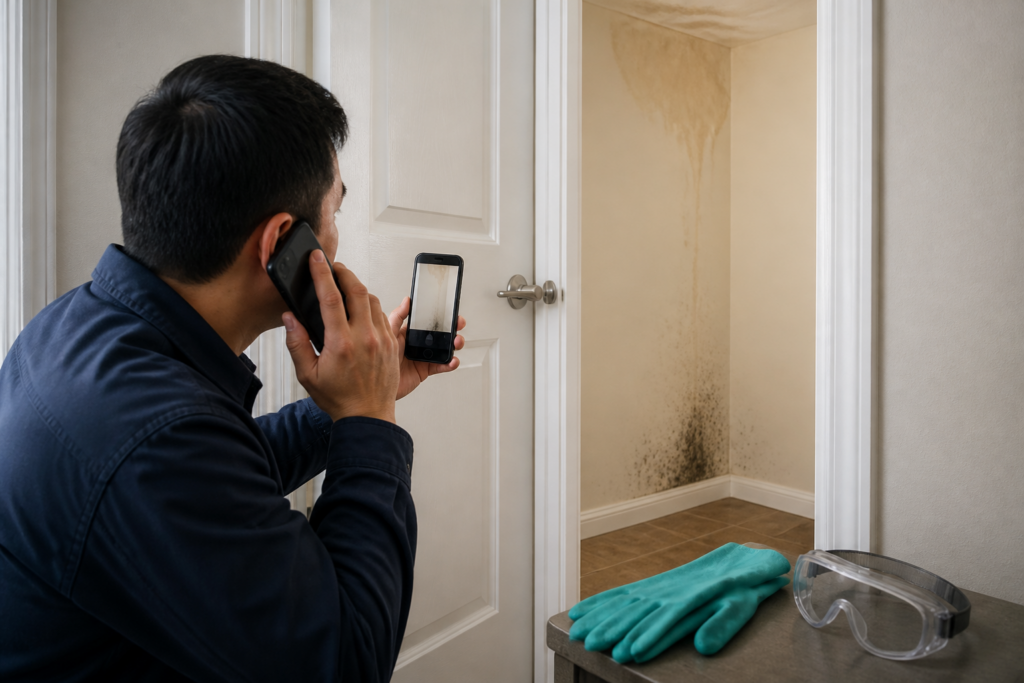
If the odor began after a leak, flooding, repeated condensation, or water intrusion, deal with that issue first. Renters should photograph stains, leaks, and damaged materials and notify the landlord or property manager in writing. Do not open walls, pull apart contaminated materials, or disturb a large area of suspected mold while casually investigating.
Air Out and Dry the Room
Once you have checked for moisture, remove stale air and help damp materials dry. Open windows and interior doors when the outdoor air is dry, and use a fan to move air through the room. Cross-ventilation works well when two openings are available.
Do not rely on open windows during rain or muggy weather. Bringing humid outdoor air inside can make the problem worse. In those conditions, a dehumidifier may be more useful. Empty its tank regularly or use a continuous drain if the model allows it.
Move furniture a few inches away from exterior walls and corners. Air can become trapped behind bookcases, beds, sofas, and wardrobes, especially where a cool wall causes condensation. Open closet doors and spread out tightly packed clothing or linens.
Washable items can often benefit from dry daylight and indirect sunlight. Hang curtains, removable cushion covers, rugs, and bedding outdoors or near a sunny, well-ventilated area when the care instructions permit it. Sunlight and moving air may help dry and freshen these items, but they do not correct an active leak or eliminate extensive mold.
Dry wet belongings promptly. Items that remain damp for roughly 24 to 48 hours are more likely to develop persistent odors and microbial growth. Never use a fan to blow air directly across visibly moldy or heavily contaminated material, since this may spread particles through the room.
Clean Hard, Washable Surfaces Gently
After reducing the humidity, clean the surfaces that may be holding odor. Dust and vacuum first, then wipe baseboards, shelves, painted surfaces, doors, and suitable floors with warm water and a small amount of mild soap.
Work on the area most closely connected to the smell rather than washing every surface in the room. Use only enough moisture to clean, and dry the surface afterward. Excess water can soak into wood joints, flooring edges, drywall, or other materials and prolong the problem.
For compatible, nonporous surfaces, a diluted white-vinegar solution may help remove some odor-causing residue. Test it first on a hidden area and stop if it dulls, stains, or damages the finish. Vinegar is not appropriate for every material. Avoid using it on natural stone, unsealed wood, delicate finishes, or surfaces that the manufacturer identifies as incompatible.
Never mix vinegar with bleach, ammonia, or other cleaning products. These combinations can create dangerous fumes. Vinegar also should not be treated as a dependable solution for extensive mold. If the smell comes from substantial growth or damp material inside a wall, floor, or ceiling, moisture correction and professional assessment are more appropriate than repeated wiping.

Treat Fabrics, Carpets, and Porous Materials
Soft materials often retain a musty smell long after the room itself has been aired out. Wash bedding, curtains, clothing, removable covers, and washable rugs according to their care labels. Dry them completely before putting them back. A slightly damp item returned to a closed room can quickly reintroduce the odor.
For carpets and upholstery, vacuum slowly and thoroughly, including edges and areas beneath furniture. If the material is damp, improve air circulation and allow it to dry fully. Test any cleaning solution on a hidden section first, since dyes and finishes can react unpredictably.
On dry, colorfast carpet or fabric, a light layer of baking soda may help absorb residual odor. Leave it for several hours, then vacuum it thoroughly. This is a deodorizing step, not a treatment for moisture or mold. Avoid soaking carpets, mattresses, upholstered furniture, and wood. Water trapped inside these materials can make the smell stronger and create deeper damage.
Activated charcoal or an open container of baking soda can help with a lingering odor in a closet, cabinet, or other small enclosed space. Place the material where air can circulate around it and replace it as directed or when it becomes ineffective. Keep loose powders and absorbents away from children and pets.
Some porous items cannot be restored through household cleaning. Carpeting, mattresses, upholstery, cardboard, or fabric-covered furnishings that remain damp, visibly moldy, or strongly musty after complete drying may need professional evaluation or replacement. Natural deodorizing methods cannot reliably remove contamination that has penetrated deep into a material.
Prevent the Musty Smell from Returning
Once the room smells fresher, focus on keeping moisture under control. Use bathroom exhaust fans during showers and continue running them for a while afterward. Vent kitchen steam outside when possible, and avoid drying wet laundry in a poorly ventilated room.
Keep furniture slightly away from cold exterior walls, leave space between stored items, and avoid overfilling closets. Wet shoes, towels, swimwear, and laundry should be dried before being placed in baskets, drawers, or closed storage.
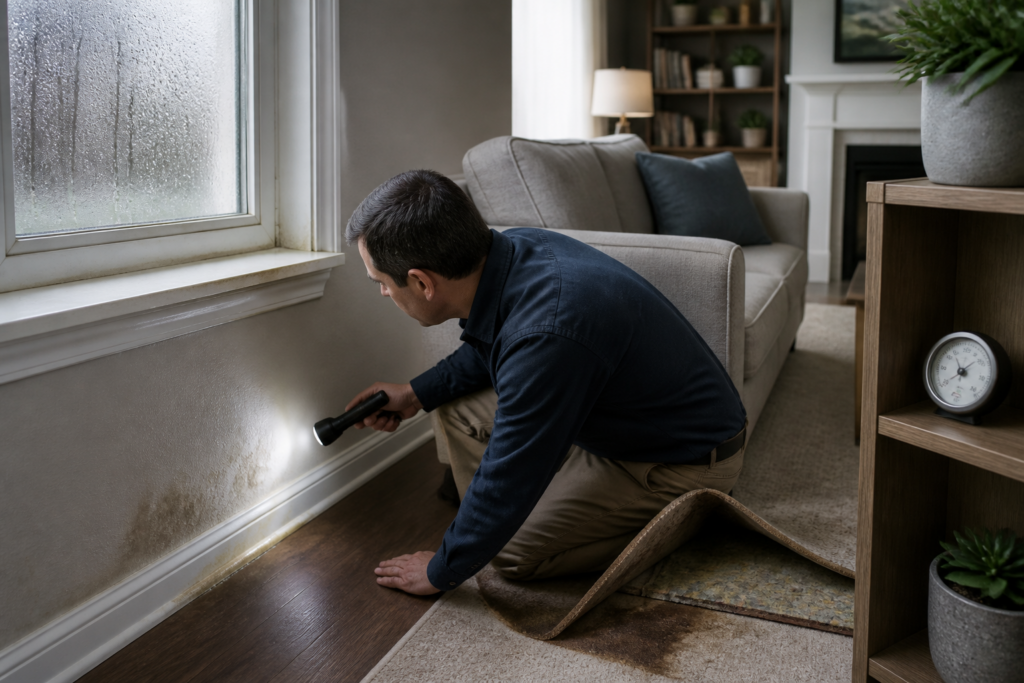
Check window condensation during cold weather and wipe away accumulated water. If condensation repeatedly returns, the room may need better ventilation, lower humidity, or an assessment of insulation and other building conditions. Also recheck under sinks, around plumbing, near appliances, and below windows after rain or periods of high humidity.
Air fresheners, incense, scented sprays, and essential oils should not be the primary remedy. They may mask the musty smell while adding fragrance or irritating fumes to the room. If the odor returns soon after cleaning, treat that as useful information: hidden moisture, damp porous materials, or mold may still be present.
Know When to Stop and Get Help
Household drying and gentle cleaning may be reasonable for a small, isolated odor with no sign of ongoing moisture. A recurring or strong smell requires more caution. Contact a landlord or property manager about leaking pipes, damp walls, repeated water intrusion, or suspected mold in a rental property.
Consider a qualified water-damage or mold professional when the odor persists despite drying and cleaning, comes from a hidden area, follows flooding, involves extensive visible growth, or appears connected to the heating and cooling system. Structural dampness and contaminated materials cannot be solved reliably with baking soda, vinegar, sunlight, or other household remedies.
For limited cleaning of a small surface-level area, wear gloves and eye protection and keep the room ventilated without spreading contaminated dust. People with asthma, significant allergies, immune suppression, or other sensitivities should avoid cleaning suspected mold themselves and seek appropriate advice instead. If cleaning causes breathing irritation or other concerning symptoms, leave the area and obtain medical guidance.
The lasting solution to a musty room is not a stronger fragrance. It is finding the moisture source, drying the room and its belongings, cleaning compatible surfaces carefully, and escalating the problem when dampness or contamination is beyond safe household treatment.