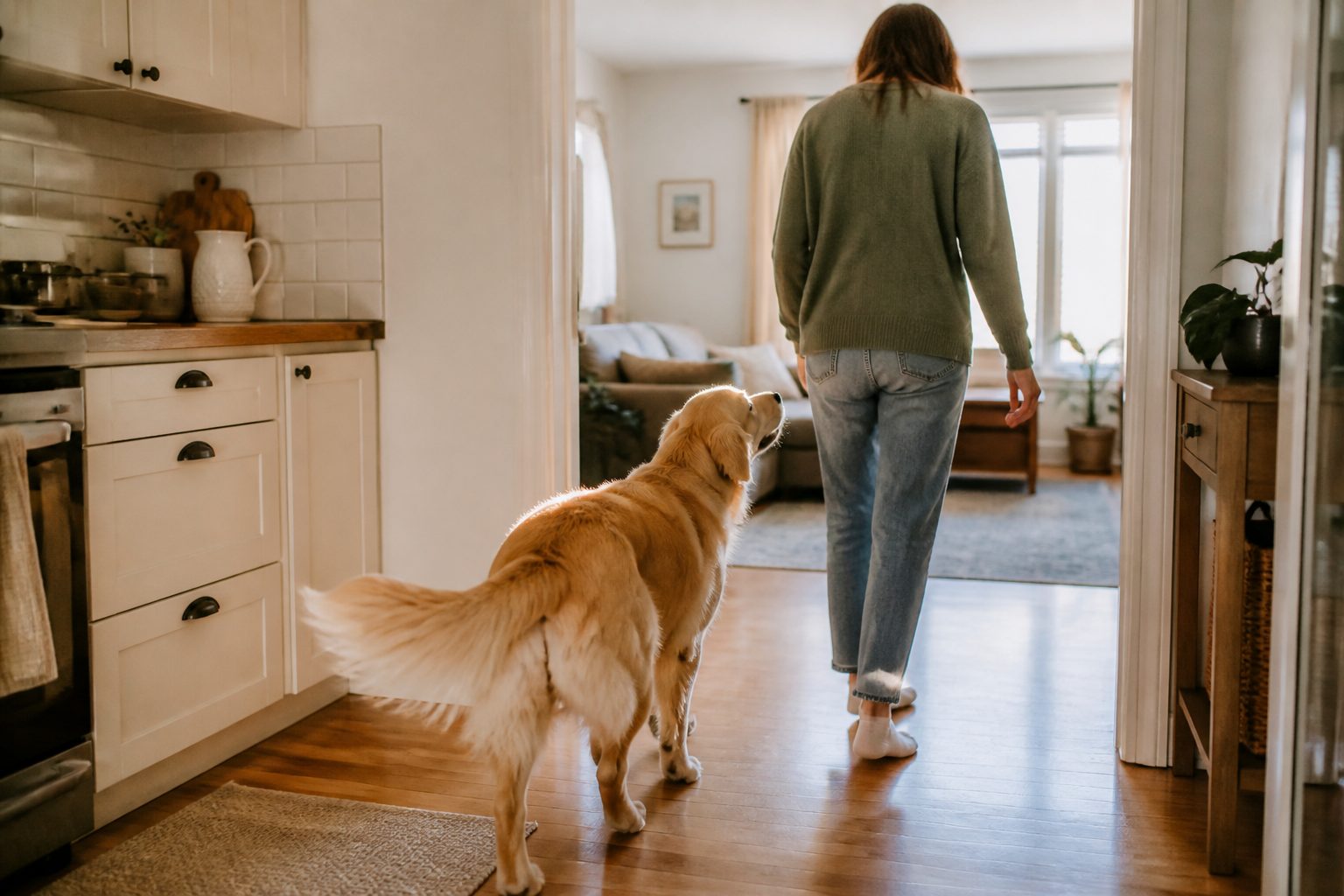
Your dog may follow you from room to room because you are a trusted companion, a source of food and attention, or simply the most interesting thing happening in the house. In many cases, this “shadowing” is normal. Some dogs are naturally people-oriented and prefer to rest near their family rather than spend time alone.
Following becomes more concerning when it is a sudden change, when the dog cannot settle without you, or when it occurs alongside signs of fear, illness, pain, or confusion. The behavior itself does not identify one cause. What matters is the wider pattern: your dog’s body language, ability to relax, response to separation, and any recent changes at home or in their health.
Why Dogs Follow Their Owners
Dogs are social animals. Staying close to a familiar person can provide companionship and security, especially in an unfamiliar, busy, or stressful environment. A dog that quietly walks after you and then settles nearby may simply be choosing to spend time with someone they trust.
Following can also be practical from the dog’s point of view. Your movements may predict something rewarding, such as:
- a meal or treat
- a walk or trip outside
- playtime
- attention and affection
- access to a room, yard, or family member
If following you has regularly led to one of these rewards, it can become a well-established habit. A dog may get up whenever you move because your movement has become a reliable signal that something interesting could happen next. This does not necessarily mean the dog is anxious or overly dependent.
Boredom can play a role as well. If your dog has limited opportunities for exercise, sniffing, play, chewing, or problem-solving, you may be their main source of stimulation. In that situation, following you may be less about distress and more about looking for something to do.
Age, temperament, and individual preferences also matter. Some dogs are content to spend much of the day in another room, while others prefer nearly constant contact. Breed tendencies can influence how people-oriented a dog is, but they are not definitive; two dogs of the same breed may behave very differently.
Look at what happens after your dog follows you. If they appear relaxed, lie down, accept a toy, or return to resting when nothing interesting occurs, the behavior is usually less concerning. The ability to settle independently is more informative than the fact that your dog walks behind you.
Normal Attachment or a Sign of Anxiety?
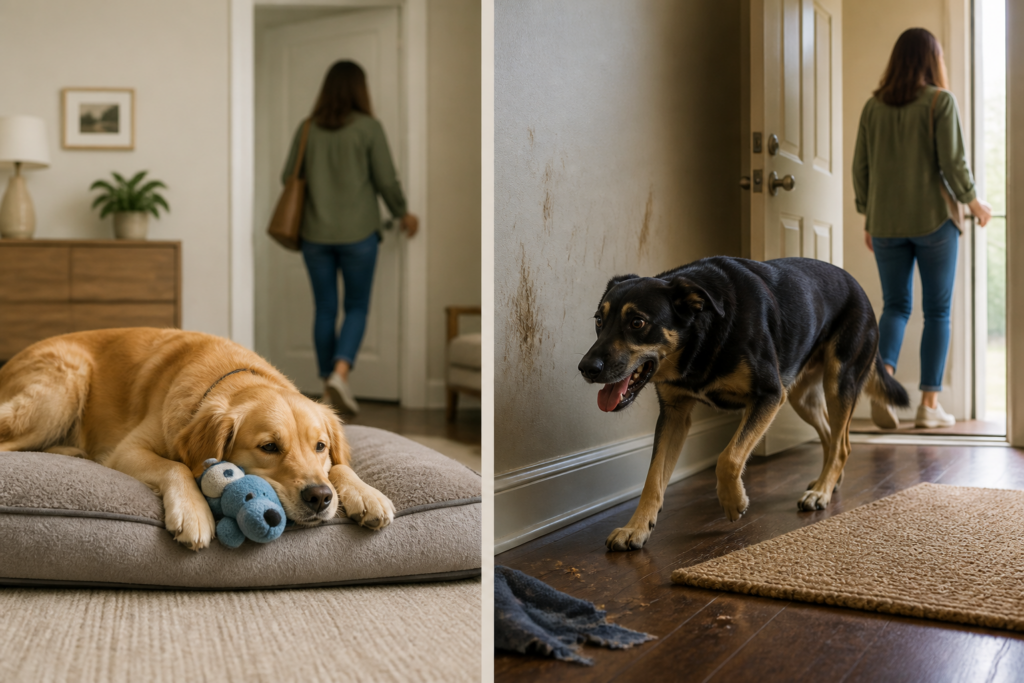
Normal attachment generally allows a dog to remain calm when you move around or spend some time out of sight. Your dog may check where you are, but they can usually rest on a bed, chew a toy, or remain comfortable in another area of the home.
Possible signs of anxiety include:
- pacing or repeatedly circling
- whining, barking, or howling when you move away
- panting, trembling, drooling, or other signs of heightened stress
- frantic attempts to keep your attention
- inability to settle even when their needs have been met
- destructive behavior, especially around doors or windows
- house-soiling that occurs mainly during separation
- attempts to escape or follow you out
Following you from room to room alone is not enough to diagnose separation anxiety. Separation-related problems are defined by distress when the dog is alone or separated from a particular person, not simply by close contact while everyone is at home. A dog can be a devoted shadow and still remain perfectly comfortable during absences. Conversely, a dog may not follow constantly but become highly distressed when left alone.
Consider whether the behavior began after a change. Moving house, a new baby or pet, a change in work schedule, travel, household conflict, or a frightening event can make a dog seek extra reassurance. Dogs may also become more unsettled when their usual routine changes, even if the change seems minor to the people around them.
If you need to understand what happens when you leave, a short video recording can provide useful information. It may show whether your dog settles after you go or remains distressed. Do not repeatedly leave a severely distressed dog alone just to test the behavior. If the response is intense, professional guidance is more appropriate than repeated experiments.
When Sudden Clinginess May Signal a Health Problem
A dog that suddenly becomes unusually attached may be uncomfortable, unwell, or confused. Pain and illness can make familiar people especially reassuring. A dog may follow because they want help, feel vulnerable, or do not want to be alone while feeling different.
Reduced hearing or vision can also change a dog’s behavior. Staying close may help an older dog navigate the home and feel secure. Age-related cognitive or sensory changes can sometimes lead to restlessness, disrupted sleep, disorientation, or increased reliance on familiar people.
Pay attention to other changes, including:
- reduced or increased appetite or thirst
- vomiting or diarrhea
- limping, stiffness, difficulty lying down, or sensitivity to touch
- restlessness or unusual vocalization
- changes in sleep patterns
- house-soiling or difficulty finding familiar areas
- confusion, staring, getting stuck, or appearing disoriented
- changes in hearing, vision, mobility, or responsiveness
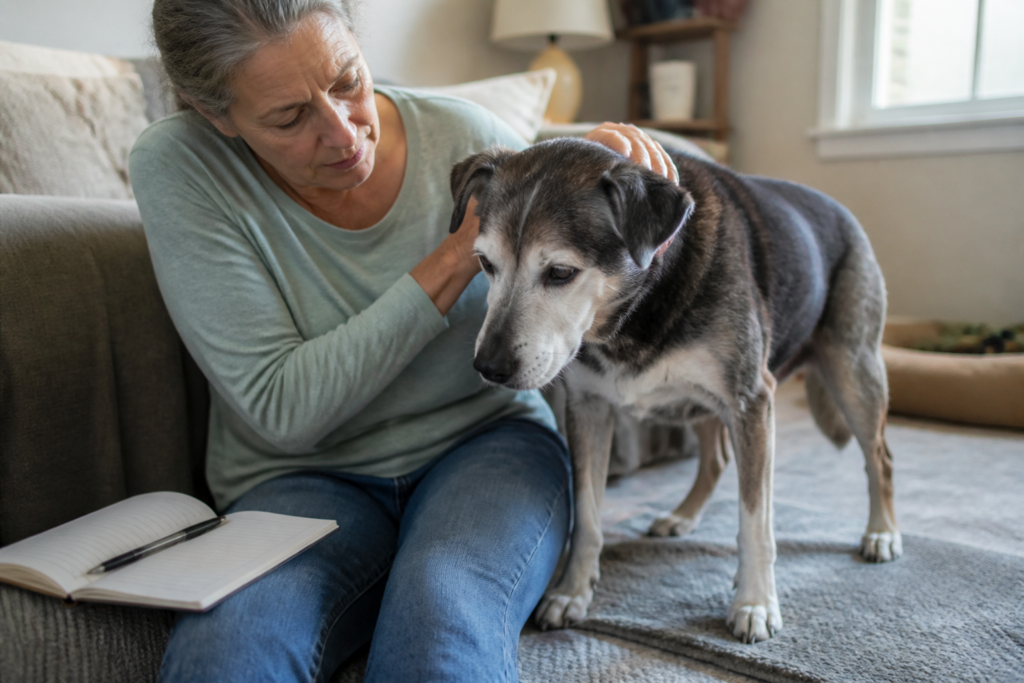
Note when the clinginess started, whether it is constant or limited to certain situations, and what else changed around the same time. This information can help a veterinarian assess the problem. Do not assume that an abrupt or persistent behavior change is purely emotional.
Contact a veterinarian promptly if the behavior is accompanied by significant physical or mental changes. Seek urgent veterinary care for severe pain, difficulty breathing, collapse, repeated vomiting, sudden weakness, seizures, or other sudden neurological changes.
How to Encourage Calm Independence
If your dog appears healthy and relaxed, you do not need to stop them from showing affection. The goal is not to make a companionable dog avoid you. It is to help them learn that resting away from you can also be safe and rewarding.
Start with the basics. A predictable routine for meals, bathroom breaks, walks, play, and rest can reduce uncertainty. Make sure your dog has suitable daily activity and enrichment. Sniffing walks, food puzzles, safe chew items, short training sessions, and simple games can give them useful ways to spend time without relying on your constant attention.
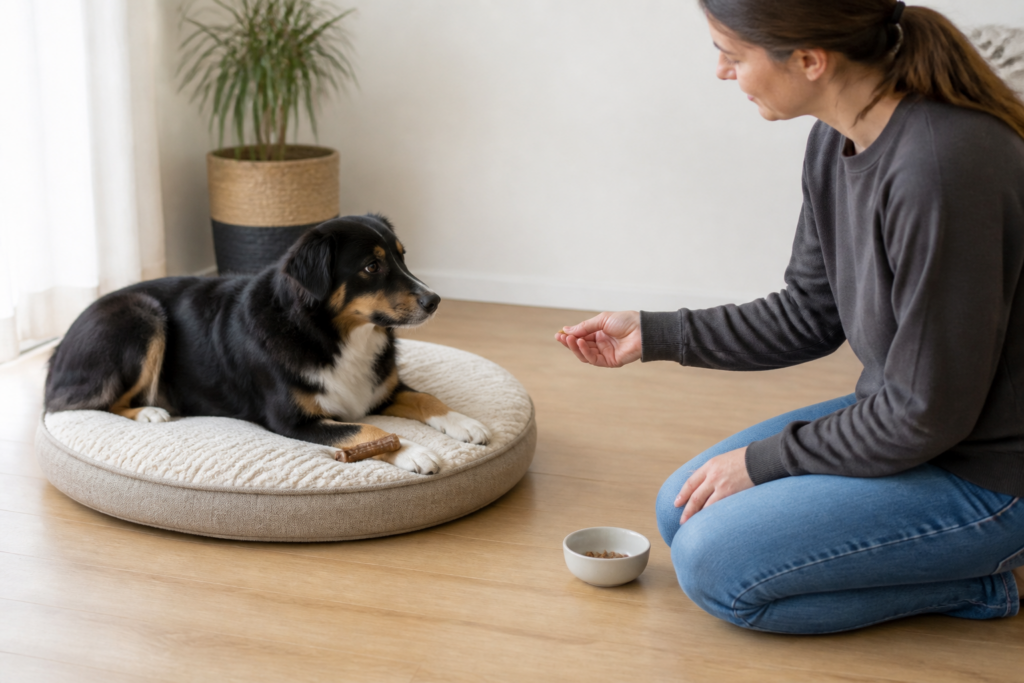
Create a comfortable resting place in an area where your dog can still feel connected to the household. When your dog chooses to lie there, calmly reinforce the behavior with quiet praise, a treat, or occasional access to a safe chew. Reward settled behavior before your dog becomes demanding, rather than waiting until they are already distressed.
You can also practice brief periods of separation while you are still at home. Ask your dog to settle on a bed while you take one step away, move into another part of the room, or briefly walk out and return. Keep the exercise easy enough that your dog remains relaxed. Gradually increase the distance or duration only when the previous step is comfortable.
Departures and returns should be calm and ordinary. This does not mean withholding affection. It means avoiding dramatic rituals that may make leaving and returning feel unusually significant. Give your dog appropriate attention, but also make relaxed, independent behavior part of normal daily life.
Do not punish your dog for following, scold them for seeking contact, or abruptly shut them away for long periods. Forced isolation can increase fear and make the dog more dependent when contact becomes available again. Fear-based tools and punishment are particularly unsuitable when anxiety may be involved.
If your dog begins pacing, vocalizing, scratching at doors, trembling, or showing other escalating distress during these exercises, make the next attempt easier or stop and seek advice. Independence should be built gradually. The aim is a dog that can relax away from you, not one that is forced to suppress normal social behavior.
When to Contact a Veterinarian or Behavior Professional
Arrange a veterinary appointment when clinginess starts suddenly, persists without an obvious explanation, or occurs with pain, illness, sensory changes, confusion, or changes in appetite, sleep, elimination, or mobility. A medical assessment can identify or rule out physical contributors before the behavior is treated as a training issue.
Behavioral support is appropriate when your dog panics during absences, damages doors or windows, vocalizes persistently, tries to escape, cannot settle, or becomes fearful or aggressive when you move away. Early help can prevent a mild problem from becoming more established.
A veterinarian may recommend a qualified, reward-based behavior professional and can help determine whether additional treatment is needed. Avoid relying on internet labels or advice that recommends punishment, forced separation, or aversive equipment without considering your dog’s individual circumstances.
Before an appointment, keep a brief log. Record when the following began, what seems to trigger it, how long it lasts, your dog’s body language, what happens during absences, and any physical or routine changes. Short videos can also help, provided they do not involve deliberately putting your dog into severe distress.
In a relaxed, healthy dog, following is often simply a preference for your company or a learned expectation that something good may happen. When the behavior is sudden, intense, or paired with distress or other changes, it deserves closer attention. Observe the full pattern, meet your dog’s physical and mental needs, encourage independence gently, and involve a veterinarian or qualified behavior professional when the situation is unclear or worrying.