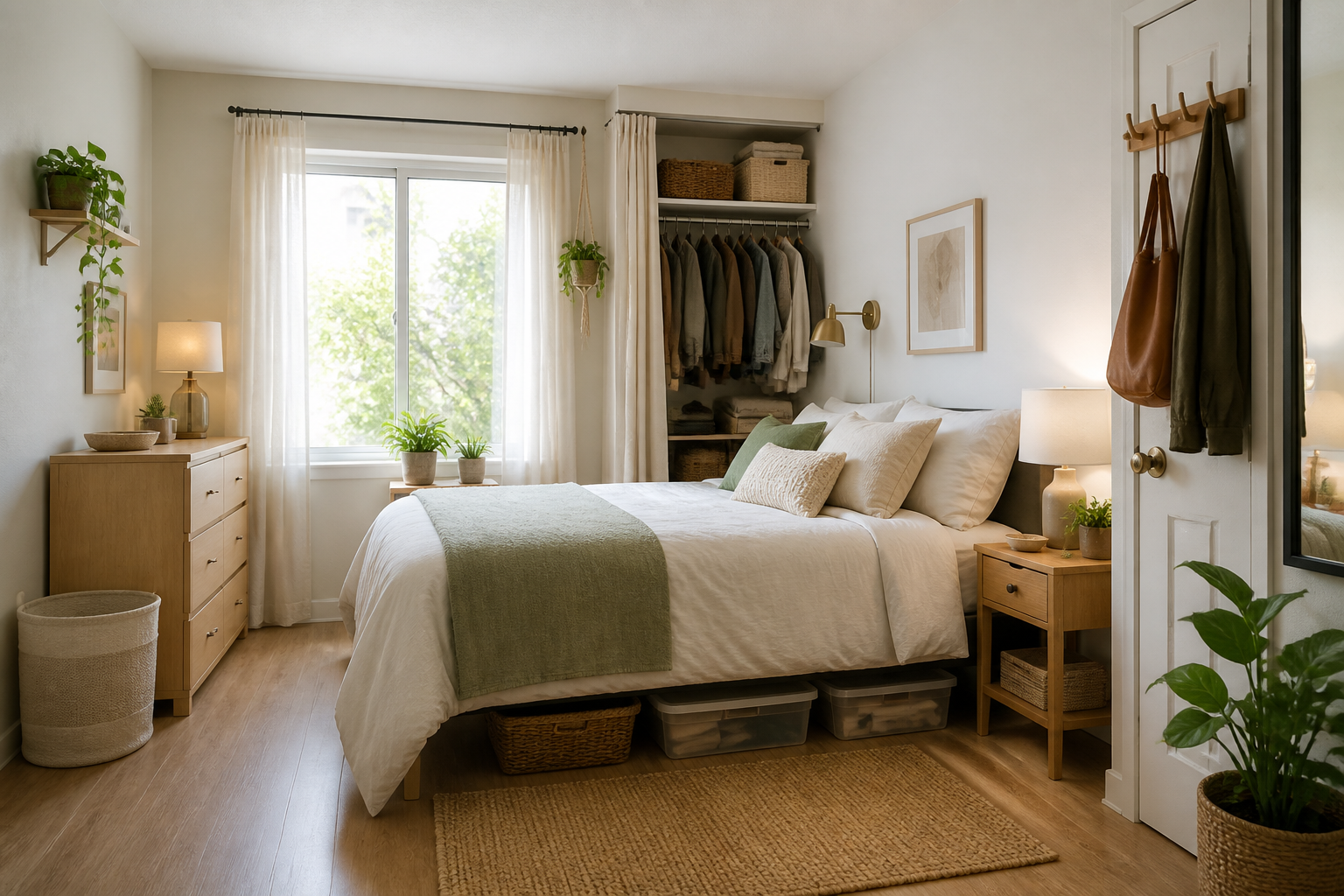
A small bedroom becomes difficult to manage when every item is competing for the same limited surfaces, drawers, and floor space. The solution is not necessarily to own less. In many cases, the room simply needs clearer categories, better use of overlooked space, and storage locations that match how often each item is used.
Begin with the belongings already in the room, then improve the way they are stored. A useful system should make everyday items easy to reach while keeping occasional and seasonal possessions out of the way.
Start by Defining What Belongs in the Bedroom
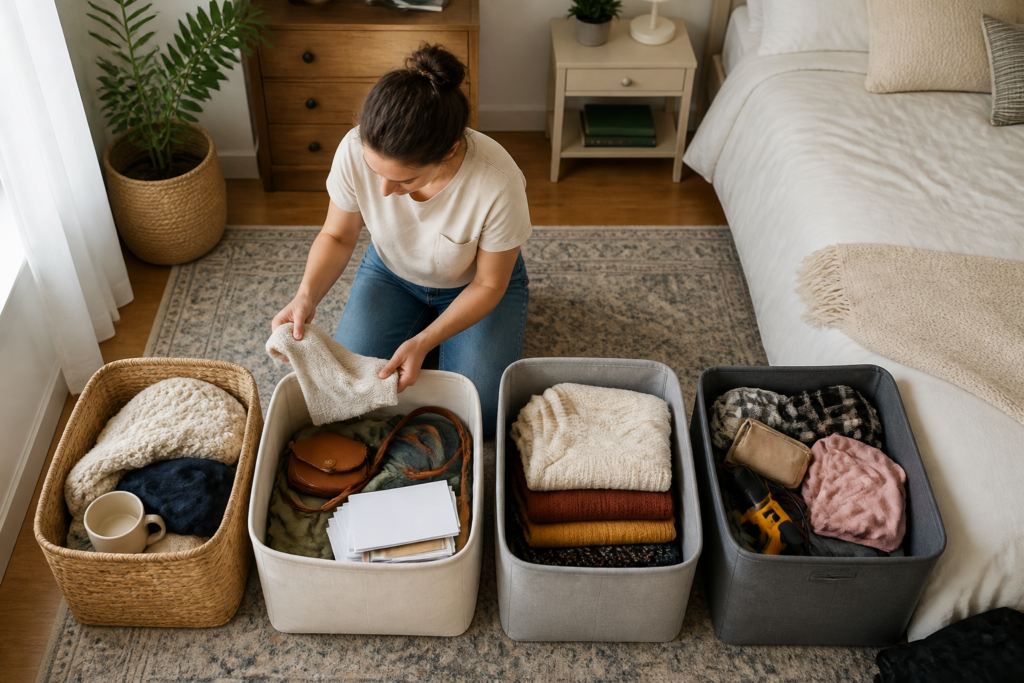
Before buying organizers or rearranging furniture, sort the room’s contents into four temporary groups:
- Items used in the bedroom
- Items used elsewhere
- Seasonal or occasional items
- Items you are undecided about
This is not a decluttering exercise. The purpose is to stop unrelated belongings from taking up valuable bedroom storage. A mug that belongs in the kitchen, paperwork that belongs at a desk, or tools that belong in a utility area can be moved without being thrown away.
Use a basket or box for items that belong elsewhere. Empty it when you leave the room or at a convenient point in the day. For possessions you are unsure about, use an undecided container rather than stopping the entire process to make a permanent decision. You can review it later when the room is easier to assess.
When space is limited, prioritize based on frequency of use. Items used daily or several times a week deserve the most accessible locations. Seasonal clothes, spare bedding, luggage, and occasional accessories can use higher shelves, under-bed storage, or the back of a closet.
As you sort, keep walkways, doors, windows, heaters, vents, and exits clear. A storage solution is not useful if it makes the room harder or less safe to move through.
Organize Storage in the Order You Use It
Think of the bedroom as having a storage hierarchy. The easiest-to-reach places should hold the things you use most often. Less accessible areas should hold belongings that are needed occasionally.
For example, a bedside drawer might contain medications, reading glasses, or a charging cable. The top drawer of a dresser could hold everyday undergarments and accessories. A high closet shelf might be suitable for out-of-season clothing, while the space beneath the bed could hold spare linens or luggage.
Group similar items together instead of scattering them across several locations. Keep chargers with other electronics, personal care items together, and accessories in one defined area. A category needs one primary home, even if a few related items are stored elsewhere.
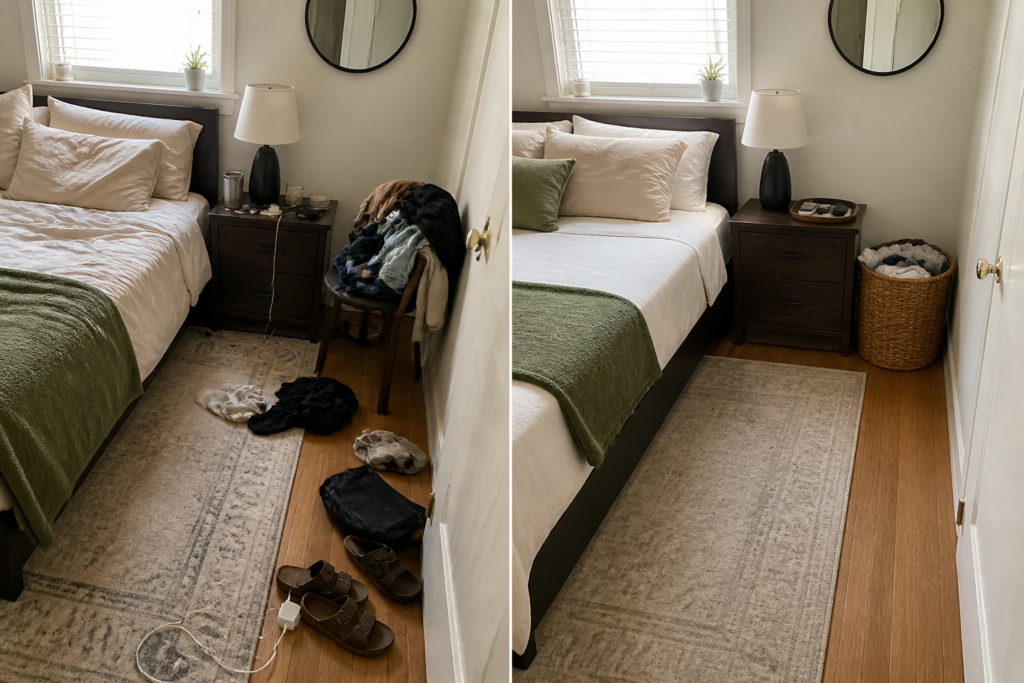
Do not fill every drawer, box, or shelf to its maximum capacity. Leave enough room to remove one item without causing the rest to spill out. A storage area that is technically full may be less useful than one with a little empty space.
Labels can help when containers are opaque or stored out of sight. They are less necessary for open baskets or transparent boxes where the contents are already obvious. The goal is to make items easier to find and return, not to create a complicated filing system.
Use Vertical, Hidden, and Overlooked Space
When floor space is limited, look upward and behind existing furniture before adding another large piece. Small changes can create useful storage without permanently altering the room.
Make use of doors and walls
The back of a bedroom door can hold lightweight items such as scarves, belts, small bags, or a few pairs of shoes. Use a removable over-door organizer or hooks if you rent or live in a dorm. Keep the load light enough that the door closes properly and the hinges are not strained.
Unused wall space can accommodate a few hooks, a compact rail, or a narrow shelf where permitted. These are useful for a frequently worn jacket, tomorrow’s outfit, or a bag that would otherwise land on the floor. Avoid placing hooks where they obstruct movement or create a hazard beside the bed.
Improve closet height
If there is unused space above a closet’s hanging rail, use shelf risers, stackable boxes, or a second hanging level for lighter garments. Keep heavy items low and avoid placing unstable stacks overhead.
The side of a wardrobe or desk may also accept a few adhesive hooks or a hanging pocket organizer, provided they do not interfere with doors, drawers, or walking space. Before purchasing anything, check whether shoeboxes, tote bags, baskets, or small containers already serve the same purpose.
Use the space under the bed
Under-bed storage is well suited to seasonal clothes, spare bedding, luggage, and occasional shoes. Use containers that can be pulled out without lifting the bed, or soft storage bags if the space is narrow.
Label containers by category rather than by vague descriptions. “Winter sweaters” is more useful than “clothes.” Covered storage helps protect against dust, but never put damp shoes or clothing into a closed container. Allow them to dry first.
Keep storage away from heaters, vents, and electrical equipment. Do not use hidden space to block an exit or make emergency access difficult.
Give Clothing and Accessories Simple, Repeatable Homes
Make clothing easier to put away
Clothing often creates the largest amount of bedroom clutter because it is handled every day and is not always immediately returned to a drawer or closet. Make the storage method match the way you naturally use clothes.
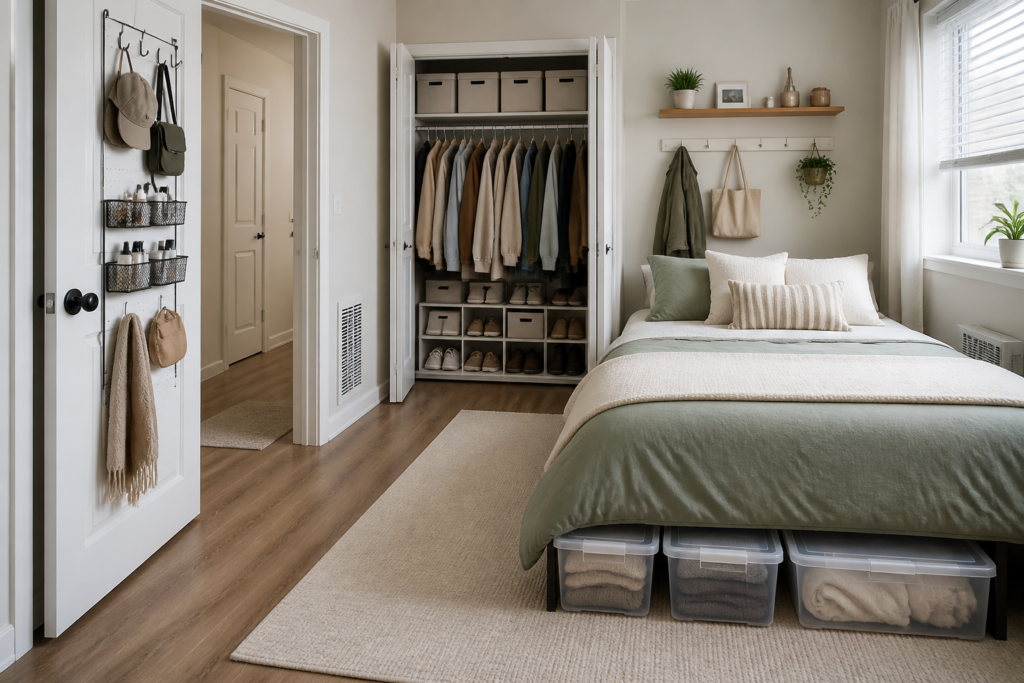
Fold soft items vertically in drawers so more of each piece is visible. This works well for shirts, sleepwear, workout clothes, and casual trousers. Drawer dividers or small boxes can keep categories from blending together, although folded shoeboxes or spare containers can work just as well.
Group clothing by type or purpose, such as everyday basics, workwear, exercise clothing, and sleepwear. In a small room, it may be more useful to organize by frequency of use than by color. Keep the clothes you reach for most often in the easiest-to-access section.
Use one hamper for dirty clothing. For clothes that can be worn again, provide a separate hook, rail, or small basket. Without a defined place for these items, they often end up on a chair, the floor, or the bed and become a permanent second wardrobe.
Rotate seasonal clothing when practical. You do not need to remove useful possessions from the bedroom permanently, but moving rarely used pieces to high shelves or under-bed containers can make daily storage less crowded. Avoid overloading drawers and hangers; if putting clothing away requires force, the system is too full.
Contain shoes, bags, and small accessories
Keep everyday shoes in one tray, basket, or low shelf near the bedroom entrance. This prevents pairs from spreading across the floor while keeping them accessible. Shoes that are damp should dry before being placed in closed storage.
Store smaller bags inside larger ones when their shapes allow it, and keep the bag used most often in an easy-to-reach location. A single row of hooks or one designated shelf is usually easier to maintain than several scattered storage points.
Use small boxes, cups, trays, or drawer dividers for belts, jewelry, hair accessories, and other small items. Group them by function rather than placing every type in a separate decorative container. A catch-all tray on the dresser or bedside table can contain the objects that otherwise collect there, such as keys, earbuds, glasses, or loose change.
Clear Surfaces Without Hiding Clutter Everywhere
Open surfaces make a small bedroom feel crowded quickly. Give each surface a job and keep only the items that support that job there.
A bedside table might need a lamp, a book, and a few daily-use items. A dresser may hold personal care products, a mirror, or a small tray. Everything else should have a drawer, basket, shelf, or container assigned to it.
When items must remain visible, contain them in one tray or basket rather than spreading them across the entire surface. Open or transparent containers work well for frequently used belongings because you can see what is inside. Opaque boxes are better for less attractive or less frequently used items.
Store books vertically on a shelf or keep one defined stack for current reading. Separate books you are actively using from the rest of your collection so the bedside area does not become a general storage pile.
Create one charging station for phones, watches, headphones, and other devices. This could be a small box on a dresser, a tray beside the bed, or a designated shelf. Keep cables contained and away from walking paths. Do not run power strips under rugs or bedding, and avoid placing electrical equipment where it can be covered by fabric.
The bed, chair, and floor should not become long-term overflow storage. If they repeatedly collect the same category of items, that is useful information: the category either needs a closer storage location or a larger, more practical container.
Create a Five-Minute Reset That Fits Your Routine
A small bedroom does not need to be perfectly arranged at all times. It does need a simple way to recover when everyday activity creates clutter.
Once a day, return loose items to their assigned homes. Put dirty clothing in the hamper, take cups or dishes out of the room, clear the floor, and place accessories back in their tray or drawer. These tasks usually take only a few minutes when items already have clear homes.
A temporary return basket can help when several belongings need to go to other rooms. Put them in the basket during the reset, then empty it at a set time. Do not let the basket become permanent storage for half the household.
After a week, notice which area causes the most trouble. If chargers always collect beside the bed, move the charging station closer. If clothes remain on a chair, add a hook or basket for repeat-wear items. If a drawer repeatedly overflows, reduce the category’s contents in that drawer or move occasional items elsewhere.
Change the system before assuming you need to buy more storage. Organization fails when it requires too many steps, too much precision, or a location that is inconvenient to use.
The most effective small-bedroom setup is not the one where every possession is hidden. It is the one where frequently used belongings are accessible, occasional items are contained, surfaces have room to breathe, and putting things away takes less effort than leaving them out.