Mold is usually a symptom, not the original problem. If a room keeps getting damp or moldy, cleaning the visible patch will only provide temporary relief unless you find where the moisture is coming from.
Most cases involve condensation, a plumbing or appliance leak, or water entering through the exterior or foundation. Use three quick questions to narrow it down:
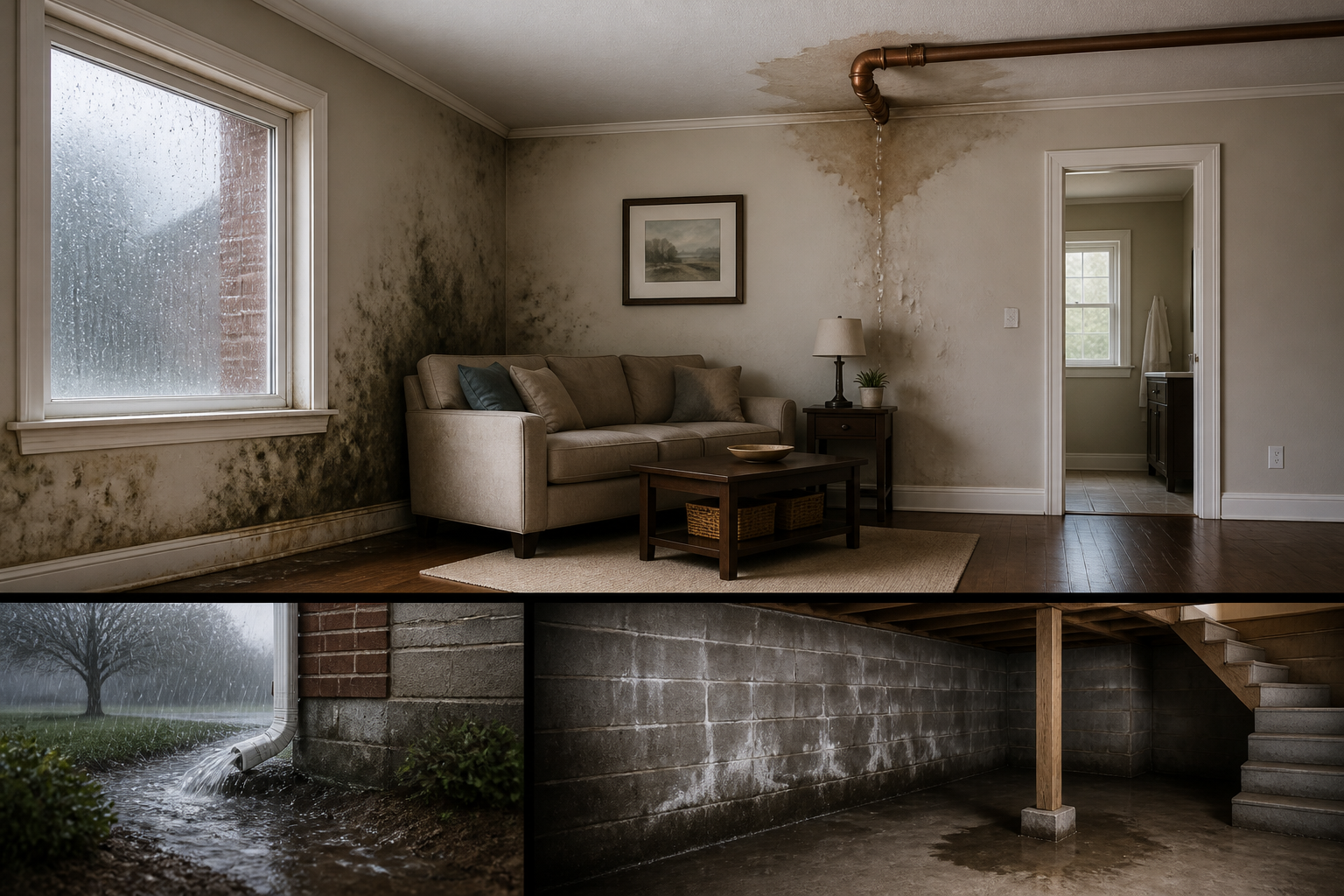
- Where is it? Moisture on windows, cold corners, or behind furniture points toward condensation. A localized stain near a ceiling, fixture, or appliance points more toward a leak. Dampness at lower walls or floors suggests exterior or foundation moisture.
- When does it worsen? Compare the room after rain, after a shower, after using nearby plumbing, and after it has been closed overnight.
- What does the surface look like? Condensation often leaves beads or general dampness. Yellow or brown stains, bubbling paint, soft drywall, swollen trim, and peeling wallpaper suggest water damage.
Visible condensation on a window or cold surface strongly suggests indoor humidity, but mold near a cold wall does not rule out a hidden leak or water entering from outside. If water is actively leaking, near electrical equipment, or contaminated by sewage or flooding, deal with that hazard first and seek appropriate help rather than beginning with mold cleaning.
Find the moisture source
Condensation and high indoor humidity
Condensation is common when warm indoor air meets cold glass, exterior walls, ceiling corners, or poorly insulated areas. Mold may grow behind a bed, dresser, or bookcase pressed against an outside wall, or in a crowded closet where air cannot circulate.
Showers, indoor clothes drying, cooking, and poor bathroom ventilation can add enough moisture to keep cold surfaces damp. A small hygrometer can help. A practical indoor relative-humidity target is about 30% to 50%; readings above 60% make condensation more likely. However, one reading in the middle of the room does not rule out a cold-surface problem. Humidity can vary by room and height, and the surface temperature may matter more than the room average.
Plumbing, appliance, or roof leaks
A leak is more likely when damage is concentrated in one place. Check whether it changes after using a nearby sink, toilet, shower, washing machine, dishwasher, water heater, or refrigerator. A ceiling stain that grows after rain points toward the roof or another exterior opening, although water can travel along framing and pipes before appearing far from its source.
Recurring stains, soft drywall, swollen materials, or paint that bubbles again after drying and repainting mean the water source is probably still active. Do not assume the nearest fixture is necessarily the source.
Water entering through the exterior or foundation
In basements and lower-level rooms, dampness may enter through the foundation, floor, windows, siding, roof, or surrounding soil. This is more likely when it appears after storms, rises from the floor, or affects the lower part of a wall.
White, powdery deposits on masonry can indicate that water is moving through the wall and leaving salts behind as it evaporates. They do not identify the exact source, but they justify checking gutters, downspouts, grading, drainage, windows, the roof, and foundation conditions rather than treating the wall as an indoor-humidity problem.
Poor airflow and hidden moisture
Blocked vents, tightly packed closets, boxes, and furniture against cold walls can create damp pockets even when the rest of the room feels comfortable. A musty odor without a visible patch may indicate damp materials or mold behind a wall, beneath flooring, above a ceiling, or in an adjacent area. If the smell quickly returns after cleaning the visible spot, stop treating the symptom and look for concealed moisture.
What to do first
- Stop active water if it is safe. Shut off a leaking fixture, place a container under a drip, and keep water away from electrical equipment. For a ceiling leak, sewage, flooding, or an unsafe electrical condition, use the landlord’s emergency channel or call a qualified professional.
- Protect belongings and document the condition. Move furniture and stored items away from wet areas. Take photographs and note when the dampness appears, the weather, nearby plumbing use, and any odors or stains.
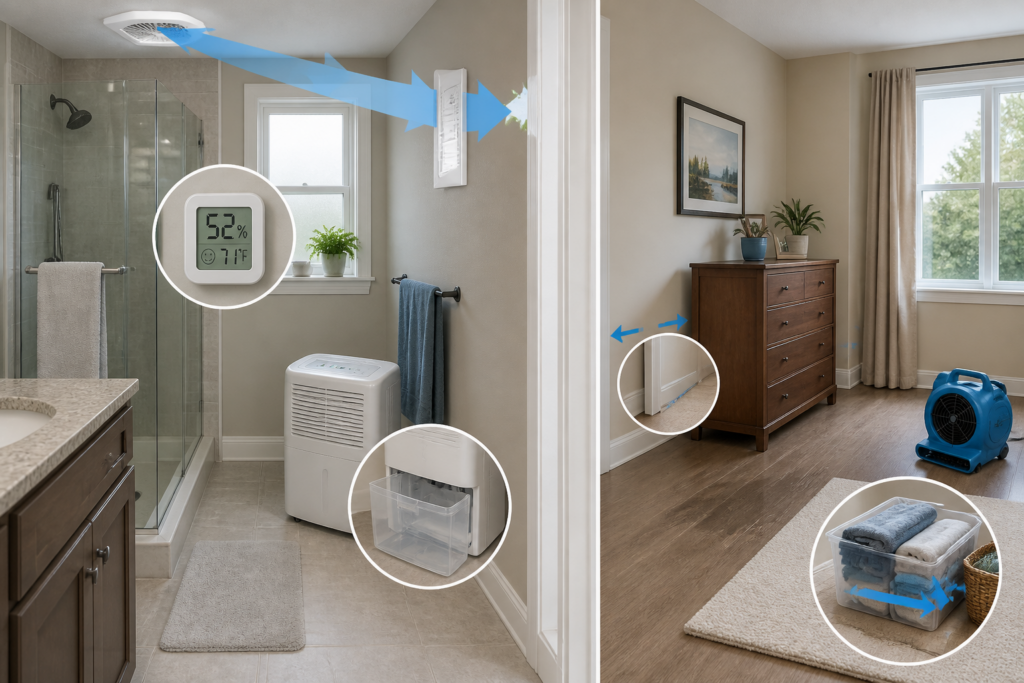
- Measure and reduce humidity. Use a dehumidifier or air conditioner when appropriate. Air conditioning removes moisture when it is operating under suitable conditions, but it is not a universal substitute for a dehumidifier. Empty a dehumidifier’s tank; a full tank can stop drying without being obvious.
- Vent moisture outdoors. Run the bathroom fan during and after a shower, keep the bathroom door closed while showering, and check that the fan actually discharges outdoors rather than into an attic or wall cavity. A weak or failed fan may need repair.
- Dry materials promptly. Remove standing water and dry washable items. Porous materials that remain wet, swollen, crumbling, or moldy may need removal rather than surface cleaning.
Leave space between furniture and cold exterior walls, and keep supply and return vents clear. Opening windows helps only when outdoor air is drier; warm, humid, or rainy air can make the problem worse. Do not paint, wallpaper, or seal a damp wall.
If you rent, report the condition in writing and request correction of the water source and damaged building materials. Documenting the problem does not mean you should open walls or attempt building repairs without authorization, except when immediate action is needed to prevent damage or danger.

Match the permanent repair to the cause
A dehumidifier can control high humidity, but it cannot repair a leaking pipe or stop foundation seepage. Cleaning, painting, or air fresheners do not solve recurring moisture.
If condensation is the main problem
Lower humidity, use effective exhaust ventilation, maintain a reasonably steady room temperature, and improve airflow behind furniture and in closets. Reduce indoor moisture by drying clothes in a ventilated area and covering boiling pots. If one wall or window remains much colder than the rest of the room, the lasting repair may involve insulation, weatherstripping, window repair, or another building improvement.
If there is a plumbing or appliance leak
Repair the pipe, fixture, drain, appliance, or seal allowing water to escape. Once the leak is fixed, dry the surrounding materials thoroughly. Drywall, insulation, carpet padding, and other porous materials can hold water below the surface. Swollen, crumbling, or heavily moldy materials often need to be removed and replaced.
If water is entering from outside
The repair may need to happen outside the room: correcting roof or window failures, clearing gutters, redirecting downspouts, improving grading or drainage, or repairing foundation defects. In a basement, check whether downspouts discharge away from the foundation and whether the sump or drainage system works. A room dehumidifier may reduce symptoms but will not stop recurring seepage.
If moisture or mold is hidden
Persistent odor, recurring stains, or mold that returns soon after cleaning calls for a broader inspection. Do not casually open walls or disturb HVAC components. Suspected contamination inside walls, ceilings, floors, or HVAC equipment is better assessed by an appropriately qualified professional. Air testing alone may confirm that spores are present without explaining the moisture path or necessary repair.
Clean only suitable small areas after the moisture is controlled
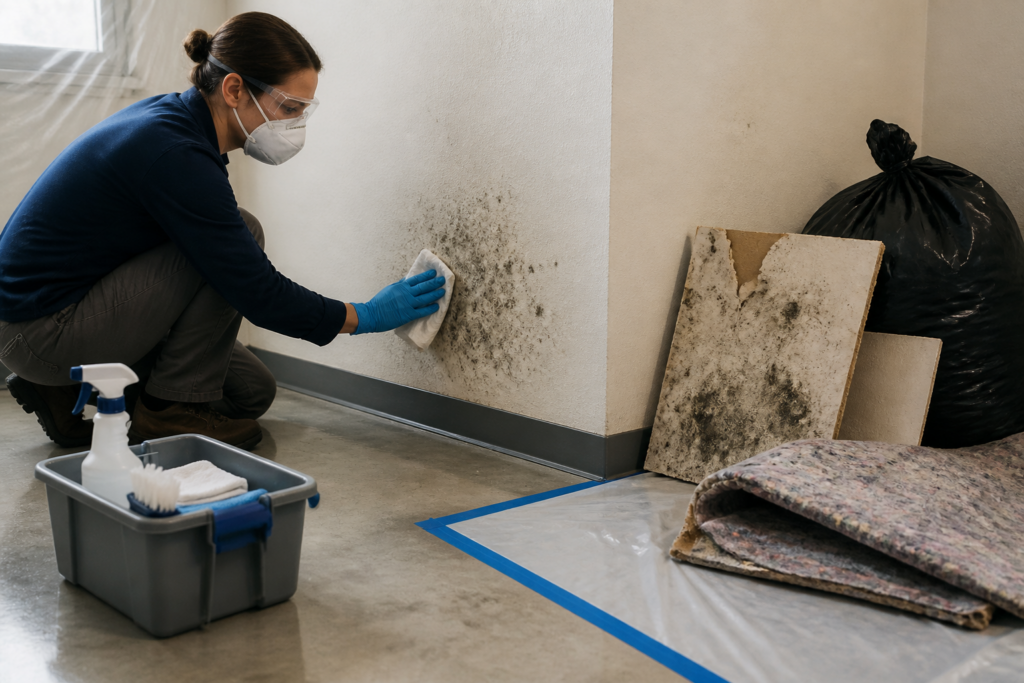
Clean a small, accessible patch yourself only after the moisture source has been controlled and the area is dry, and only when the mold is on a hard, washable surface and the water was not contaminated. The often-used guideline of about 10 square feet is only a rough screening reference, not a safety boundary. Material, location, water type, extent, and occupant health matter more than the number alone.
People with asthma, significant allergies, immune suppression, or other mold-related health concerns should not perform the cleanup themselves. For others undertaking a genuinely small cleanup, wear protective gloves and eye protection and follow applicable guidance for respiratory protection. A mask does not make extensive, hidden, or contaminated mold safe to handle.
Clean hard surfaces according to the product label, remove residue if directed, and dry them completely. Never mix bleach with ammonia, acids, or other cleaners. Drywall, ceiling tile, insulation, carpet padding, cardboard, and upholstered items often cannot be reliably cleaned when heavily affected; they may require careful removal or professional handling rather than surface treatment.
When to involve a professional or landlord
Get additional help when the source is active, hidden, recurring, contaminated, extensive, or unsafe to investigate. Escalate promptly for:
- sewage, floodwater, or another contaminated water source;
- water near electrical equipment, an active ceiling leak, or structural damage;
- extensive damage to drywall, insulation, flooring, or ceilings;
- a persistent musty odor with no visible source;
- suspected mold inside walls, ceilings, floors, or HVAC equipment; or
- recurring dampness after storms or repeated plumbing use.
For renters, keep photographs and written records and request repairs through the landlord or property manager. Local responsibilities vary, but the practical request is the same: correct the water or humidity source and address damaged materials, rather than simply spraying or painting the stain.
If the dampness or odor returns, treat that recurrence as evidence that the moisture source or damaged material has not been fully resolved.