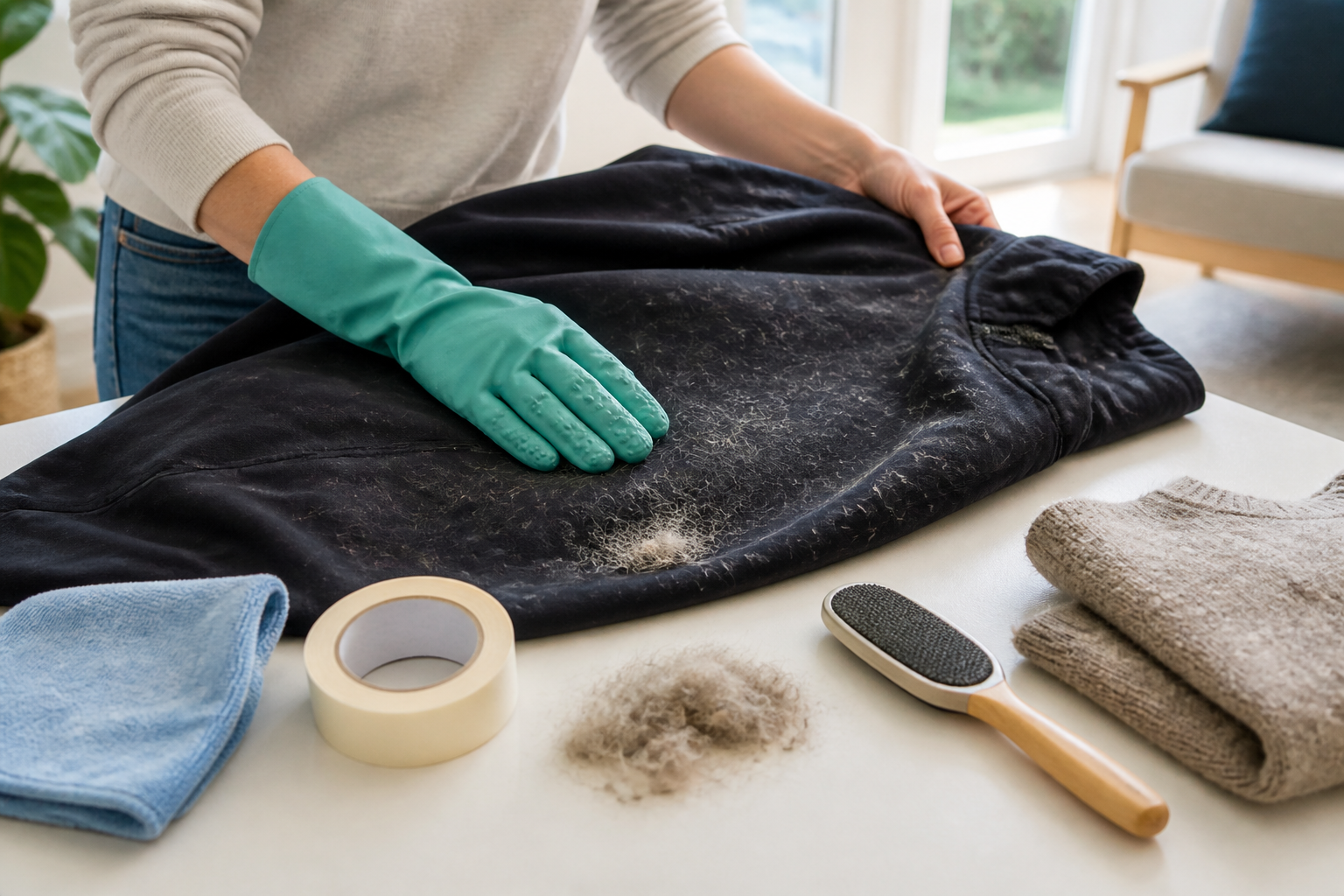
Pet hair has a way of finding its way onto shirts, trousers, coats, and nearly every other item of clothing. A lint roller is convenient, but it is not the only solution. With a few ordinary household items and the right technique, you can remove pet hair from clothes without a lint roller.
The best method depends on the fabric and the type of hair involved. Loose hair can often be swept away by hand, while deeply embedded hair may need rubber, mild moisture, adhesive tape, or gentle brushing. The key is to work in one direction, avoid damaging the fabric, and remove as much hair as possible before washing the garment.
Quick Ways to Remove Pet Hair From Clothes
For a small amount of loose hair, start with the simplest option: clean, dry hands. Place the garment on a flat surface and brush the fabric in one direction with your palm or fingertips. Hair will often collect into small rolls that are easier to pick up. This works best on smooth, sturdy fabrics and freshly shed hair that has not worked into the fibers.
If dry hands are not enough, try one of these quick alternatives:
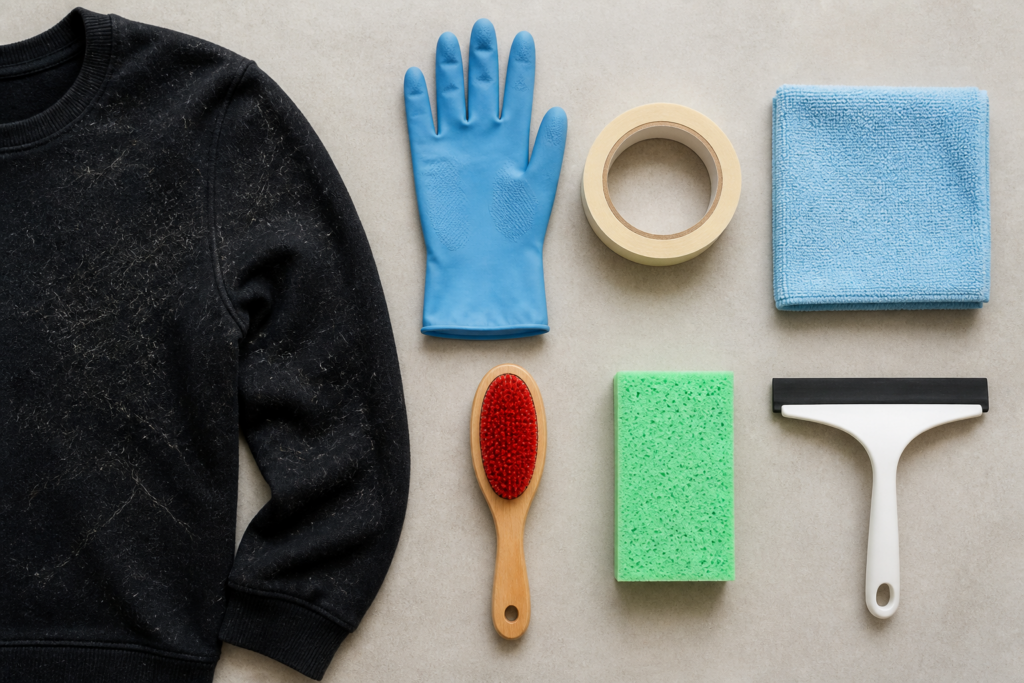
- Sticky tape: Wrap masking tape or packing tape around your hand with the sticky side facing out. Press it lightly against the clothing, lift, and repeat. Replace the tape when it becomes covered with hair.
- A damp rubber glove: Put on a clean rubber or latex-free household glove and lightly dampen it. Sweep your hand across the fabric in one direction. The rubber gathers hair into visible clumps.
- A slightly damp sponge: Use a clean, barely damp sponge and wipe the garment gently. Rinse or brush off the collected hair regularly so you do not spread it around.
- A microfiber cloth: A dry microfiber cloth can attract loose fibers, while a slightly damp one can gather hair that is clinging more tightly.
For speed, tape is usually useful on small areas, such as a sleeve or the front of a shirt. A rubber glove or microfiber cloth covers more surface area and is often better for a coat, blanket, or pair of trousers. If the hair is heavily embedded, use a fabric brush or rubber tool rather than relying on repeated rubbing.
Whichever method you choose, work from the top of the garment toward the bottom. Collect the hair frequently instead of continuing to rub it across the fabric. This reduces static and prevents already-removed hair from settling elsewhere.
Household Items That Work as Lint Roller Alternatives
Many everyday items can help remove pet hair from fabric. Each has advantages, and some are more appropriate for certain materials than others.
Rubber Gloves
Rubber gloves are among the most effective lint roller alternatives for removing dog hair from clothes. The slightly textured surface creates enough friction to gather hair without requiring much pressure. Use the glove dry for light shedding or barely damp for hair that is clinging to the fabric.
Do not soak the glove or the clothing. Too much water can spread hair, leave water marks, or make the garment take longer to dry. A few light passes are usually more effective than aggressive scrubbing.
Masking Tape or Packing Tape
Adhesive tape can pick up pet hair from smooth, durable fabrics. Wrap a short length around your fingers or hand, sticky side out, then press and lift rather than dragging it across the garment. This helps capture hair without stretching the fabric.
Masking tape is generally less aggressive than strong packing tape, but all adhesives should be tested first. Apply a small piece to an inconspicuous area, particularly on dark clothing, wool, velvet, satin, or other delicate materials. Strong adhesive may leave residue, lift fibers, or affect the finish.
Microfiber Cloths
A microfiber cloth is useful when you want a reusable option. A dry cloth works well on loose hair and surface dust. For more stubborn hair, dampen the cloth very slightly and wring it out thoroughly before wiping the garment.
Microfiber is particularly practical for jackets, work uniforms, and upholstery-like fabrics. Wash the cloth separately or shake it outdoors after use so the collected hair does not transfer to other laundry.
Fabric Brushes
A fabric brush or clothes brush can remove pet hair while also smoothing the garment. Use short, gentle strokes in one direction. A brush with soft or medium bristles is suitable for many durable fabrics, but very stiff bristles may pull at knits or roughen delicate surfaces.
Clean the brush frequently during the process. If it becomes covered in hair, it will stop lifting effectively and may simply push the hair around.
A Squeegee
A small, clean rubber squeegee can work on large, flat sections of sturdy clothing, such as a heavy jacket or workwear. Move it gently in one direction to gather hair into a pile. This method is less suitable for delicate fabrics, loose knits, or garments with raised decorative details.
Use the Dryer to Loosen Pet Hair
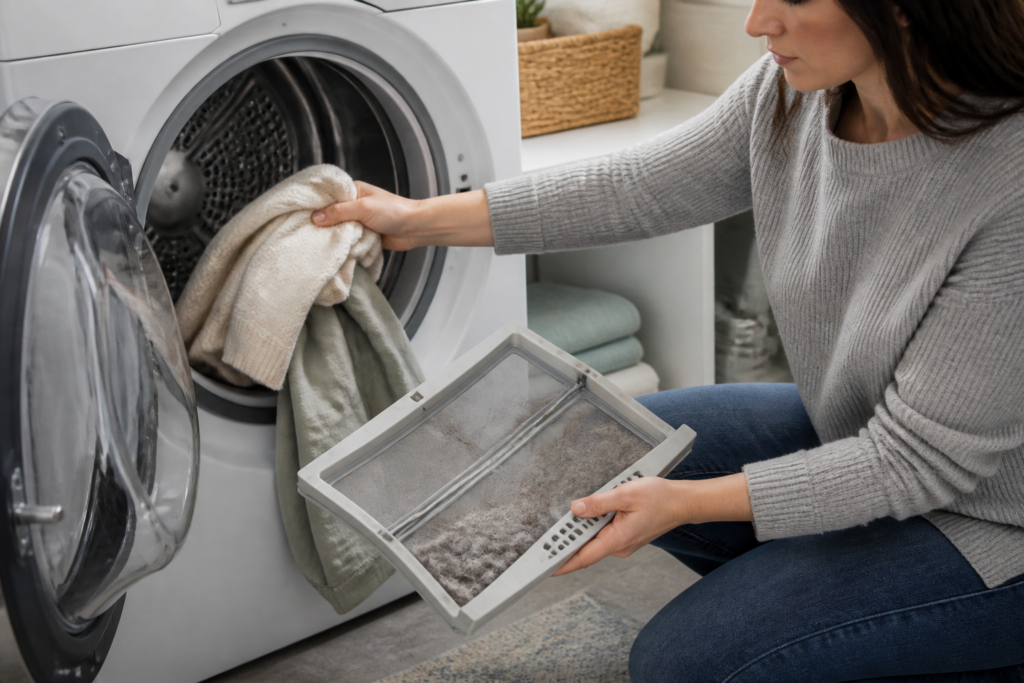
A dryer can help loosen pet hair before washing, especially when the garment is covered in loose or moderately embedded hair. Place the dry clothing in the dryer and select an air-fluff or no-heat cycle. If that option is unavailable, use the lowest suitable heat setting for the fabric.
Run the cycle for about 10 minutes, then remove the clothing outdoors or over an easy-to-clean surface and shake it out. Clean the lint trap immediately afterward. Pet hair may collect there along with ordinary lint, and a full trap can reduce airflow and dryer performance.
Always check the care label before using a dryer. High heat can shrink some fabrics, damage elastic, affect prints, or set stains. Avoid using heat on garments that are labeled air-dry only. The dryer is intended to loosen hair, not replace all other removal steps, so inspect the clothing afterward and use a glove, brush, or cloth for remaining strands.
Washing Clothes With Pet Hair
Washing can remove some pet hair, but it should not be the first step when clothing is heavily covered. Loose hair may collect inside the washing machine, cling to other garments, or remain in the drum and transfer during a later load.
Before washing, shake the garment outdoors if possible. Then use dry hands, tape, a rubber glove, or a fabric brush to remove the visible surface hair. If the garment is suitable for a dryer, an air-fluff cycle can be used before washing.
Sort clothing according to color and care instructions, and avoid overloading the washer. Crowded garments have less room to move, which can make it harder for hair and debris to rinse away. After the cycle, inspect the drum, door seal, and any accessible filter for collected hair. Follow the washing machine manufacturer’s instructions before cleaning or opening a filter.
Do not assume that fabric softener or special additives will solve a heavy pet-hair problem. Proper pre-removal is usually more reliable and reduces the amount of hair entering the machine in the first place.
Methods for Different Fabric Types
Smooth, Durable Fabrics
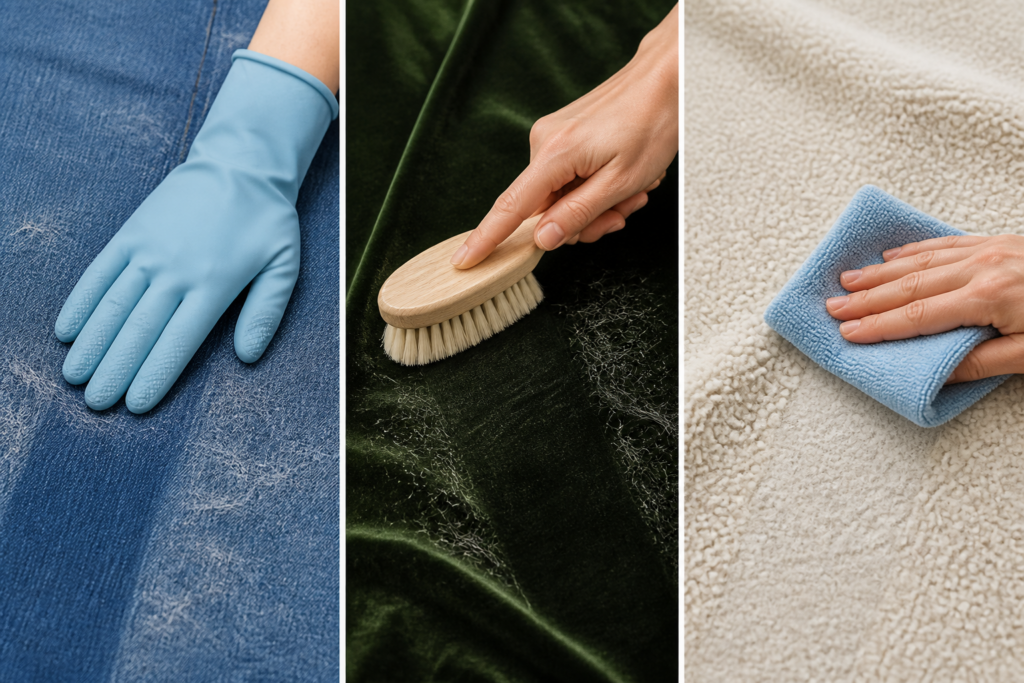
Cotton shirts, denim, canvas, polyester blends, and many synthetic jackets can usually tolerate several pet hair removal methods. Start with a dry hand, fabric brush, rubber glove, or microfiber cloth. Tape can be useful for isolated areas, but test it first if the garment has a special finish or dark dye.
For stubborn hair, use a barely damp rubber glove and moderate pressure. Avoid repeated hard rubbing, which can create friction and cause some fabrics to look worn.
Delicate Fabrics
Silk, lace, fine wool, velvet, and garments with loose embellishments need a gentler approach. Use a soft clothes brush or barely damp microfiber cloth with light strokes. You can also lift visible strands by hand rather than rubbing the entire surface.
Avoid strong adhesive, rough sponges, stiff brushes, and excessive moisture. Do not scrape delicate fabric with a blade or hard-edged tool. If the care label recommends professional cleaning, follow those instructions rather than experimenting with a household method.
Knits and Fleece
Knitted clothing and fleece can trap hair between fibers. A clean rubber glove or soft fabric brush often works well, but use light pressure and short strokes. Work with the direction of the knit when possible.
Avoid pulling individual hairs forcefully, as this can stretch loops or draw out fibers. Excessive friction may also create pilling, especially on fleece and synthetic knitwear.
Dog Hair vs. Cat Hair Removal
There is no single method that works best for every dog or cat hair problem. Hair texture and how tightly it clings to the fabric matter more than the animal itself.
Longer dog hair is often easier to see and gather into clumps, particularly with a rubber glove or dry hand. However, short dog hair can become embedded in upholstery-like fabrics and may require brushing or gentle moisture.
Cat hair is frequently fine and light, so it can cling tightly through static. A slightly damp microfiber cloth, rubber glove, or soft fabric brush may work better than simply shaking the garment. On smooth fabric, tape can quickly pick up the remaining strands.
Choose the method based on the garment and the hair’s behavior. Use adhesive for loose surface hair on suitable fabric, rubber for hair that clings, and gentle brushing when strands are caught in a knit or fleece surface.
How to Prevent Pet Hair From Sticking to Clothes
Removing pet hair is easier when less of it reaches your clothing in the first place. Keep pets away from clean laundry, closets, and clothing storage areas when practical. Store freshly washed items in closed drawers or wardrobes rather than leaving them on an open chair or bed.
Place washable blankets or covers on furniture where your pets like to rest. Launder these covers regularly, following their care instructions, so they capture loose hair before it reaches your clothes. Washing pet bedding frequently can also reduce the amount of hair circulating around the home.
Regular brushing helps remove loose fur before it lands on clothing, floors, and furniture. Choose grooming tools appropriate for your pet’s coat, and brush in an easy-to-clean area. If your pet sheds unusually heavily or develops bald patches, irritated skin, or other changes, speak with a veterinarian.
When practical, change clothes after prolonged contact with a shedding pet. You can also keep a washable overshirt or house coat for cuddling, grooming, or sitting on pet furniture.
Mistakes to Avoid
- Do not use excessive water. A soaked sponge or glove can spread hair and leave the garment damp.
- Do not apply high heat without checking the care label. Heat may shrink, warp, or damage fabric.
- Do not wash heavily covered clothing immediately. Remove loose hair first to protect the washer and other garments.
- Do not scrub delicate fabrics aggressively. Friction can cause pilling, stretching, or surface damage.
- Do not use untested adhesive. Strong tape may leave residue or lift fibers.
- Do not use dirty tools. A used sponge, glove, or brush can transfer dust, oils, and odors onto clothing.
Frequently Asked Questions
What household items can remove pet hair from clothes?
Rubber gloves, masking tape, packing tape, microfiber cloths, slightly damp sponges, fabric brushes, and small rubber squeegees can all serve as lint roller alternatives. Use tape for small areas, rubber or microfiber for clinging hair, and a brush for durable fabrics or textured surfaces.
Can a damp rubber glove or sponge remove pet hair effectively?
Yes. Slight dampness helps hair gather into clumps, especially when used with a rubber glove. The glove or sponge should be barely damp, not wet. Use gentle strokes and avoid this method on delicate fabrics unless the care label and a small test area indicate it is safe.
Does putting clothes in the dryer help loosen pet hair?
An air-fluff or low-heat dryer cycle can loosen surface hair before washing. Clean the lint trap afterward, and check the garment’s care label first. Avoid high heat when the fabric may shrink or become damaged.
How should different fabric types be treated?
Use tape, rubber gloves, brushes, or microfiber cloths on smooth, durable fabrics. Choose gentle brushing or a barely damp cloth for delicate materials. For knits and fleece, lift hair carefully with rubber or soft bristles and avoid pulling fibers or applying excessive friction.
Can washing clothes remove embedded pet hair?
Washing may remove some remaining hair, but it is not the best first step for clothing covered in loose fur. Pre-remove as much hair as possible to prevent buildup in the washer and transfer to other garments.
What methods work best for dog hair versus cat hair?
Longer dog hair may gather easily with a dry hand or rubber glove, while fine cat hair may need a slightly damp cloth, rubber glove, or gentle brush. However, the fabric and how tightly the hair is attached are more important than whether it came from a dog or cat.
Which pet hair removal methods should be avoided?
Avoid excessive heat, soaking wet tools, aggressive scraping, and strong adhesive that has not been tested. These methods can shrink clothing, leave marks, pull fibers, or damage delicate surfaces.
Final Tips for Hair-Free Clothing
You do not need a lint roller to remove pet hair from clothing. Start with the least aggressive option that suits the fabric: dry hands for loose strands, tape for small areas, a slightly damp rubber glove for clinging hair, or a fabric brush for textured materials. When necessary, use an air-fluff dryer cycle before washing, then clean the lint trap and inspect the washer afterward.
Regular pet grooming, washable furniture covers, frequent bedding care, and closed clothing storage can reduce the problem over time. By matching the tool to the fabric and using light, controlled strokes, you can keep everyday clothes looking cleaner with simple items already found around the home.