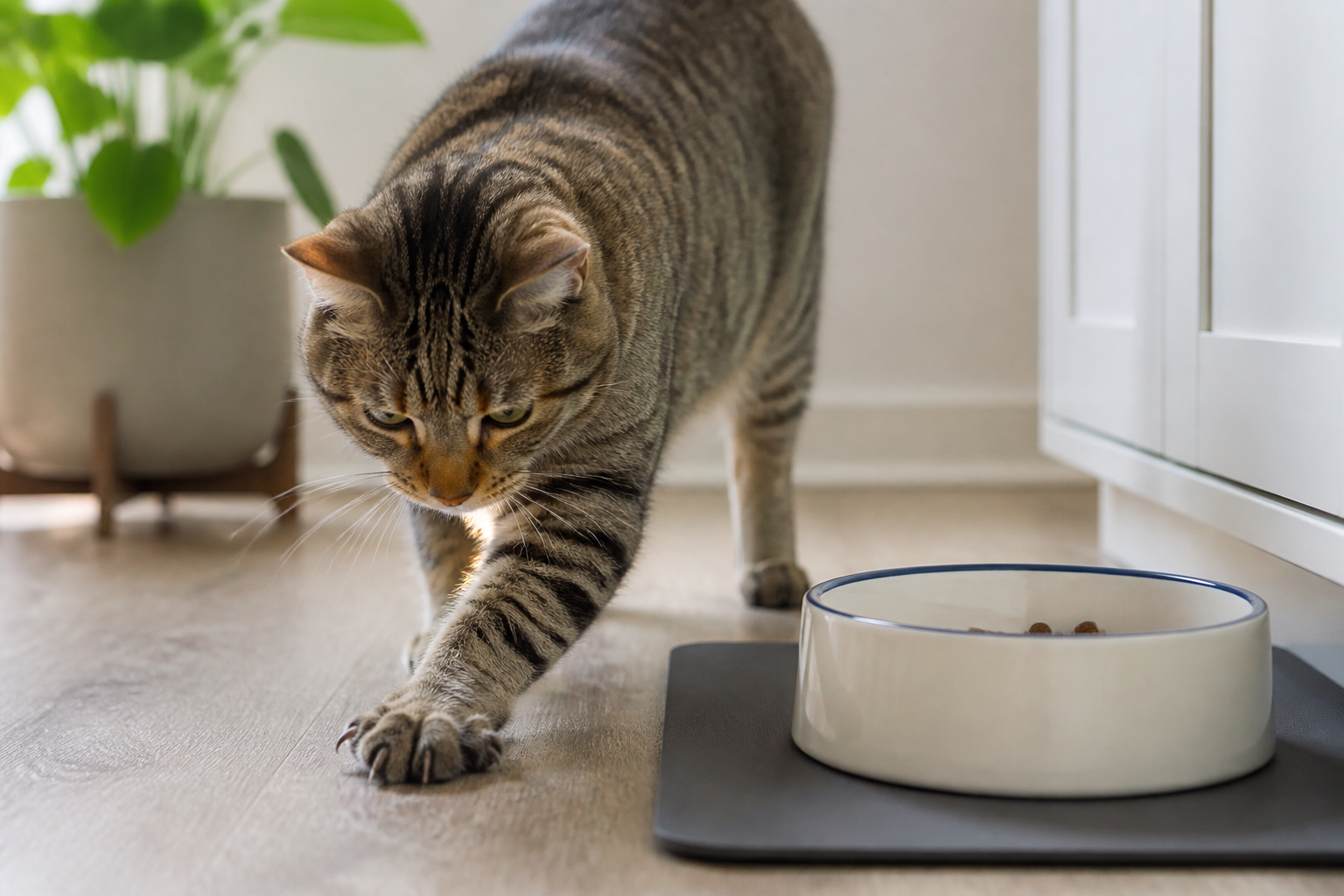
In most cases, a cat that scratches or paws at the floor beside her food is performing a harmless feeding ritual, not signaling a serious problem. The motion may be an instinctive attempt to cover or hide the smell of food, but it can also simply become a learned habit.
Scratching may happen after eating, when food remains, or before a meal. If your cat eats normally, maintains her usual weight and energy, and shows no obvious discomfort, the scratching alone usually does not mean she dislikes the food.
Why Cats Scratch Beside Their Food
Some cats make digging or covering motions around food even when there is nothing to bury. They may paw at the floor, drag a nearby mat, or scratch beside the bowl without moving anything. This likely reflects an instinctive or habitual response to the food’s scent, rather than a clear message about whether the meal is acceptable.

What matters more is what happens next. Scratching before eating is usually unimportant if your cat settles down and eats normally. A new pattern deserves closer attention when it comes with reluctance to approach, eating less, repeatedly walking away, or visible discomfort.
For example, a cat that approaches the bowl and retreats, drops food, drools, chews on one side, or tries to eat and then stops may be having trouble rather than simply completing a routine. A recent change in food, bowl, feeding location, or another pet’s presence can also make the area less comfortable, but the scratching itself cannot identify the cause.
Simple Changes to Try
If your cat is eating well and the behavior is not causing a problem, you do not need to stop it. If the area is becoming messy or your cat seems hesitant at meals, try one change at a time:
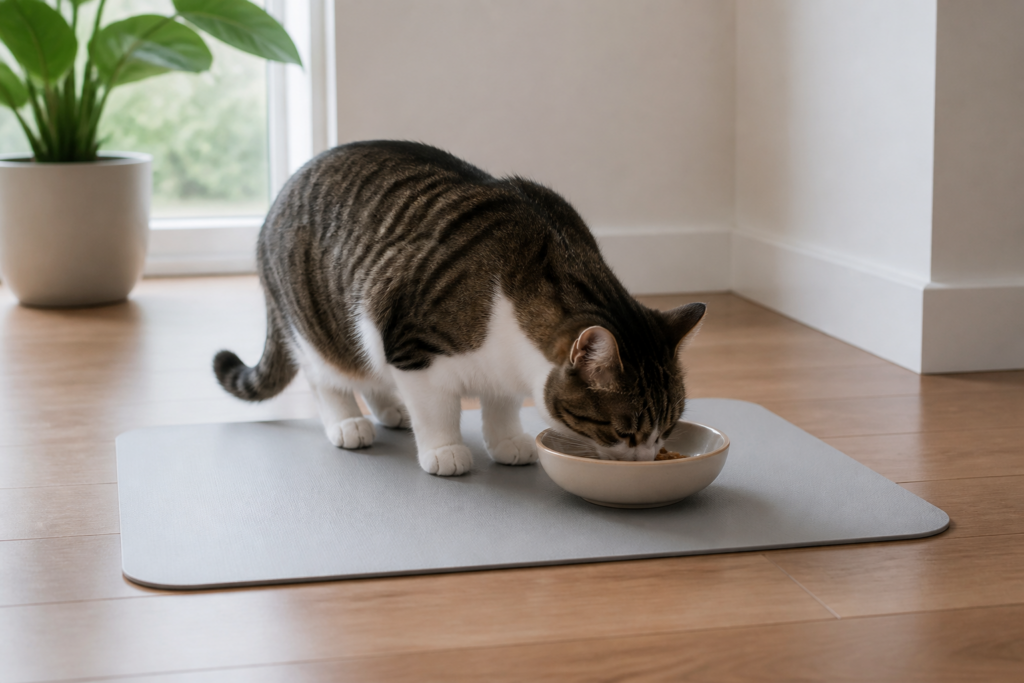
- Move the bowl to a quiet, open spot. Keep it away from heavy foot traffic, sudden noise, and other pets that may hover nearby. Observe your cat over several meals.
- Check the bowl and mat. Use a stable bowl and a flat, easy-to-clean surface that does not slide, bunch up, or trap your cat’s paws.
- Remove uneaten wet food. Do not leave it sitting out indefinitely; follow the product’s storage and serving guidance.
- Do not punish the scratching. Quietly clean up or move the mat instead. Scolding can make the feeding area more stressful without changing the underlying habit.
There is usually no need to change meal portions just because your cat scratches around leftovers. Focus first on whether she is eating an appropriate amount for her usual diet and whether she otherwise seems well.
When to Contact a Veterinarian
Call your veterinarian if the scratching occurs with a marked or persistent change in appetite, especially if your cat approaches food but cannot eat comfortably. Other reasons to seek veterinary advice include:
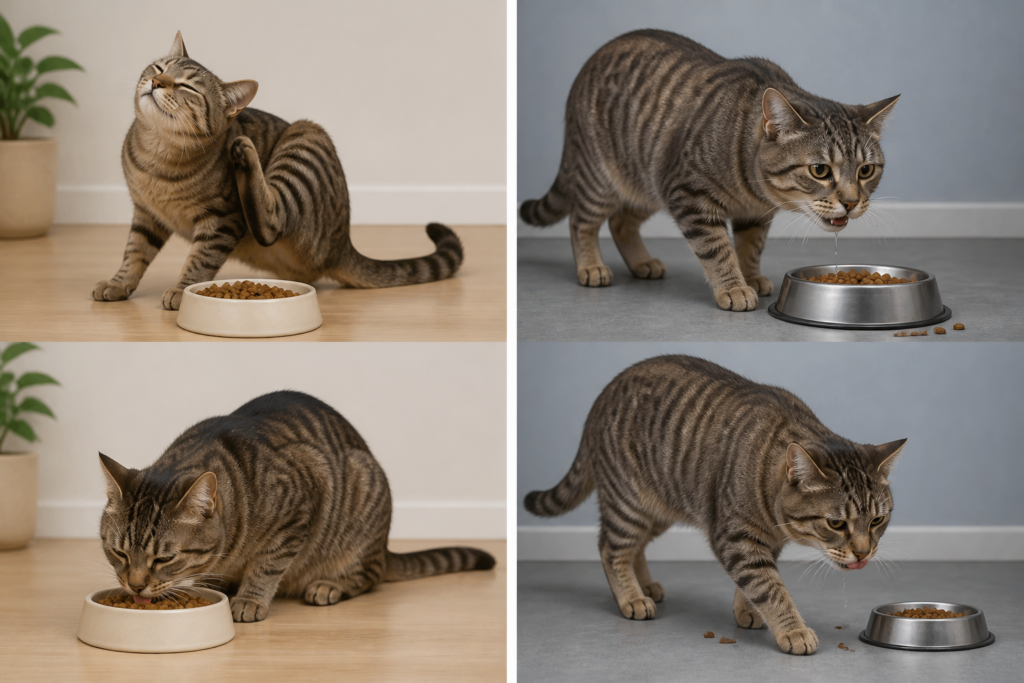
- refusing food or eating substantially less than usual;
- drooling, pawing at the mouth, difficulty chewing, or dropping food;
- repeated vomiting, difficulty keeping food down, or diarrhea;
- unusual weakness, marked lethargy, hiding, or weight loss; or
- a sudden major change in behavior, particularly in a kitten, older cat, or cat with an existing health condition.
The urgency depends on how much and how long your cat has been eating less, along with her age and health. A cat that is not eating or appears ill should not be left waiting for the scratching to resolve.
If she is eating normally and acting normally, monitor the pattern and make a minor environmental adjustment only if needed. In that common situation, scratching the floor next to the food is usually just a harmless instinctive or learned routine.