
How to Stay Motivated When You Feel Like Giving Up
Feeling like giving up is more common than most people admit. You start a goal with energy and clear intention — whether it’s building a business, getting in shape, learning a new skill, writing consistently, or improving your finances — and for a while everything feels possible. Then the initial excitement fades. Progress slows. Obstacles appear. Self-doubt grows louder. Suddenly the same goal that once felt inspiring starts to feel heavy, pointless, or impossible.
This dip is normal. Motivation is not a permanent state. It naturally rises and falls. The people who reach long-term goals are rarely the ones who feel constantly inspired. They are the ones who learn how to keep moving even on the days when motivation is low or completely missing.
The strategies below are practical ways to handle those low periods. They focus less on forcing yourself to “feel motivated” and more on building systems, perspective, and habits that carry you through the hard stretches.
Table of Contents
- Accept That Motivation Naturally Fluctuates
- Reconnect With Your Deeper Reason
- Shrink the Goal Until It Feels Doable
- Focus on Systems Instead of Outcomes
- Track Progress in Visible Ways
- Manage Your Energy, Not Just Your Time
- Design Your Environment for Follow-Through
- Use Accountability Without Shame
- Practice Self-Compassion Instead of Self-Criticism
- Limit the Influence of Comparison
- Create a “Minimum Viable Effort” Rule
- Review and Adjust Instead of Quitting
- Final Thoughts
1. Accept That Motivation Naturally Fluctuates
One of the biggest reasons people quit is the belief that something is wrong with them when motivation disappears. In reality, motivation is designed to come and go. It is strong at the beginning of a new goal because of novelty and hope. Over time, as the work becomes familiar and results take longer than expected, that emotional fuel decreases.
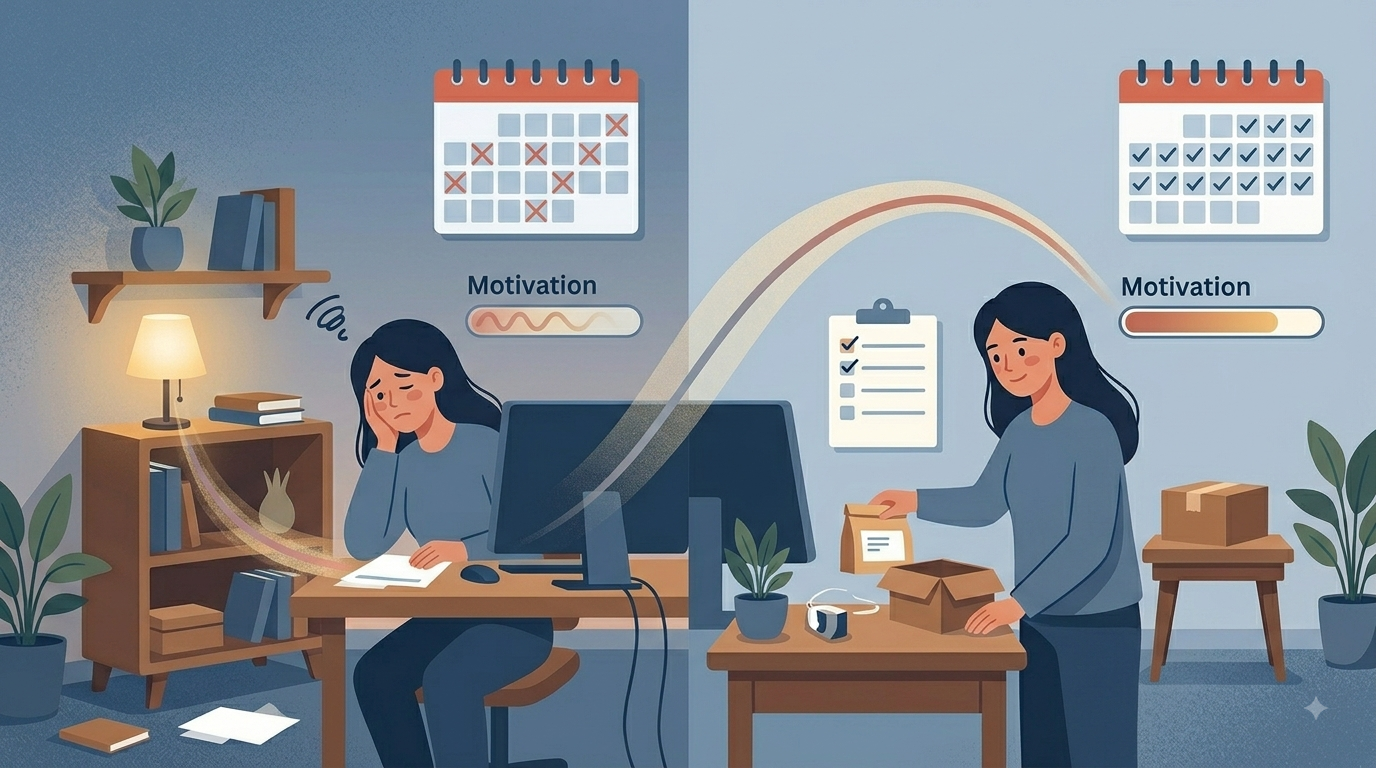
Accepting this pattern removes a layer of unnecessary pressure. Instead of interpreting low motivation as a sign that you should quit or that you lack discipline, you can treat it as a normal phase. This shift in mindset alone makes it easier to keep going.
Real-life example: When Maya started her side business, she felt excited for the first six weeks. Then the novelty wore off and sales were slower than expected. She nearly quit, thinking she had lost her passion. Once she recognized that the drop in motivation was predictable rather than personal, she stopped waiting to “feel ready” again and focused on simply completing the next small task each day.
2. Reconnect With Your Deeper Reason
Surface-level goals are fragile. “I want to lose weight,” “I want to make more money,” or “I want to be productive” often lose power when things get difficult. Stronger motivation usually comes from a deeper personal reason — the underlying why.
Ask yourself: What will this change make possible in my life? How will it affect my health, freedom, relationships, confidence, or future options? Writing down the deeper reason and reviewing it during low moments can restore a sense of purpose when the daily work feels pointless.
Real-life example: Jordan wanted to get out of debt but kept falling off track. When he reframed the goal as “I want to stop feeling anxious every time I check my bank account and be able to say yes to opportunities without worrying about money,” the purpose became more emotional and real. That clearer why helped him stay consistent during months when progress felt slow.
3. Shrink the Goal Until It Feels Doable
When motivation drops, big goals often feel overwhelming. The gap between where you are and where you want to be starts to look too wide. In those moments, the most effective move is often to make the next step almost ridiculously small.
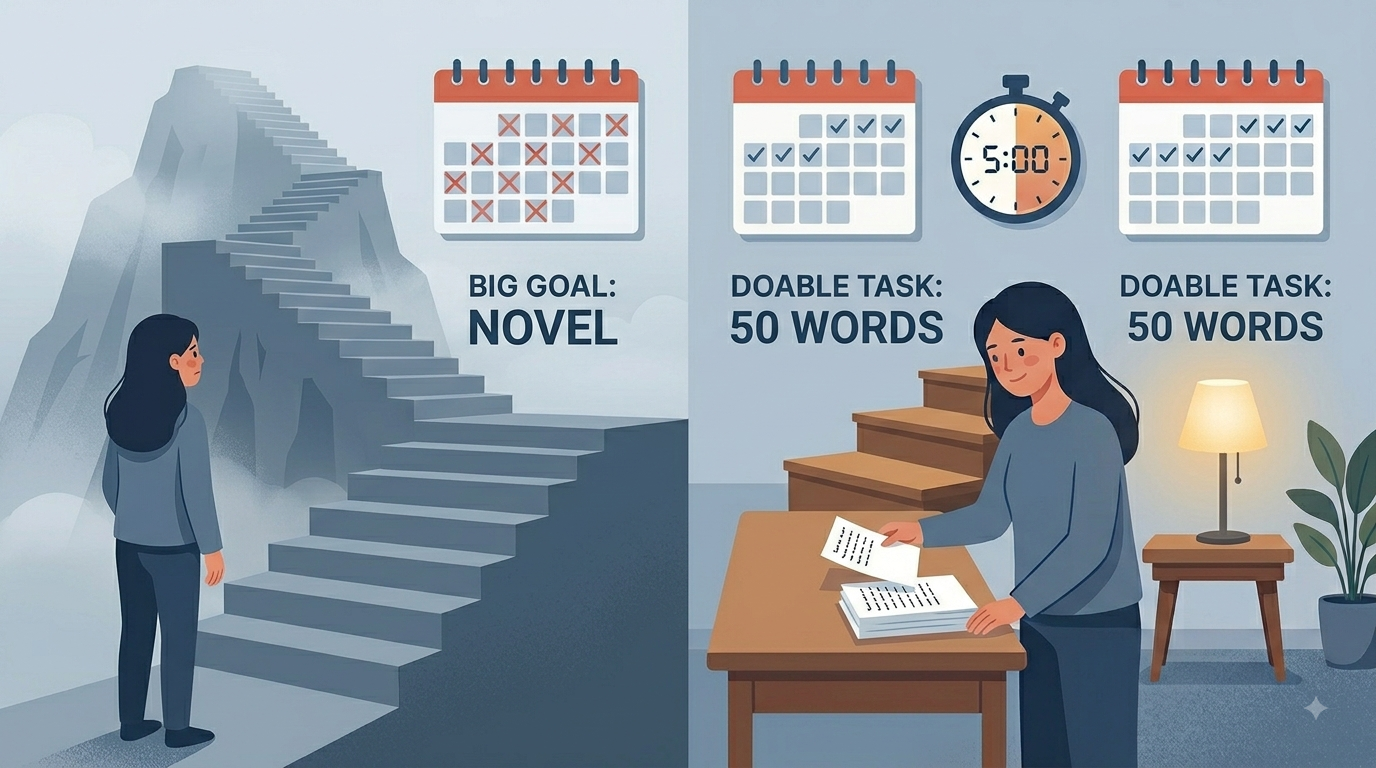
Instead of focusing on the entire project, ask: What is the smallest version of this action I can complete today? A five-minute version is better than a perfect version you never start. Momentum builds from action, not from waiting until you feel ready.
Real-life example: After weeks of avoiding her novel, Priya lowered her daily target from 1,000 words to just 50 words or ten minutes of writing. The smaller target felt manageable even on low-energy days. Most days she wrote more than 50 words once she started, but the low bar made it easier to begin.
4. Focus on Systems Instead of Outcomes
Outcomes are often delayed and partly outside your control. Systems — the regular actions you take — are within your control every day. When motivation fades, shifting attention from “Am I seeing results yet?” to “Did I follow my system today?” reduces frustration and keeps you moving.
A good system is specific and repeatable. It might be writing for 25 minutes each morning, walking after lunch, or reviewing finances every Sunday. The system becomes the measure of success, which is more stable than waiting for external results.
Real-life example: Chris wanted to improve his fitness but got discouraged when the scale didn’t move quickly. He switched his focus to a simple system: strength training three times a week and walking on the other days. By measuring success based on completed sessions rather than weekly weight changes, he stayed consistent long enough for real progress to appear.
5. Track Progress in Visible Ways
The human brain often underestimates how far it has already come, especially during difficult stretches. When effort feels invisible, quitting becomes more tempting. Visible tracking counters this by making progress concrete.
This can be as simple as a checklist, a calendar where you mark completed days, a notes app log, or a basic spreadsheet. Seeing a chain of effort builds evidence that you are someone who follows through, which strengthens identity and motivation over time.
Real-life example: Lena started marking an X on a wall calendar every day she completed her language study session. After three weeks the visual chain became something she didn’t want to break. On days when she felt like skipping, the calendar made the cost of stopping more noticeable than the temporary comfort of quitting.
6. Manage Your Energy, Not Just Your Time
Motivation is heavily influenced by physical and mental energy. Trying to force high-effort work when you are exhausted, underslept, or burned out is usually ineffective. In low-motivation periods, it often helps to protect the basics: sleep, nutrition, movement, and recovery.
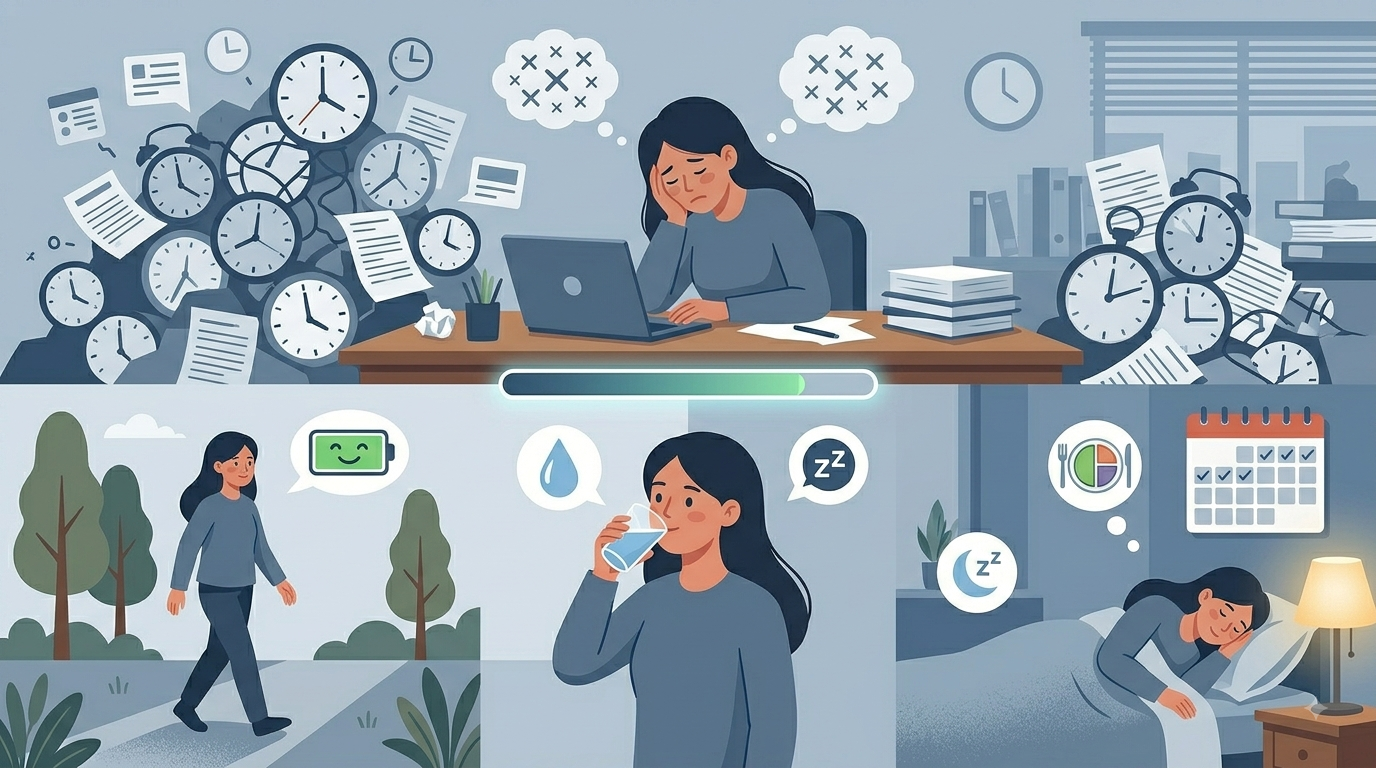
Sometimes the most productive thing you can do is rest properly so that effort becomes possible again. Pushing through chronic fatigue often leads to lower-quality work and faster burnout.
Real-life example: After months of forcing late-night work sessions, Diego noticed his motivation collapsing. When he started prioritizing a consistent sleep schedule and short walks during the day, his capacity for focused work returned. The same tasks that had felt impossible on low energy became manageable again.
7. Design Your Environment for Follow-Through
Willpower is limited. Environment often shapes behavior more reliably than motivation. If the desired action is hard to start and the distraction is easy, low-motivation days will usually win.
Make the important action easier and the competing distractions harder. This might mean laying out workout clothes the night before, keeping your phone in another room while working, preparing healthy food in advance, or removing apps that consistently pull your attention away.
Real-life example: Sophia wanted to read more but kept defaulting to her phone in bed. She started charging her phone across the room and leaving a book on her pillow. The small friction of getting up for the phone and the easy access to the book changed her default behavior without requiring constant willpower.
8. Use Accountability Without Shame
Accountability works best when it supports action rather than creating fear or embarrassment. Sharing your goal with someone who checks in, joining a group with similar aims, or simply reporting progress to a friend can increase follow-through.
The key is choosing accountability that feels helpful rather than harsh. Shame-based pressure often backfires and leads to avoidance. Supportive accountability creates a sense of external structure when internal motivation is weak.
Real-life example: Marcus told a friend he would send a short weekly update on his job-search activities. Knowing someone would ask about his progress made it harder to ignore the work completely on low days. The check-ins stayed light and practical, which made them sustainable.
9. Practice Self-Compassion Instead of Self-Criticism
Many people believe that being hard on themselves will create motivation. In practice, harsh self-criticism often increases stress and avoidance. When you already feel like giving up, adding shame usually makes the emotional load heavier.
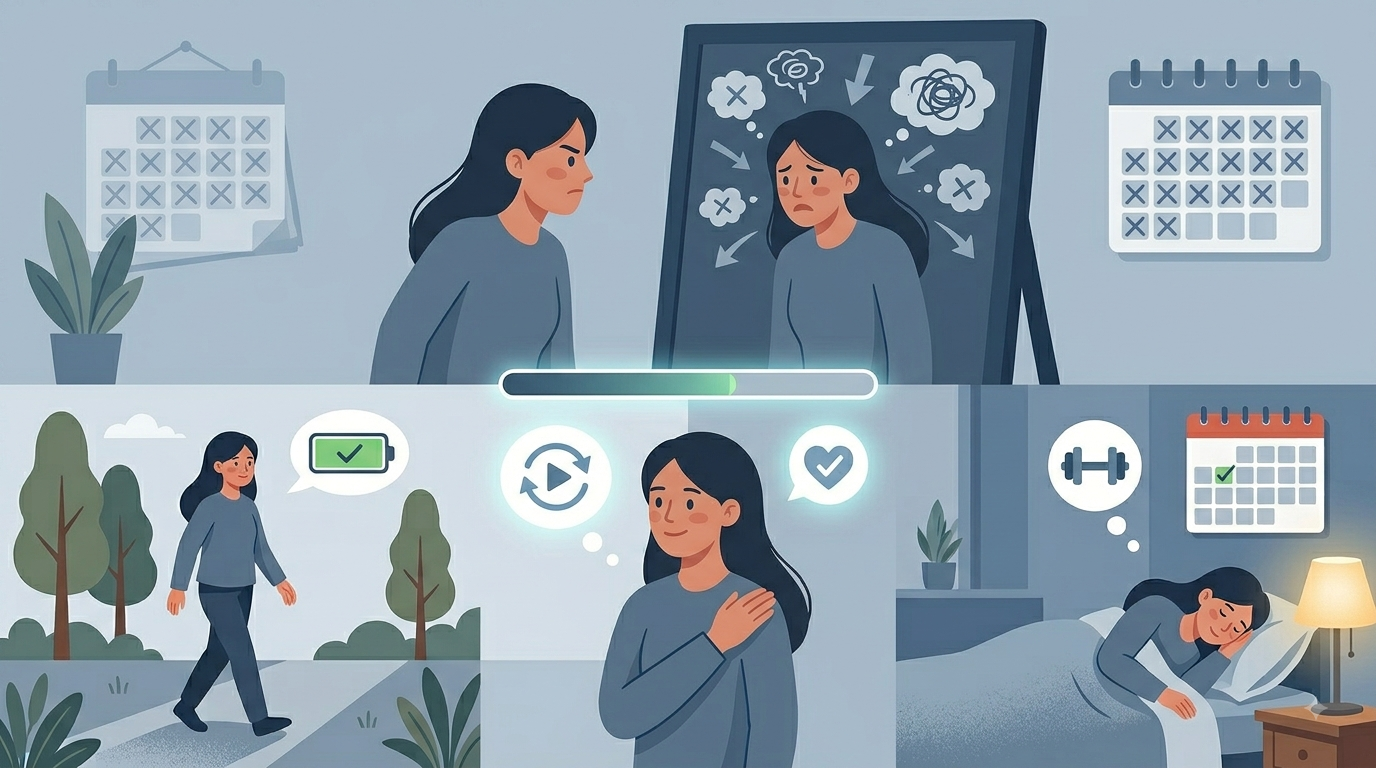
Self-compassion does not mean making excuses. It means treating yourself with the same basic fairness you would offer a friend who is struggling. Acknowledging that the work is hard and that setbacks are normal often makes it easier to begin again.
Real-life example: After missing several workout days, Alicia’s usual pattern was to criticize herself and then avoid the gym out of guilt. When she started responding with a simpler approach — “I missed some days. I can start again today with a short session” — she returned to her routine faster and with less emotional resistance.
10. Limit the Influence of Comparison
Comparing your progress to people further ahead is one of the fastest ways to drain motivation. Social media makes this especially easy. You see polished results without the full context of time, resources, or struggles behind them.
During low-motivation periods, it often helps to reduce exposure to comparison triggers and focus on your own trajectory instead. Your only necessary competition is who you were last month or last year.
Real-life example: When Noah constantly saw peers announcing promotions and new projects online, his own steady progress started to feel inadequate. After limiting social media during the workweek and reviewing his own finished projects from the past year, his sense of momentum returned. The external noise had been distorting his view of his actual effort.
11. Create a “Minimum Viable Effort” Rule
On the hardest days, perfectionism becomes a form of avoidance. If the only acceptable effort is a full, high-quality session, many days will end with nothing done. A minimum viable effort rule gives you permission to do a reduced version instead of quitting entirely.
Decide in advance what the smallest acceptable version of your habit looks like. On low days, completing that minimum still counts. This protects continuity, which is often more important than intensity.
Real-life example: Instead of needing a full one-hour writing session, Elena set a minimum of opening the document and writing one paragraph. On difficult days she often stopped there. On better days she continued. The rule kept her from breaking the chain of consistency during a stressful month.
12. Review and Adjust Instead of Quitting
Sometimes low motivation is a signal that the current approach needs adjustment rather than a sign that the goal itself is wrong. Before deciding to give up, pause and review: Is the goal still meaningful? Is the pace sustainable? Does the method need to change?
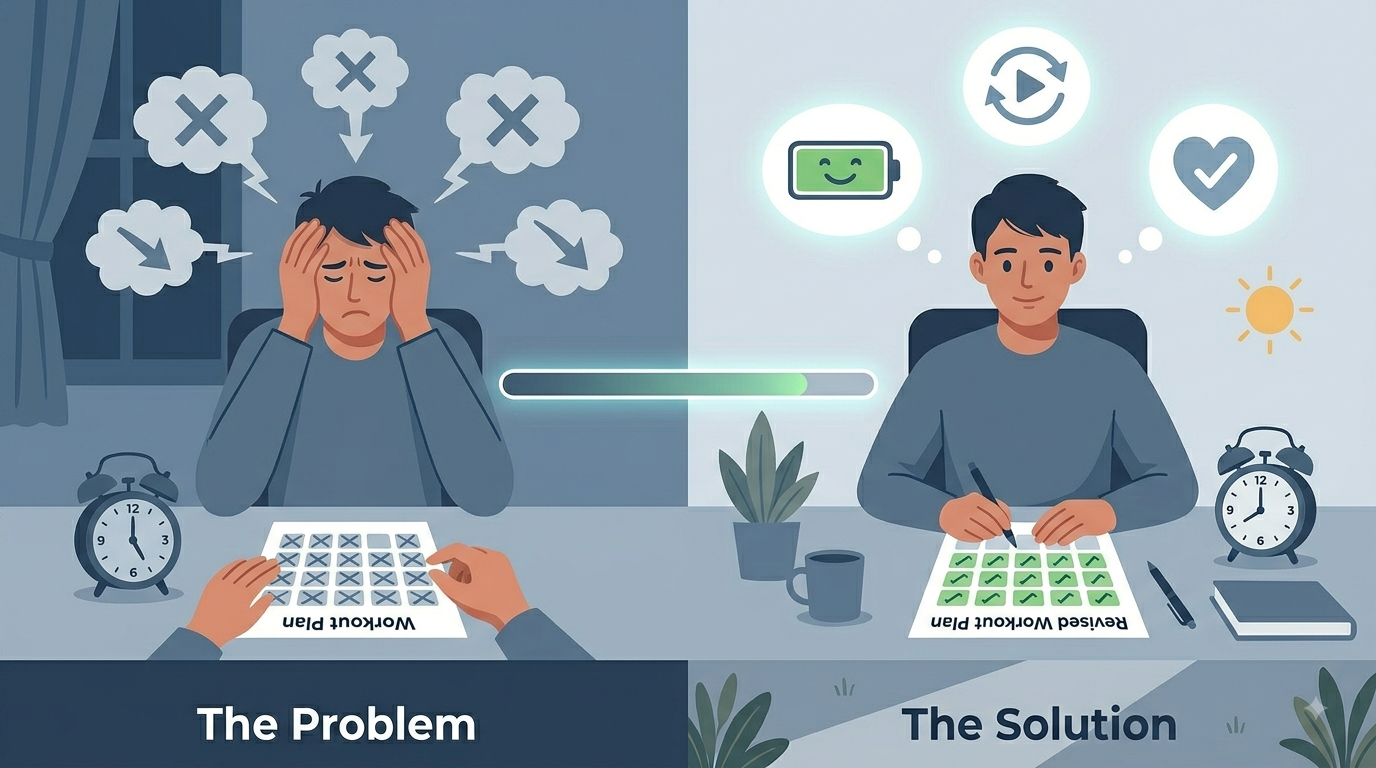
Adjusting the plan is often wiser than abandoning the objective entirely. Quitting removes the possibility of future progress. Revising keeps the door open.
Real-life example: After months of forcing an early-morning routine that never felt natural, Daniel realized the schedule itself was draining him. Instead of quitting his health goals, he moved his workouts to lunchtime and simplified his morning. Motivation improved because the system finally fit his actual life.
Final Thoughts
Staying motivated when you feel like giving up is less about generating constant inspiration and more about building a relationship with yourself that can tolerate difficulty. Motivation will continue to rise and fall. What matters is having ways to keep showing up during the lower periods.
You do not need to feel ready, confident, or inspired to take the next small step. You only need a clear enough reason, a small enough action, and enough self-respect to begin again when you slip.
Most meaningful goals involve stretches where progress feels slow and the emotional reward is delayed. The people who reach the other side are not the ones who never wanted to quit. They are the ones who learned how to continue anyway.
Choose one or two of the approaches above and apply them this week. Momentum rarely returns all at once. It usually rebuilds through small, repeated acts of follow-through — especially on the days when giving up feels easiest.