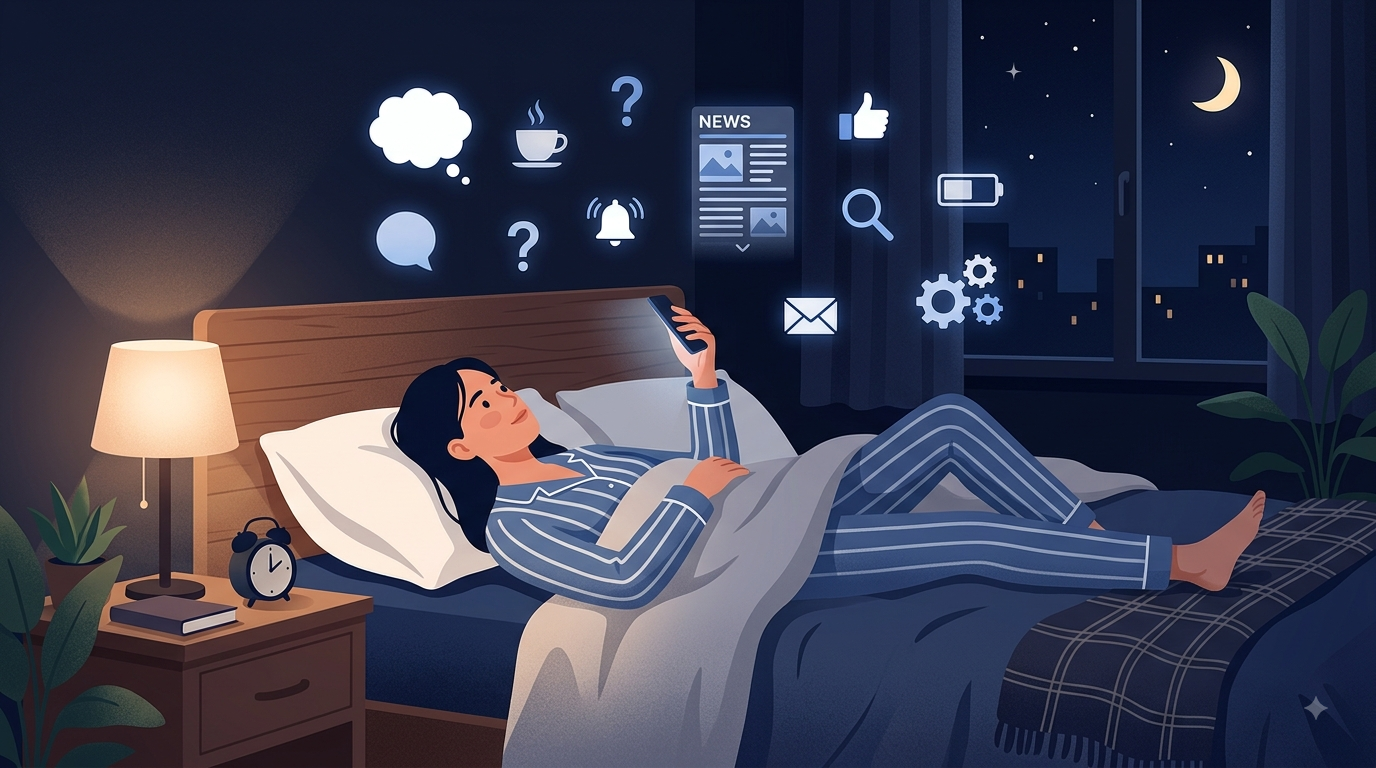
Struggling with sleep is one of the most common and frustrating problems adults face. You feel tired all day, yet when night comes your mind refuses to shut off. Or you fall asleep quickly only to wake up at 3 a.m. and stare at the ceiling. Many people assume the solution must be complicated — special supplements, perfect routines, or a complete lifestyle reset. In reality, sleep usually improves through small, consistent changes that remove the quiet obstacles standing in the way.
Your body already knows how to sleep. The problem is that modern habits often interfere with that natural ability. Late-night scrolling, irregular schedules, caffeine timing, a non-ideal bedroom, and leftover mental stress all send mixed signals to your nervous system. The good news is that you don’t need to fix everything at once. Most people notice meaningful improvement by adjusting just a few key areas.
This guide focuses on practical, realistic changes that work for regular people with jobs, responsibilities, and imperfect schedules. Each suggestion includes not only what to do, but why it matters and how it looks in everyday life.
Table of Contents
- Set a Consistent Sleep and Wake Time
- Create a Simple Wind-Down Routine
- Reduce Screen Time Before Bed
- Make Your Bedroom Cool, Dark, and Quiet
- Be Strategic With Caffeine
- Be Careful With Alcohol Close to Bedtime
- Get Natural Light in the Morning
- Avoid Heavy Meals Late at Night
- Do a Brain Dump Before Bed
- Use Your Bed Only for Sleep
- Keep Naps Short and Early
- Manage Stress Earlier in the Day
- Final Thoughts
1. Set a Consistent Sleep and Wake Time
Your body runs on a circadian rhythm — an internal 24-hour clock that influences when you feel alert and when you feel sleepy. This system works best when it receives consistent signals. Going to bed at 10:30 p.m. one night and 1:00 a.m. the next confuses that clock. Over time, this inconsistency can make it harder to fall asleep, reduce sleep quality, and leave you feeling groggy even after enough hours in bed.
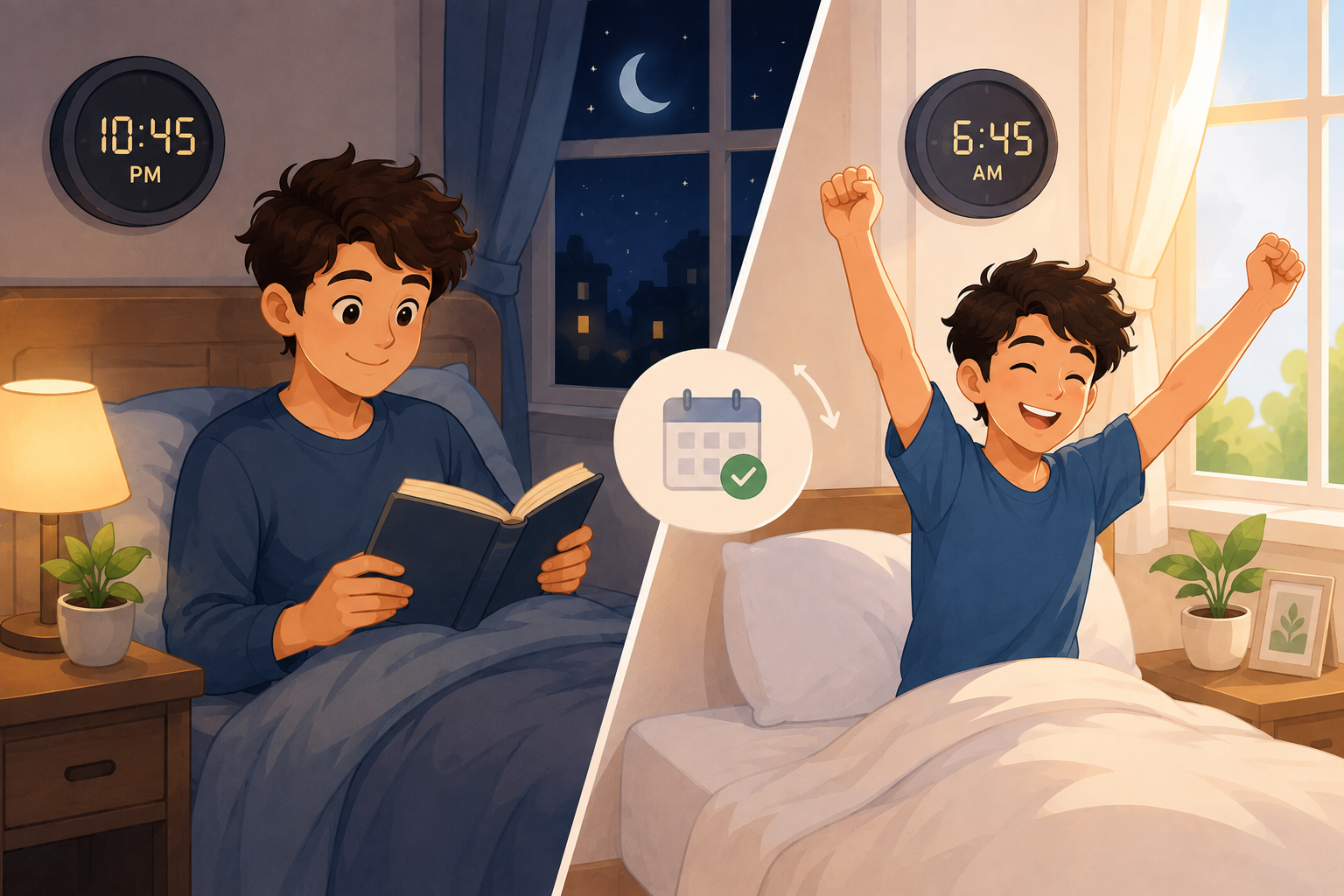
A more stable schedule helps regulate hormones like melatonin and cortisol. You don’t need military-level precision. Aim to keep your bedtime and wake-up time within a one-hour window on most days, including weekends when possible.
Real-life example: Sarah used to stay up late on weekends and sleep in, then struggle every Monday. After committing to a 10:45 p.m. to 6:45 a.m. window most nights (even on Saturday), she found she started feeling sleepy closer to her target bedtime and woke up with less resistance. The change took about two weeks to feel natural.
2. Create a Simple Wind-Down Routine
You can’t expect your brain to switch from high-alert mode to deep rest in five minutes. Throughout the day your nervous system deals with decisions, notifications, conversations, and problems. Jumping straight into bed often leaves your mind still processing everything.
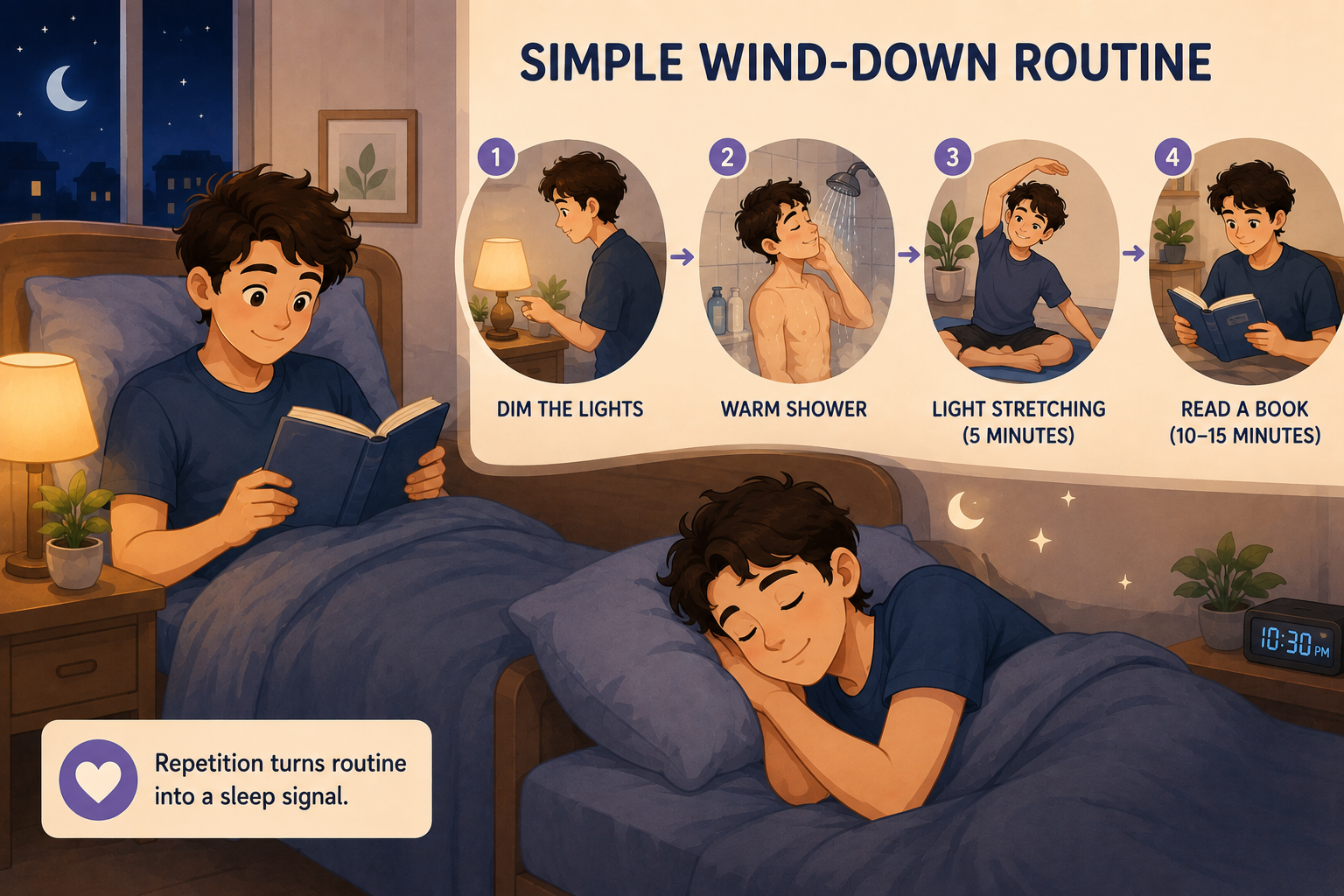
A wind-down routine acts as a bridge. It gives your brain time to downshift. The routine doesn’t need to be long or impressive — 15 to 30 minutes of low-stimulation activity is enough for most people. The power comes from repetition. When you do similar calming activities in the same order most nights, your brain begins to associate those actions with sleep.
Real-life example: Instead of scrolling in bed, Marcus started a simple sequence: dim the lights, take a warm shower, do five minutes of light stretching, and read a physical book for 10–15 minutes. Within ten days he noticed he was yawning before he even got into bed. The routine itself became a sleep signal.
3. Reduce Screen Time Before Bed

Screens affect sleep in two important ways. First, the blue light they emit can delay the release of melatonin, the hormone that helps you feel sleepy. Second — and often more disruptive — is the content itself. News, messages, social media, and emails keep your brain emotionally engaged and in problem-solving mode.
Even if you use night mode or blue-light blockers, stimulating content can still keep your mind alert. A better approach is to set a screen cutoff time, ideally 30–60 minutes before bed. Replace that time with something less activating.
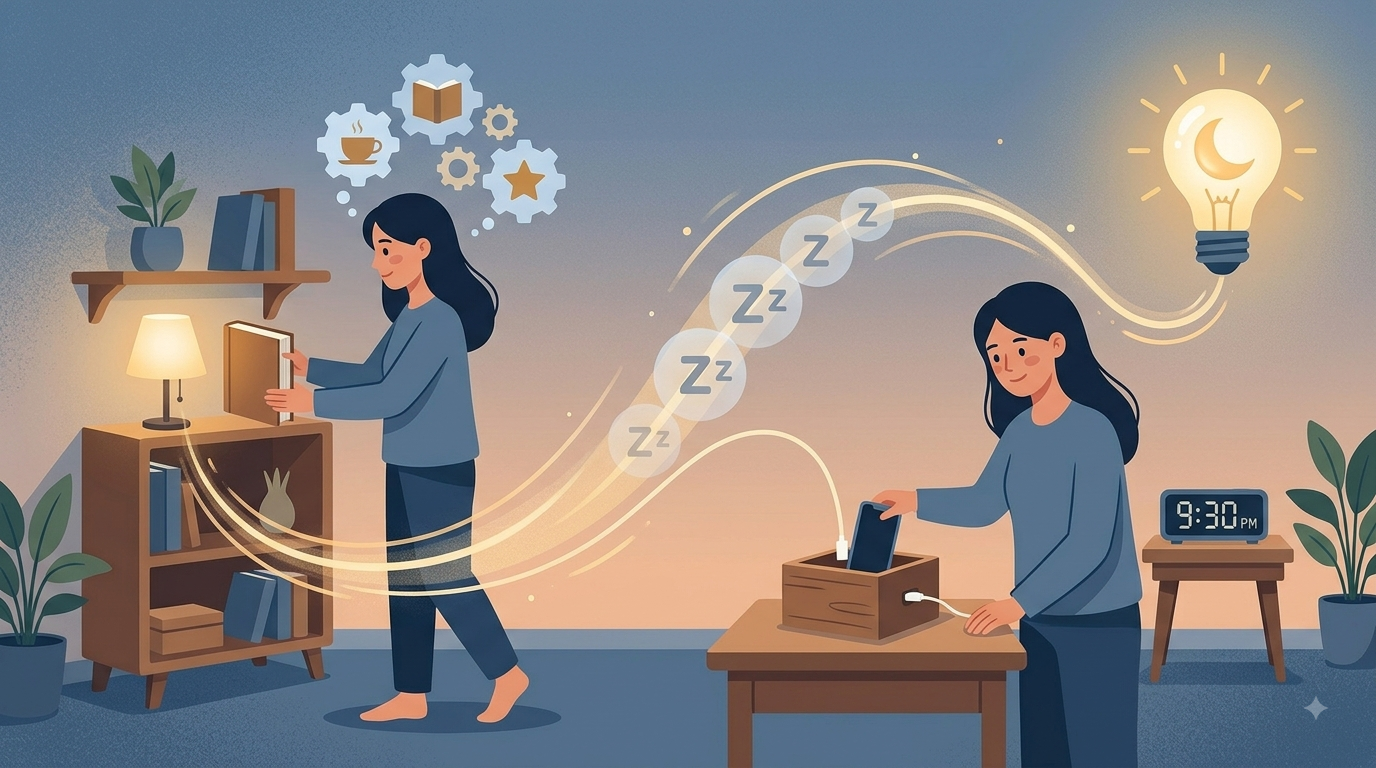
Real-life example: Jessica used to scroll TikTok and check work emails until she felt tired. She began plugging her phone in across the room at 9:30 p.m. and switching to a paperback novel. The first few nights felt boring. By the second week, she was falling asleep faster and waking up less often during the night.
4. Make Your Bedroom Cool, Dark, and Quiet
Your sleep environment either supports rest or works against it. Research and practical experience both show that most people sleep better in a cool, dark, and relatively quiet room. Ideal temperature for many adults falls roughly between 60–67°F (15–19°C). Light exposure at night, even from small sources, can interfere with deep sleep. Noise can cause micro-awakenings you may not fully remember.
You don’t need a perfect bedroom. Small upgrades often deliver noticeable results: blackout curtains or an eye mask, a fan or white-noise machine, and covering or removing tiny LED lights from chargers and devices.
Real-life example: David lived on a somewhat noisy street and had a bright digital clock facing the bed. After adding blackout curtains, turning the clock away, and running a simple box fan for background noise, he stopped waking up as often between 2 a.m. and 4 a.m. The room didn’t become silent or pitch-black — it just became “good enough” for better rest.
5. Be Strategic With Caffeine
Caffeine is a powerful stimulant with a longer half-life than many people realize. It can still affect your system six to eight hours after consumption, even if you no longer feel “wired.” That means an afternoon coffee or energy drink can reduce sleep depth and make it harder to fall into restorative stages of sleep.

A practical guideline is to avoid caffeine for at least eight hours before bedtime. If you go to bed around 11 p.m., that often means cutting off caffeine by 3 p.m. Individual sensitivity varies, so it helps to experiment and observe how you feel the next morning.
Real-life example: Chris used to have a coffee at 4 p.m. to push through the afternoon slump. He slept seven hours but still woke up tired. After moving his last caffeine to before 2 p.m., he noticed he felt sleepier at bedtime and more refreshed in the morning — even though the total hours in bed stayed roughly the same.
6. Be Careful With Alcohol Close to Bedtime
Alcohol is a common evening wind-down tool, but it often creates a false sense of better sleep. It may help you fall asleep faster, yet it tends to fragment sleep later in the night, reduce REM sleep, and lead to more awakenings. Many people wake up feeling less rested after drinking, even if they spent enough time in bed.
If you choose to drink, finishing your last alcoholic beverage at least three to four hours before bed gives your body more time to process it. Paying attention to how you feel the next day is the best personal feedback.
Real-life example: Amanda noticed she often woke up around 3 a.m. after having wine with dinner. When she stopped drinking on weeknights, those middle-of-the-night awakenings became less frequent. She didn’t quit alcohol entirely — she simply moved it earlier or reserved it for nights when sleep quality mattered less.
7. Get Natural Light in the Morning
Morning light is one of the strongest signals for your circadian rhythm. Exposure to natural light early in the day helps anchor your internal clock, which makes it easier to feel sleepy at the appropriate time later. It also supports better mood and daytime alertness.
You don’t need a long outdoor session. Ten to twenty minutes of morning daylight — even on cloudy days — can help. Open the curtains as soon as you wake up, step outside with your coffee, or sit near a bright window.
Real-life example: After months of working from home in a dim apartment, Leo began taking a short walk around the block right after waking up. Within a couple of weeks he found he felt more alert during the day and naturally sleepier closer to his target bedtime. The morning light helped create a clearer day-night contrast for his body.
8. Avoid Heavy Meals Late at Night
Going to bed with a very full stomach forces your body to continue digesting while it should be focusing on rest and recovery. This can lead to discomfort, heartburn, or simply a lighter, more restless sleep. Large, spicy, or fatty meals close to bedtime are especially likely to interfere.
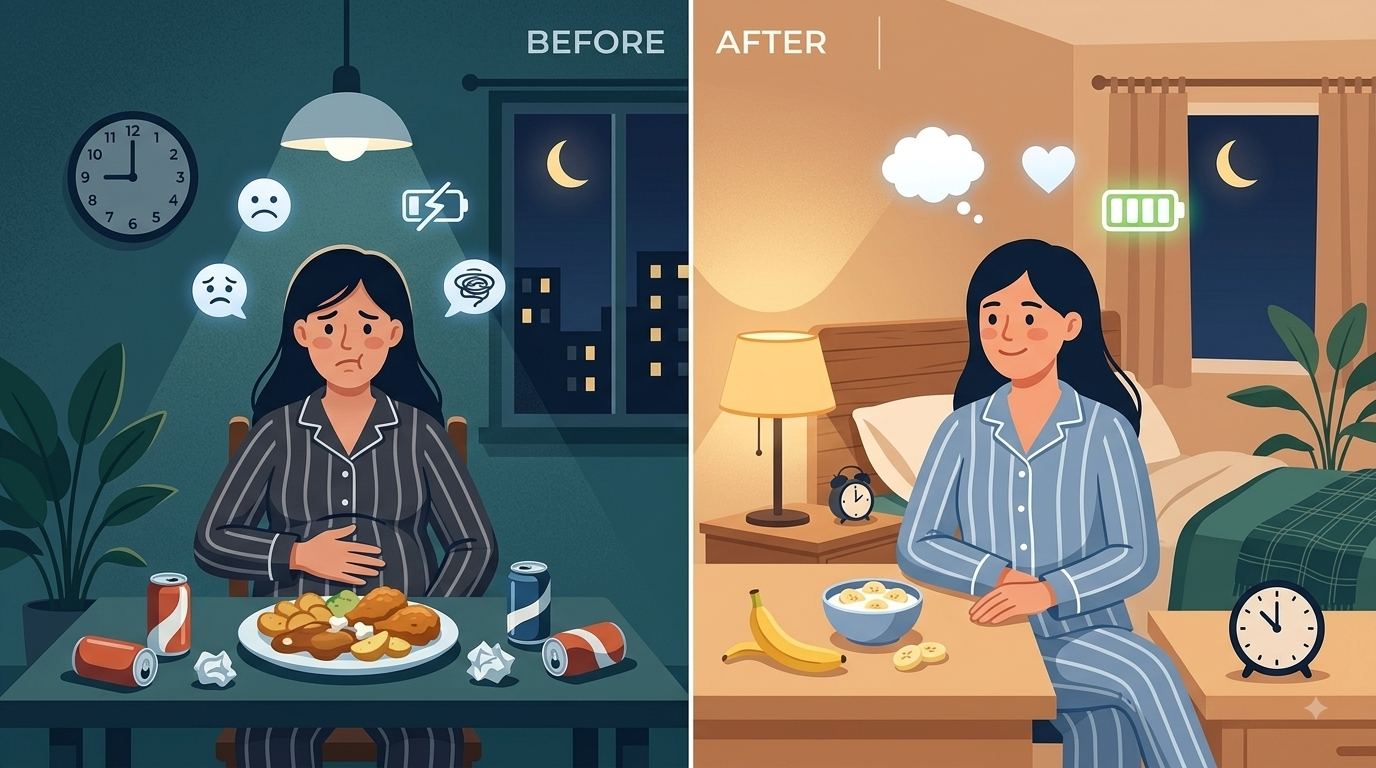
A useful guideline is to finish substantial meals at least two to three hours before bed. If you feel hungry later in the evening, choose something light and easy to digest rather than a full second meal.
Real-life example: Ryan often ate a big dinner at 8:30 or 9:00 p.m. after late workdays and then struggled to fall asleep. When he shifted his main meal earlier and kept any late snack small (such as yogurt or a banana), he found it easier to settle down and experienced less nighttime discomfort.
9. Do a Brain Dump Before Bed
A racing mind is one of the top reasons people can’t fall asleep. Unfinished tasks, worries about tomorrow, and random thoughts keep the brain in active problem-solving mode. Trying to force yourself to “just stop thinking” usually backfires.
A brain dump is a simple externalization technique. Shortly before bed, write down everything occupying your mind — tasks, concerns, ideas, or reminders. Once those thoughts are on paper or in a notes app, your brain no longer has to keep actively holding them.
Real-life example: Nina used to lie in bed mentally rehearsing the next day’s meetings and unfinished to-dos. She began spending five minutes each evening writing a quick list titled “Tomorrow” and another short list for worries. The act of transferring the thoughts out of her head reduced the mental noise enough that she started falling asleep more easily.
10. Use Your Bed Only for Sleep
When you regularly work, watch shows, scroll on your phone, or worry while in bed, your brain starts associating the bed with alertness and activity instead of rest. Over time, simply getting into bed can trigger a state of mental wakefulness.
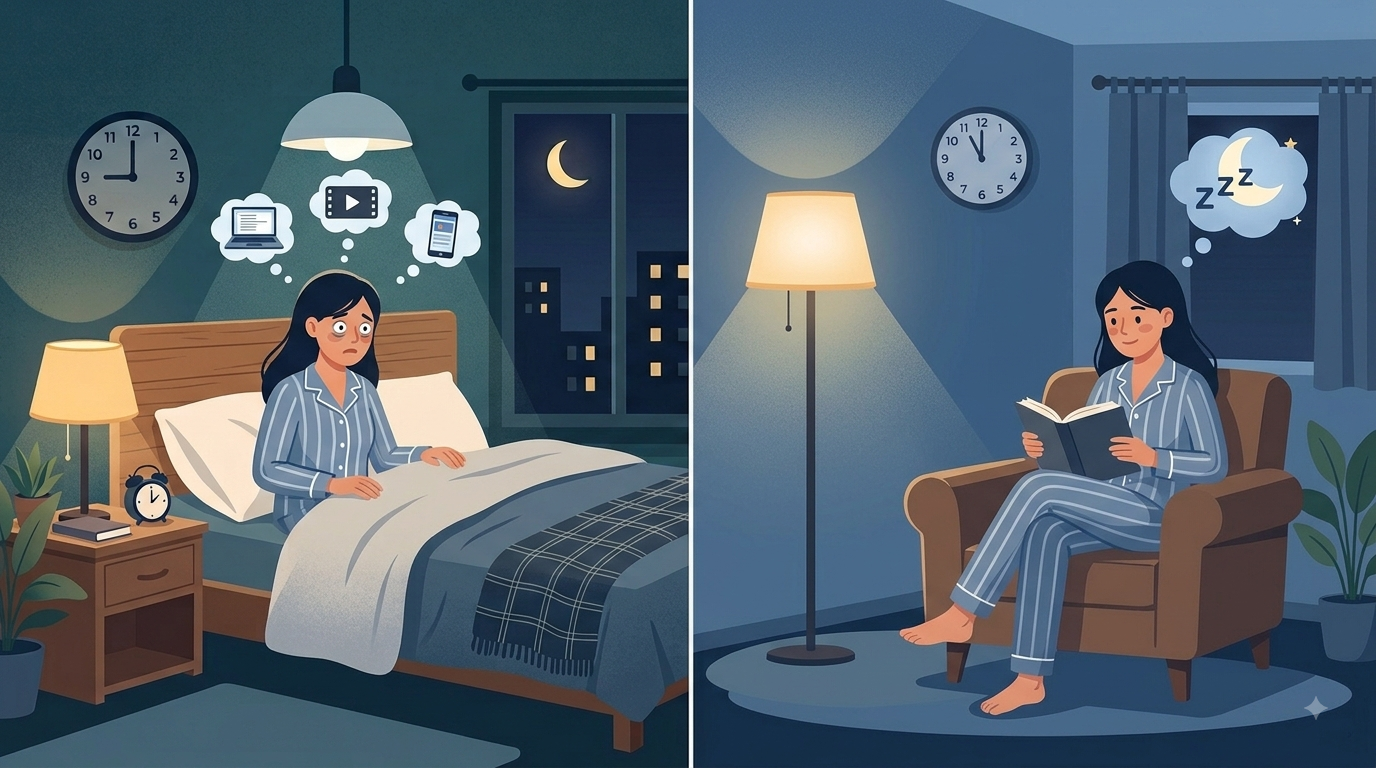
Reserving the bed primarily for sleep (and sex) helps rebuild a stronger mental association between your bed and rest. If you can’t fall asleep after about 20 minutes, it’s often better to get up, do a quiet low-light activity, and return only when you feel sleepy.
Real-life example: Tom had developed a habit of answering emails and watching YouTube in bed. He began moving all non-sleep activities to the couch or desk. The first week felt awkward. After a few weeks, getting into bed started to feel like a clearer signal that it was time to sleep, and he spent less time lying awake.
11. Keep Naps Short and Early
Naps can be useful, but long or late naps reduce your sleep drive at night. The longer and later you nap, the more likely it is to interfere with falling asleep at your regular bedtime.
If you need to nap, keep it short — around 20 minutes — and try to take it earlier in the afternoon rather than in the evening. This gives you a boost without significantly borrowing from your nighttime sleep pressure.
Real-life example: After switching to a new schedule, Priya started taking 90-minute naps after work and then struggled to fall asleep at night. When she limited herself to a 20-minute nap before 3 p.m., her nighttime sleep became more reliable again.
12. Manage Stress Earlier in the Day
Evening anxiety often has roots in unresolved stress that accumulated throughout the day. While a nighttime wind-down routine helps, it works better when you haven’t carried maximum tension into the evening.
Short breaks, brief walks, light movement, or simply naming stressors during the day can reduce the emotional load you bring into the night. Better daytime regulation usually leads to a quieter mind at bedtime.
Real-life example: Instead of pushing through stress until evening, Omar began taking two short 10-minute walks during the workday and jotting down lingering worries in a notebook before leaving his desk. By the time he started his nighttime routine, his mind felt less overloaded, and he found it easier to relax.
Final Thoughts
Better sleep is rarely the result of one dramatic change. It usually comes from reducing the small, repeated frictions that keep your body and mind from settling. Consistency matters more than intensity. A few realistic habits practiced most days will almost always outperform a perfect routine you abandon after three nights.
Choose two or three of the changes above that feel doable in your current life. Give them at least one to two weeks before deciding whether they help. Sleep improvements are often gradual rather than immediate.
Your energy, mood, focus, and long-term health all benefit when sleep improves. You don’t need a flawless system — you just need fewer things working against your body’s natural ability to rest. Start small tonight, and let the results compound over time.