We all get the same 24 hours. Yet some people consistently get more done, feel less rushed, and still have energy left at the end of the day. The difference usually isn’t talent, a fancy app, or waking up at 5 a.m. It’s a collection of small, practical habits that quietly protect their time.
Most productivity advice is either too extreme or too vague. The hacks below are different. They’re simple, realistic, and designed for normal people with jobs, families, and limited willpower. You don’t need to overhaul your entire life. You just need to stop leaking time in the same places every day.
Here are 15 time-saving hacks that actually work in real life.
1. Decide Your Top 3 the Night Before

One of the biggest time wasters is starting the day without clarity. You open your laptop, check messages, and suddenly an hour has disappeared while you try to figure out what matters most.
The fix is simple: before you end your workday or go to bed, write down the three most important things you need to finish tomorrow. Not ten. Not a full brain dump. Just three.
When you wake up, you already know where your focus should go. This single habit can save 20–40 minutes of decision fatigue every morning. Over a year, that adds up to dozens of hours.
Pro tip: Keep the list visible — on a sticky note, in your notes app, or on a whiteboard. The goal is zero friction when the day starts.
2. Use the Two-Minute Rule

Small tasks have a sneaky way of piling up. A quick email reply, putting something back in its place, scheduling an appointment — each one feels minor, but together they create mental clutter and a growing to-do list.
The two-minute rule is straightforward: if something takes less than two minutes, do it immediately. Don’t add it to a list. Don’t “save it for later.” Just handle it.
This habit keeps your open loops small and prevents the slow buildup of tiny unfinished tasks that drain mental energy throughout the day.
3. Batch Similar Tasks

Constantly switching between different types of work is one of the most expensive things you can do with your attention. Checking email, then writing, then answering messages, then going back to writing creates a hidden tax on your focus.
Instead, group similar tasks together. Check and reply to emails only two or three times a day. Make all your phone calls in one block. Run all your errands in a single trip. Do administrative work in one focused session.
Batching reduces the mental cost of switching contexts and usually helps you finish faster with better quality.
4. Put Your Phone in Another Room While Working

Most people underestimate how much time they lose to their phone. A “quick check” rarely stays quick. Notifications, social media, messages — they pull your attention away and make it harder to return to deep work.
When you need to focus, put your phone in another room or at least in a drawer across the room. Out of sight really does help keep it out of mind.
If you need your phone for work, turn off non-essential notifications and put it face down. The goal is to make distraction take more effort than focus.
5. Prepare the Night Before

Mornings are when willpower is usually lowest. Searching for keys, deciding what to wear, or packing a bag adds unnecessary friction to the start of your day.
Spend five to ten minutes the night before preparing. Lay out your clothes. Pack your bag. Set up the coffee maker. Put your keys, wallet, and phone in the same spot.
These small actions remove decision-making and searching from your morning, making the start of the day smoother and faster.
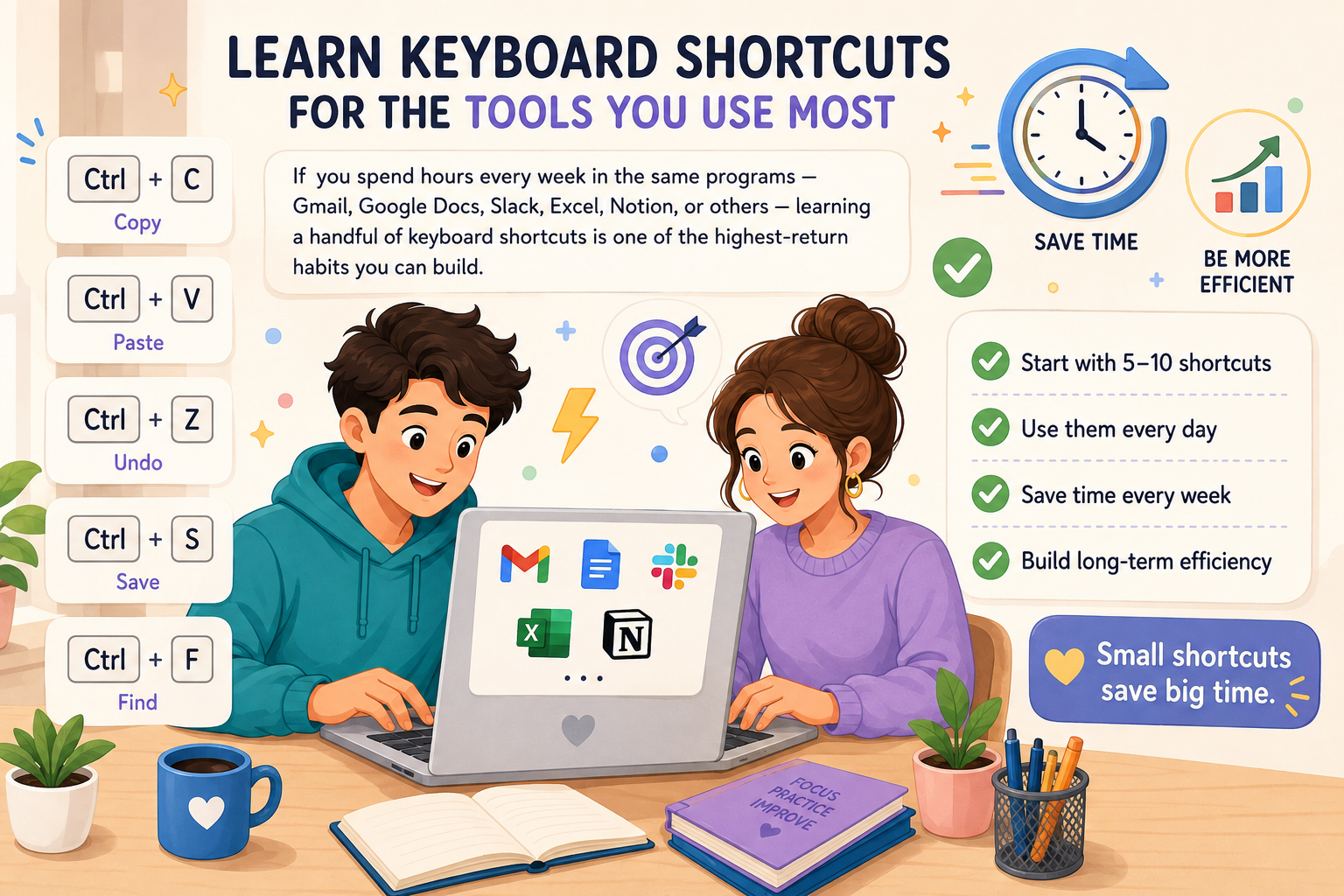
6. Learn Keyboard Shortcuts for the Tools You Use Most
If you spend hours every week in the same programs — Gmail, Google Docs, Slack, Excel, Notion, or others — learning a handful of keyboard shortcuts is one of the highest-return habits you can build.
You don’t need to memorize dozens. Start with the five to ten shortcuts you use most often. Over weeks and months, the time saved adds up more than most people expect.
7. Stop Taking Notes in Multiple Places
Having notes scattered across random apps, notebooks, email drafts, and sticky notes creates a hidden time cost: searching. When information is fragmented, you waste time trying to remember where you wrote something down.

Pick one primary system and commit to it. It can be a notes app, a physical notebook, or a simple document. The specific tool matters less than consistency. One reliable place beats five scattered ones.
8. Use Templates for Repeated Messages
If you regularly send similar emails or messages — meeting follow-ups, scheduling replies, client updates, status reports — stop writing them from scratch every time.
Create a few simple templates. Customize them in under a minute instead of rewriting the same content repeatedly. This small system frees up attention for work that actually requires thinking.
9. Set a Timer for “Good Enough”
Perfectionism is one of the most expensive habits many capable people have. Some tasks genuinely need high quality. Many others just need to be finished.
For work that doesn’t require perfection, set a timer. When the time is up, stop and move on. In most cases, the result will still be more than good enough — and you’ll have protected time for higher-priority work.
10. Automate the Obvious Stuff

Look for tasks you do repeatedly that don’t require your personal judgment: paying regular bills, ordering household essentials, filtering newsletters, or backing up files.
Set up automatic payments, recurring deliveries, and email filters. Every automation you create is a small amount of time and attention you get back every week going forward.
11. Eat the Same Breakfast Most Days
Decision fatigue is real. The more small choices you make early in the day, the less mental energy you have later for important decisions.
Having a default breakfast (and even a default lunch a few days a week) removes one more choice from your morning. Save your decision-making energy for things that actually matter.
12. Keep a “Waiting For” List
Whenever you ask someone for something or are waiting on a reply, note it in a simple list. Check the list once a day.
This habit prevents important follow-ups from slipping through the cracks and stops your brain from constantly trying to remember open loops. It creates clarity without mental effort.
13. Do a 10-Minute Evening Reset
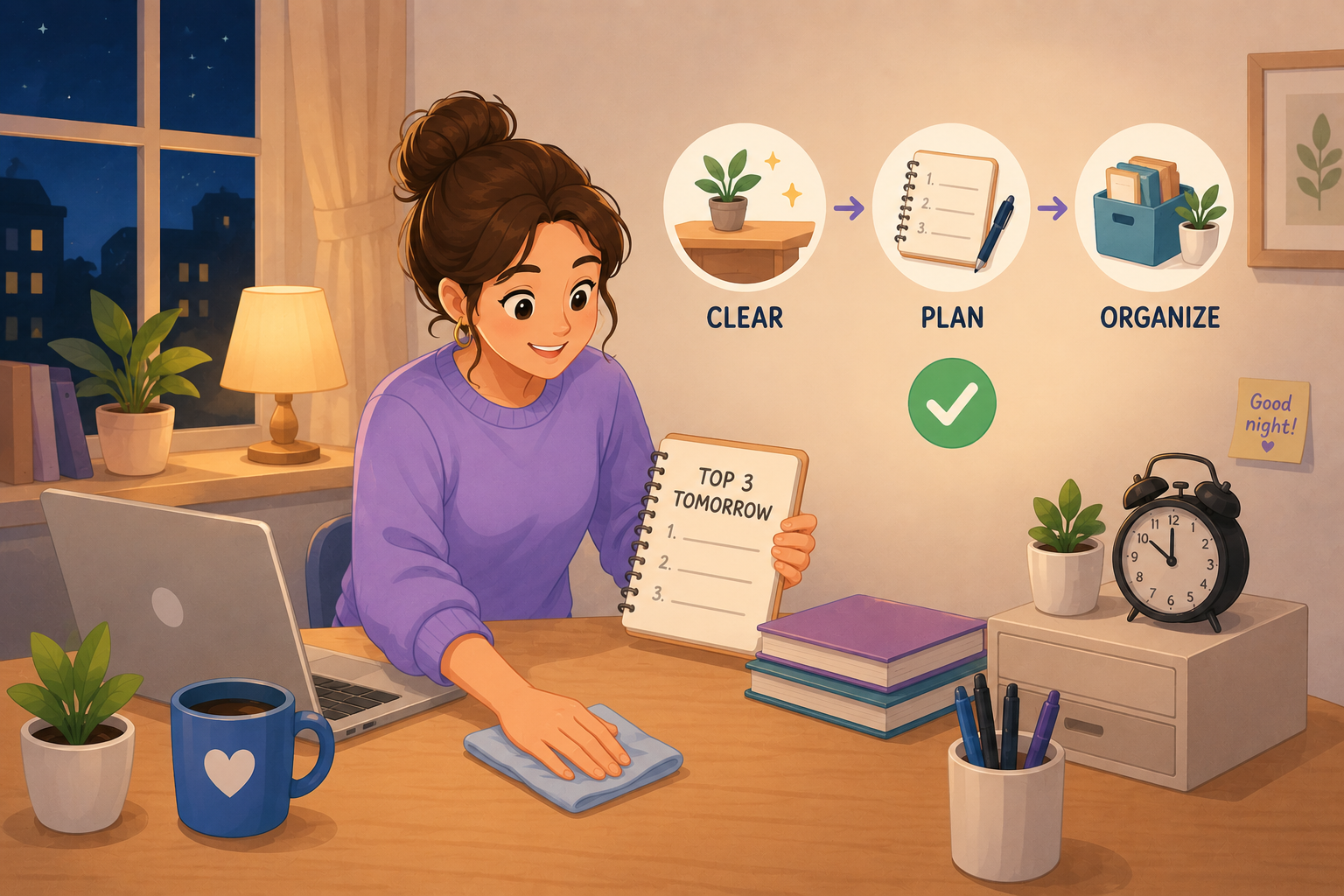
A messy workspace and unclear priorities make the next day harder before it even starts.
Spend ten minutes at the end of the day clearing your desk, reviewing tomorrow’s top three tasks, and putting things back where they belong. Starting the next morning with a clean slate is one of the simplest ways to feel more in control.
14. Say No Faster
Not every request deserves a long explanation or internal debate. Many things that come your way simply don’t align with your current priorities.
Practice declining clearly and politely: “I can’t take that on right now” or “That doesn’t fit my focus this month.” Protecting your time often starts with getting comfortable saying no without over-explaining.
15. Track Your Time for Three Days
Most people have a gap between how they think they spend their time and how they actually spend it. Tracking your time for just two or three days usually reveals patterns you didn’t notice — too many shallow tasks, too much context switching, or time disappearing into low-value activities.
Awareness alone is often enough to trigger better choices. You don’t need to track forever. A short audit is usually sufficient.

How to Actually Make These Work
You don’t need to apply all 15 hacks at once. That approach usually fails. Instead, choose two or three that feel easy and relevant right now. Practice them for one week. Once they feel natural, add another.
The goal isn’t to become a productivity machine. It’s to stop leaking time on things that don’t matter so you have more energy and attention for the things that do.
Small changes, repeated daily, create compounding results. Start with one or two hacks this week and notice what happens.
Which of these are you going to try first?
15 Simple Time-Saving Hacks You Can Use Every Day | Time Saving Features