Christmas decorating doesn’t have to mean spending a fortune or turning your entire house into a theme park. The most inviting holiday homes usually rely on a few well-chosen ideas that feel warm, personal, and intentional rather than overwhelming. Whether you live in a small apartment, a family house, or somewhere in between, simple changes can completely shift the atmosphere of your space.
The goal isn’t perfection. It’s creating a feeling — cozy, festive, and welcoming — that makes coming home in December a little more special. The ideas below focus on approaches that are realistic, flexible, and effective. Many of them work even if you’re decorating on a budget or working with limited storage space.
Table of Contents
-
- Style a Christmas Tree That Feels Personal
-
- Create a Warm and Inviting Entryway
-
- Dress Up Your Mantel (or Create a Faux One)
-
- Use Layered Lighting for Instant Atmosphere
-
- Add Seasonal Textiles and Soft Furnishings
-
- Make a Simple but Striking Tablescape
-
- Bring in Natural Elements
-
- Decorate Windows and Doorways Thoughtfully
-
- Create Small Moments of Surprise Throughout the Home
-
- Use Scent as Part of Your Decor
- Final Thoughts
1. Style a Christmas Tree That Feels Personal
The Christmas tree is still the emotional centerpiece of most holiday homes. Instead of aiming for a magazine-perfect look, focus on making it feel like your tree.
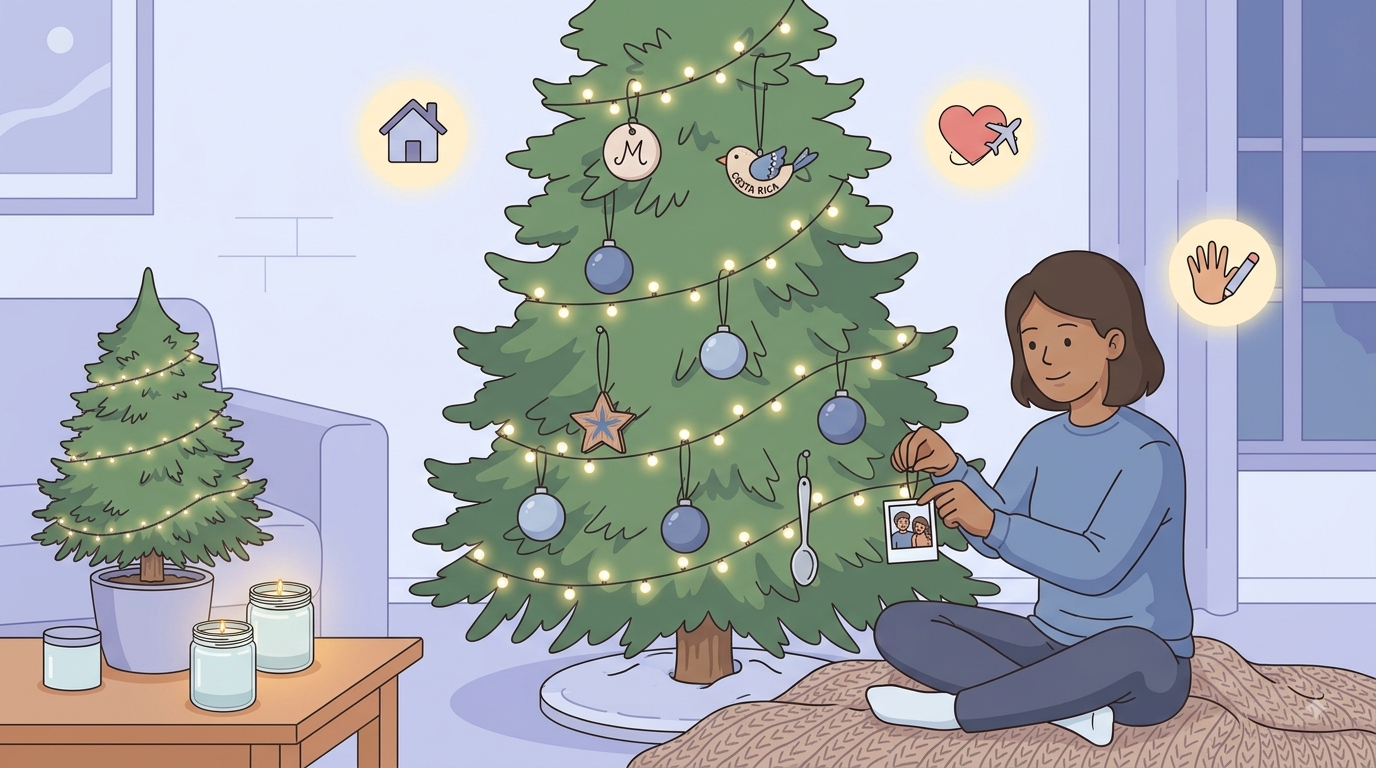
Start with good lights (warm white usually feels cozier than cool white). Then build layers: larger ornaments toward the inside and bottom, smaller ones toward the tips and top. Mix textures — glass, wood, fabric, and metal — so the tree has depth rather than looking flat.
A simple way to make the tree more personal is to include a few meaningful ornaments: handmade ones, souvenirs from trips, or pieces that represent family members. You don’t need every ornament to match. A mix of coordinated colors with a few sentimental pieces often looks more lived-in and charming than a perfectly uniform set.
Tip: If you have a small space, consider a slim tree, a tabletop tree, or even a wall-mounted branch display. The feeling matters more than the size.
2. Create a Warm and Inviting Entryway
The entryway sets the tone for the entire home. Even a small update here makes the whole place feel more festive the moment someone walks in.
A wreath on the front door is the classic starting point. Inside, add a simple console setup: a small bowl for keys, a candle or two, a miniature tree or greenery, and perhaps a pair of stockings hung nearby if you have the space. A festive doormat and a throw blanket draped over a bench or chair complete the look.
If your entryway is very limited, focus on just two elements — a wreath and one surface arrangement. Small, intentional touches often feel more polished than trying to decorate every available inch.
3. Dress Up Your Mantel (or Create a Faux One)
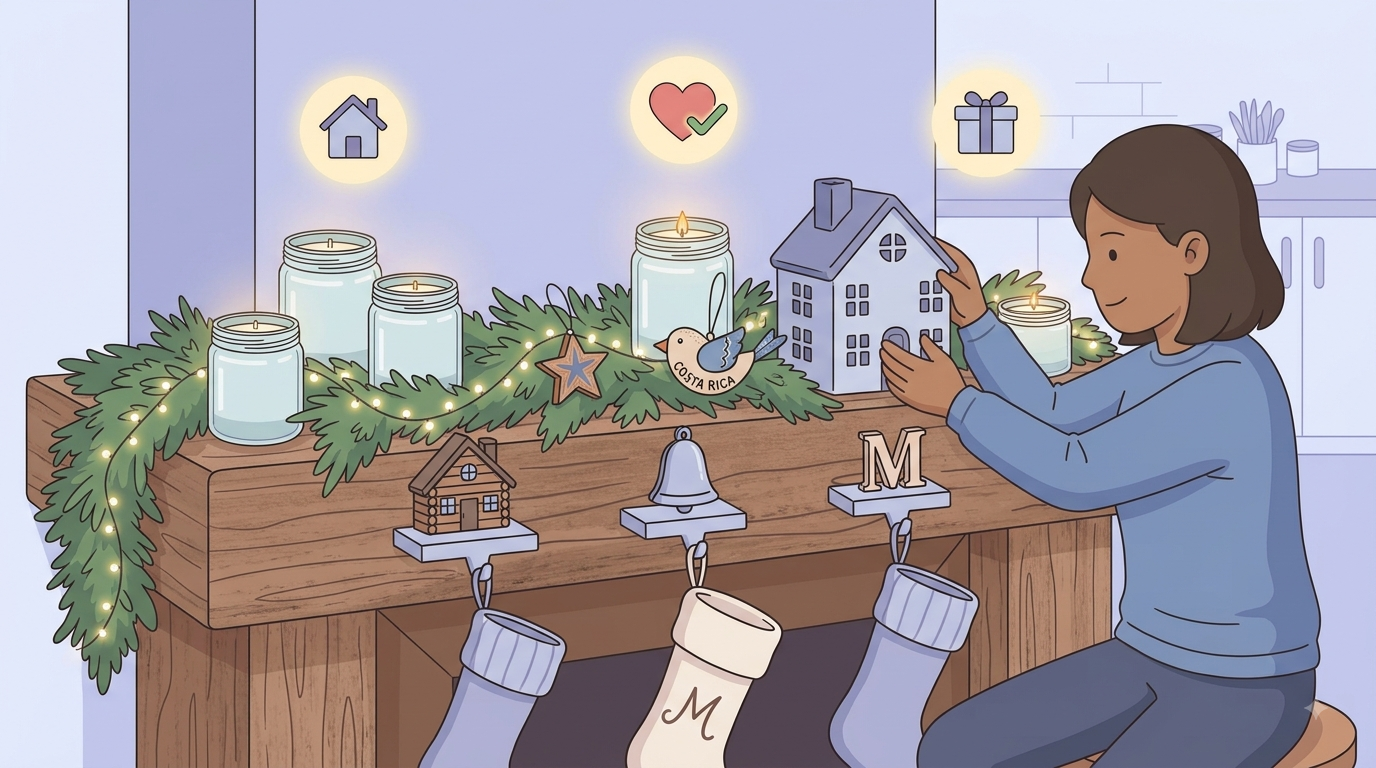
A fireplace mantel is a natural focal point for Christmas decorating. If you have one, use it. If you don’t, you can still create a similar effect on a shelf, console table, or even a wide windowsill.
A balanced mantel usually works best with a mix of heights and textures. Try greenery as a base (real or high-quality faux), then add candles of varying heights, a few ornaments, and one or two larger statement pieces such as stocking holders or decorative houses. Keep the color palette relatively tight so it doesn’t look cluttered.
Real-life approach: Many people start with a simple garland, add battery-operated candles for safety, and finish with three to five meaningful objects. This keeps the look layered without becoming overwhelming.
4. Use Layered Lighting for Instant Atmosphere
Lighting is one of the fastest ways to make a home feel festive. Overhead lights alone often feel harsh in winter. Layering softer light sources creates warmth immediately.
String lights (also called fairy lights) are especially effective. Drape them along a mantel, around a window frame, across a headboard, or inside a large glass jar. Warm white lights tend to feel more elegant and cozy than multicolored ones for general home use.
Supplement with candles (real or LED), table lamps, and a few lanterns if you have them. Turning off the main overhead light in the evening and relying on these softer sources can make even a simply decorated room feel magical.
5. Add Seasonal Textiles and Soft Furnishings
Soft furnishings are an underrated part of Christmas decorating. Swapping everyday pillows and throws for versions in seasonal colors or textures instantly makes a room feel more festive without requiring permanent changes.
Think in terms of rich reds, deep greens, cream, gold, or soft neutrals, depending on your style. Velvet, faux fur, chunky knits, and plaid patterns all read as winter-appropriate. Stockings hung along a mantel, staircase, or even a simple rod add another layer of tradition and color.
This approach is especially useful for renters or anyone who wants to pack decorations away easily in January.
6. Make a Simple but Striking Tablescape
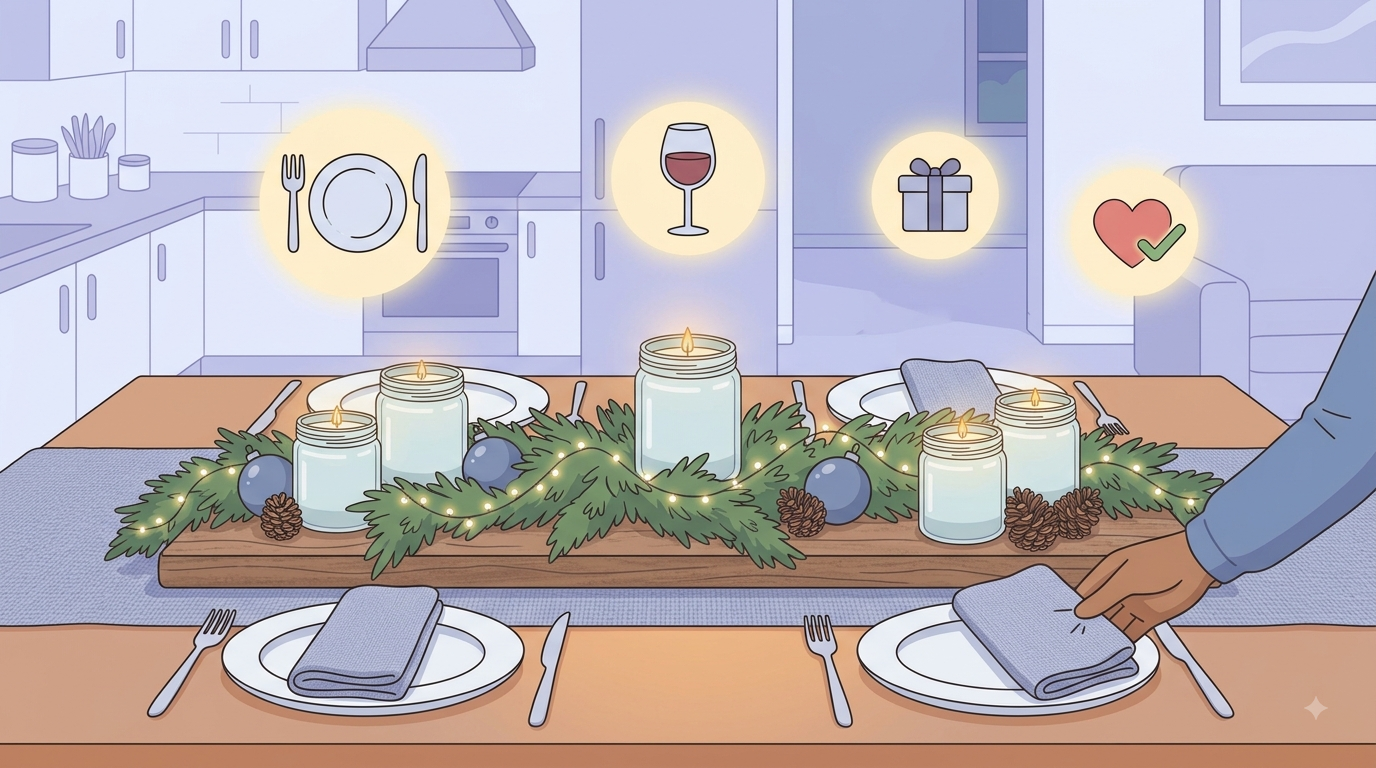
You don’t need an elaborate dining table setup to create a holiday feeling. A clean runner or tablecloth, a low centerpiece, and a few candles are often enough.
For the centerpiece, consider a long tray or wooden board filled with greenery, ornaments, pinecones, and candles. Keep the height low enough that people can still see each other across the table. Cloth napkins and simple place settings elevate the look without requiring special china.
Even if you rarely host formal dinners, styling the table for a few key days (or keeping a simplified version out during the season) makes everyday meals feel more special.
7. Bring in Natural Elements
Natural materials add texture and freshness that manufactured decorations sometimes lack. Greenery, pinecones, cinnamon sticks, dried oranges, and wood accents connect the indoors to the season outside.
You can use real garland or high-quality faux versions for convenience. Branches in a vase, a bowl of pinecones, or a simple arrangement of greenery on a coffee table all contribute to a richer, more layered look. Dried orange slices and cinnamon sticks also add subtle fragrance.
These elements work especially well when mixed with lights and candles, creating depth without visual clutter.
8. Decorate Windows and Doorways Thoughtfully
Windows and doorways are often overlooked, yet they frame the home both from the inside and outside. A wreath hanging in a window, a simple garland around a door frame, or string lights outlining a window can make a big difference.
From the inside, consider hanging ornaments at different lengths in front of a window or placing a small tree or candle arrangement on the sill. These details look charming from the street and make the view more festive when you’re indoors on dark winter evenings.
9. Create Small Moments of Surprise Throughout the Home
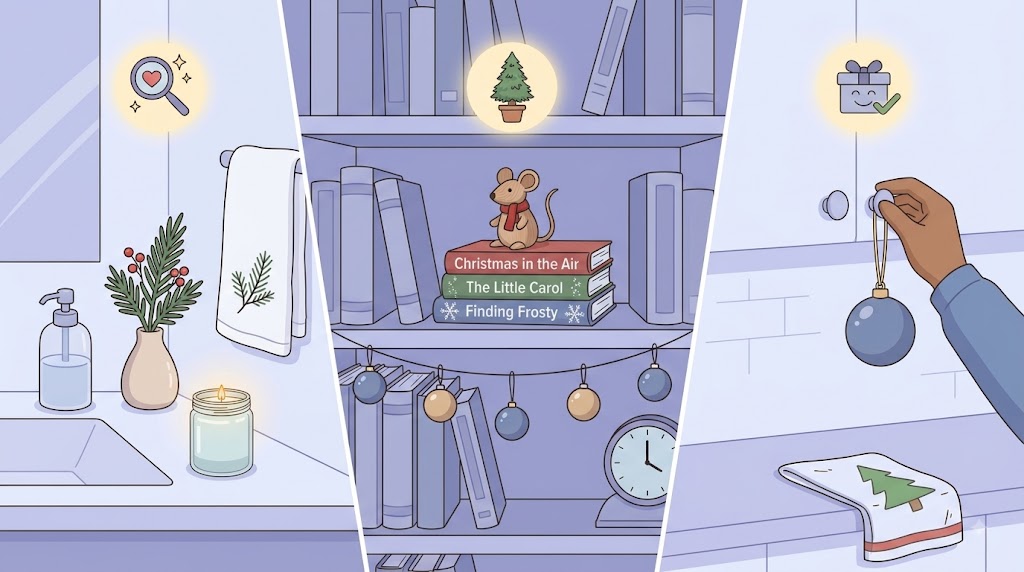
Some of the most memorable holiday homes have little festive touches in unexpected places. A tiny tree on a bathroom counter, a festive hand towel, a small arrangement on a bookshelf, or ornaments hanging from a kitchen cabinet knob all contribute to a sense of discovery.
These small moments don’t require much money or effort, but they make the entire home feel considered. The key is restraint — a few thoughtful details usually feel more special than decorating every single surface.
10. Use Scent as Part of Your Decor
Scent is one of the strongest memory triggers and an often-overlooked part of holiday atmosphere. A home that smells like pine, citrus, cinnamon, or baked spices immediately feels more festive.
You can use candles, essential oil diffusers, simmer pots (a small pot of water with orange slices, cinnamon sticks, and cloves on the stove), or fresh greenery. Choose one or two signature scents rather than mixing too many competing fragrances.
When scent is combined with soft lighting and a few visual decorations, the overall effect becomes much stronger than visuals alone.
Final Thoughts
The most successful Christmas decorating usually comes from editing rather than adding endlessly. Choose a simple color direction, focus on a few key areas (tree, entry, mantel or main living space, and lighting), and let the rest of the home support those choices with smaller touches.
You don’t need to decorate everything at once. Start with the areas you see and use most, then add more only if it still feels enjoyable. The goal is a home that feels warmer and more welcoming in December — not a space that creates extra stress.
Pick two or three ideas from this list that fit your home, style, and energy level this year. Do those well, and your space will already feel transformed for the season.
I like the valuable info you provide in your articles.
I will bookmark your weblog and check once more here frequently.
I am moderately certain I’ll be told plenty of new stuff right here!
Good luck for the next!