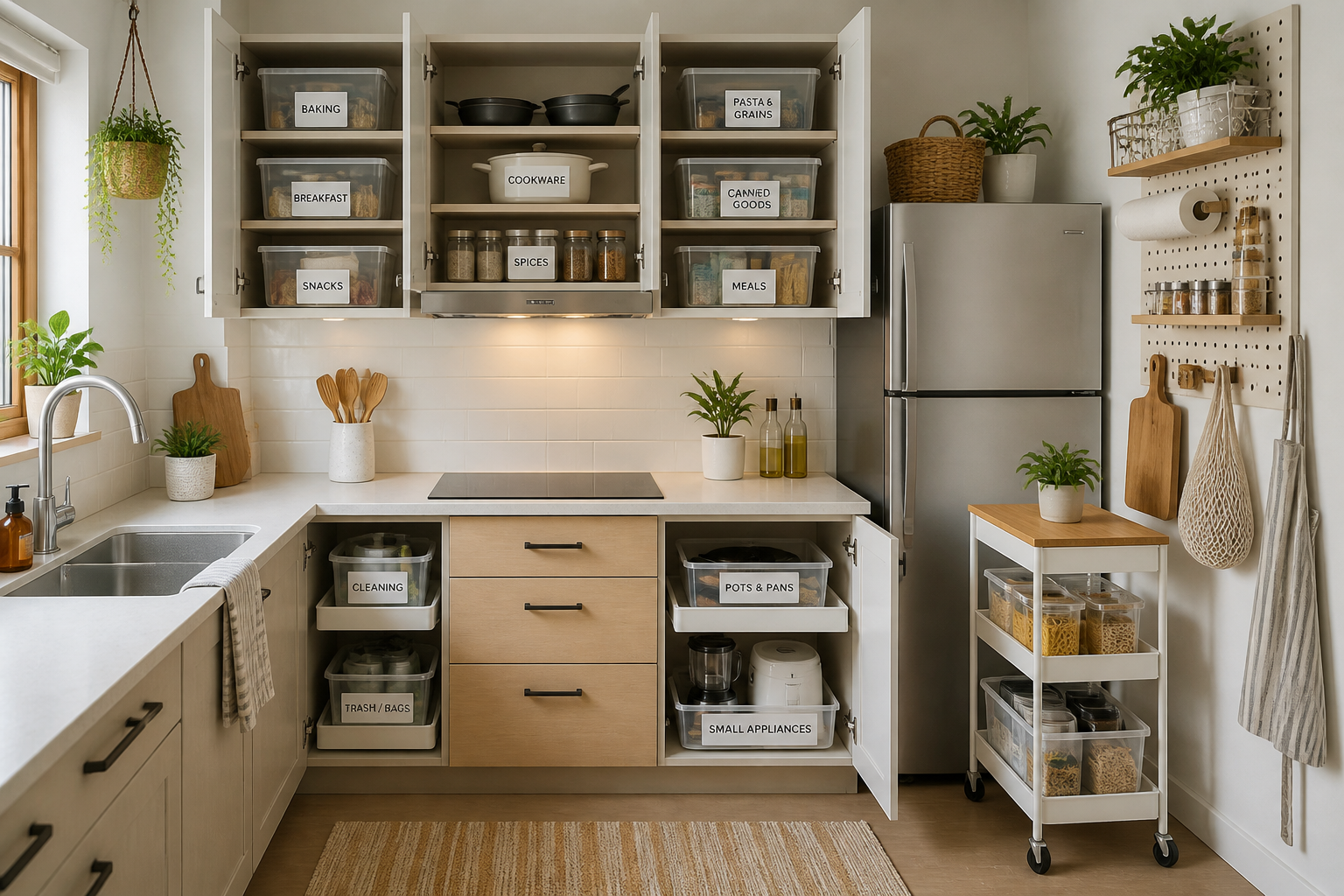
A kitchen does not need a dedicated pantry to be functional. With the right arrangement, cabinets, drawers, walls, doors, and nearby furniture can provide much of the same storage in a smaller footprint. The goal is not to fit more items into every available space. It is to make the items you use easy to find while keeping surfaces clear and storage areas manageable.
If you are wondering how to organize a small kitchen without a pantry, begin with a realistic inventory. Remove what you no longer need, group similar items, and create storage zones based on how you cook. A few carefully chosen organizers can then turn overlooked spaces into practical pantry alternatives.
Start by Decluttering and Categorizing Your Kitchen
Organization works best when you are not trying to store unnecessary items. Empty one cabinet, drawer, or shelf at a time and check each item before putting it back. Discard expired food, recycle empty packaging, and set aside duplicate tools or appliances you rarely use. If something is in good condition but no longer useful to you, consider donating it where appropriate.
Next, group your belongings into broad categories:
- Dry foods such as pasta, rice, cereal, and grains
- Baking ingredients and supplies
- Canned goods, jars, and sauces
- Snacks and breakfast foods
- Pots, pans, and baking dishes
- Cooking utensils and small tools
- Appliances and serving items
- Cleaning products and kitchen linens
Notice which items you use every day. Coffee, tea, cooking oil, frequently used spices, and basic utensils should be easy to reach. Specialty bakeware, holiday serving dishes, and infrequently used appliances can occupy higher shelves, lower cabinets, or a nearby storage area.
Maximize Existing Cabinets and Drawers
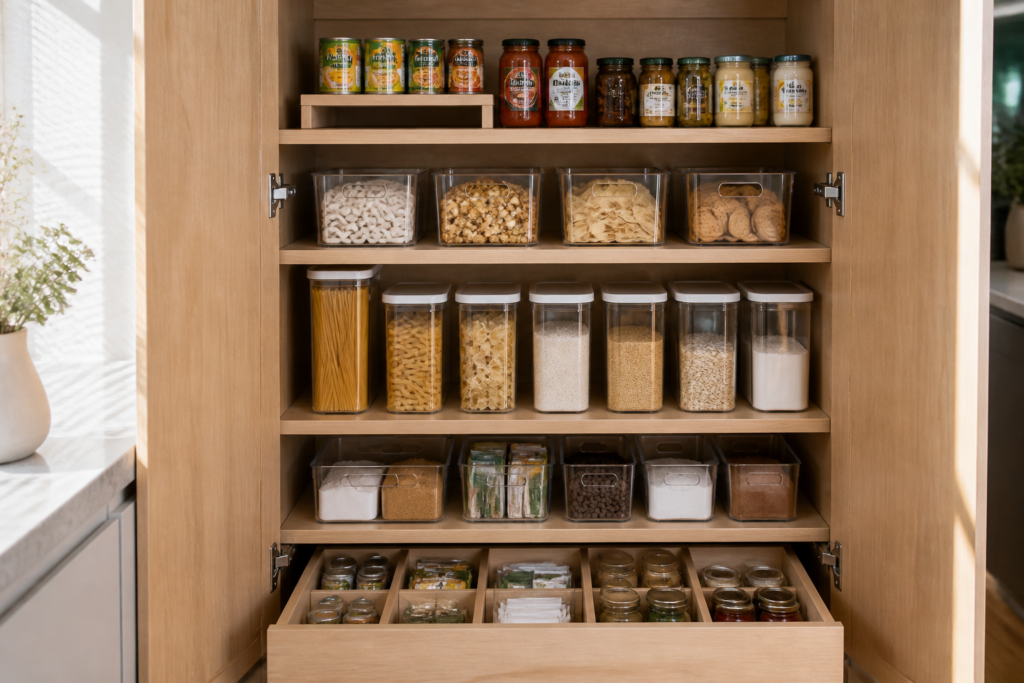
Cabinets often have more usable capacity than they appear to have, especially when vertical space is left empty. Shelf risers can create a second level for cans, jars, or small bowls. Stackable bins help contain packets and loose food, while pull-out baskets make deep cabinets easier to access.
Use drawer dividers for utensils, measuring spoons, kitchen gadgets, and food-storage accessories. Adjustable dividers are useful because they can be changed as your needs change. Avoid filling drawers so tightly that you must remove several items to reach one tool.
Heavy cookware generally belongs in lower cabinets, where it is easier and safer to lift. Everyday plates, glasses, and ingredients should be stored between waist and eye level when possible. Keep cleaning products separate from food and food-contact items, preferably in a designated cabinet.
Create Pantry Zones Inside Cabinets
Instead of treating every cabinet as general storage, assign each area a purpose. One cabinet might hold dry goods, another baking ingredients, and a third canned foods or snacks. Defined zones make it easier to put items away and notice when supplies are running low.
Store similar ingredients together in bins or containers. For example, keep breakfast items in one bin and baking supplies in another. Clear, airtight containers can be helpful for frequently used staples such as flour, sugar, oats, rice, and pasta. They protect contents from humidity and make the remaining quantity visible, but use containers that are easy to clean and label them if their contents are not obvious.
Do not transfer food into a container unless you can identify it confidently. Keep important package information, such as cooking instructions or allergen details, available when needed.
Improve Deep or Awkward Storage
Deep cabinets can become storage traps when small items disappear at the back. Narrow bins, handled baskets, or pull-out organizers allow you to bring a whole category forward instead of reaching behind several objects. Group items by use rather than simply by size. A bin for sauces, for instance, is often more useful than a bin containing unrelated small containers.
Place less-used supplies toward the back and rotate older food toward the front. For cabinets that are difficult to reach, store reserve items there rather than products you use daily. Check that pull-out hardware fits the cabinet dimensions and does not interfere with doors, plumbing, or shelves.
Use Vertical and Unused Wall Space
When floor and cabinet space are limited, look upward. A slim shelf, wall-mounted rack, pegboard, or magnetic strip can provide storage without taking up valuable counter space. Vertical kitchen storage is especially useful for spices, cooking utensils, mugs, cutting boards, and lightweight pans.
A pegboard can be fitted with hooks and small shelves, allowing you to customize the arrangement as your tools change. A magnetic strip may hold metal utensils or spice tins, but install it securely and avoid placing it where objects could fall near children or food preparation areas.
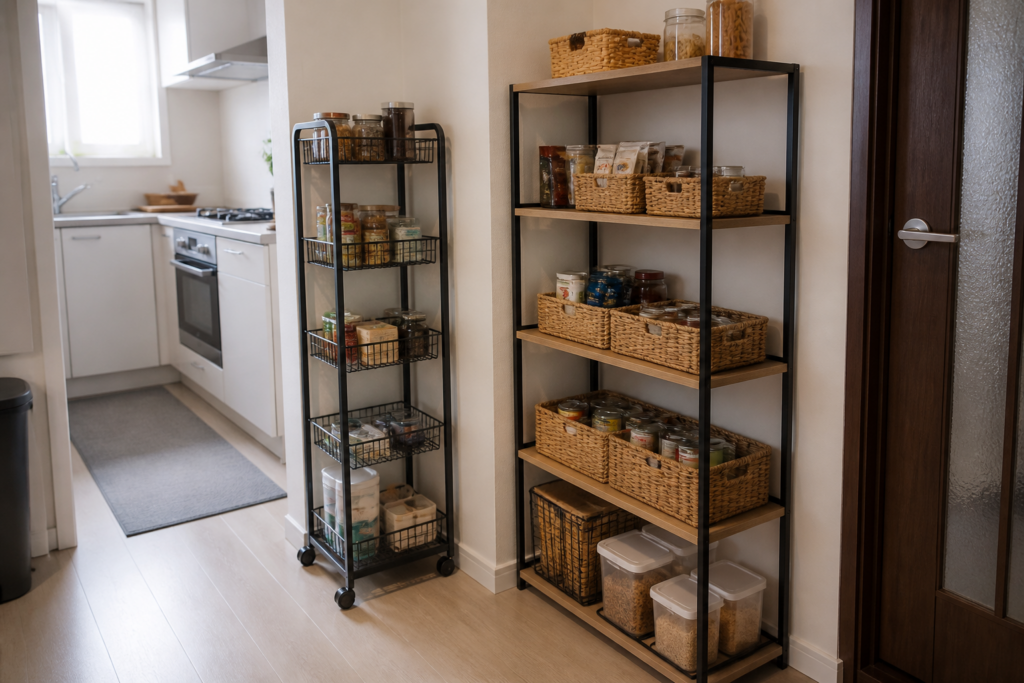
Freestanding narrow shelving can fill a gap beside a refrigerator or between cabinets. Use it for dry goods, cookbooks, or small appliances, and choose a stable unit that does not obstruct walkways. In a rental, removable hooks, tension rods, and freestanding shelves can provide storage without permanent modifications. Always follow the manufacturer’s weight limits and installation instructions.
Make Cabinet Doors and Side Spaces Work Harder
The inside of a cabinet door is often overlooked. Over-the-door or adhesive organizers can hold spice packets, food wraps, measuring tools, pot lids, or small cleaning supplies. Before installing one, measure the door and check that the organizer will not prevent the cabinet from closing.
The side of a cabinet or refrigerator may accommodate a narrow rack for spices, towels, or utensils. These spaces are best for lightweight items unless the surface and hardware are designed to support more weight. Avoid blocking refrigerator vents, cabinet hinges, electrical outlets, or appliance controls.
Door storage should remain selective. An overloaded door can sag, become difficult to close, or cause containers to fall when opened. Keep heavier items in a cabinet or on a stable shelf instead.
Organize Countertops Without Creating Clutter
Counter space is valuable in a small kitchen, so reserve it for items you use frequently. A coffee maker, toaster, or electric kettle may deserve a permanent place if it is used every day. An appliance used only occasionally is usually better stored in a cabinet, on a rolling cart, or in a nearby cupboard.
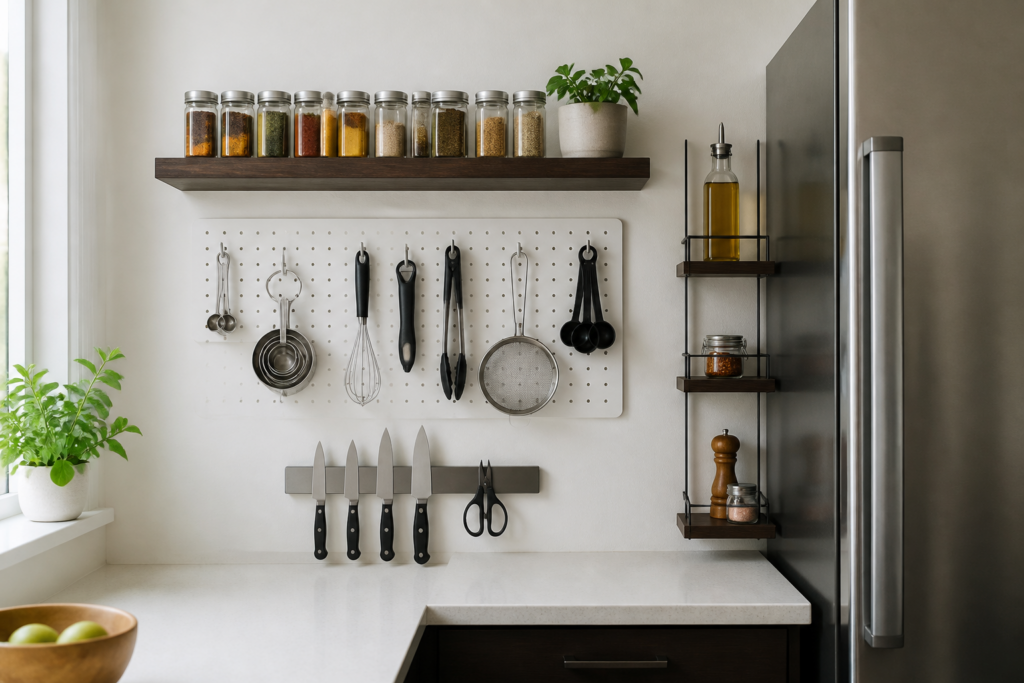
Contain daily essentials with a tray or compact canister system. A tray can hold cooking oil, salt, pepper, and frequently used seasonings while making the group easy to move during meal preparation. A tiered stand can provide extra levels for spices or condiments without spreading them across the counter.
Keep countertops safe and easy to clean by avoiding overcrowding. Do not store food where it may be exposed to heat, splashes, or cleaning chemicals. If an appliance must remain visible, use the space above or beside it carefully rather than covering the entire work surface.
Create Pantry Alternatives Beyond the Kitchen
When the kitchen itself cannot hold enough food, a nearby storage solution can act as a pantry. A rolling cart, narrow bookcase, freestanding cabinet, hutch, or compact shelving unit can provide additional capacity without remodeling. A cart is particularly useful because it can be moved when you need more floor space.
Choose furniture with shelves that suit the items you plan to store. Tall, narrow shelves work well for cans, boxed foods, and jars, while deeper cabinets may be better for small appliances or bulk packages. Use baskets or labeled bins to keep categories together and prevent the furniture from becoming a second clutter zone.
Bulk foods can be stored outside the kitchen if the area is cool, dry, clean, and convenient to access. Keep food away from heat sources, moisture, pests, and cleaning chemicals. Do not place food in a garage, laundry area, or utility space unless the conditions are appropriate and the products can remain protected. Store heavier items on lower shelves to improve stability.
Assign a Home to Every Kitchen Item
A useful storage system reflects your routines. Keep coffee supplies near the coffee maker, cooking utensils near the main preparation area, and pots close to the cooktop if that arrangement is safe and practical. Storing items near where they are used reduces unnecessary movement and makes cleanup easier.
Place frequently used ingredients at eye level or in the front of a cabinet. Occasional supplies can go higher or farther back, provided they remain accessible. Use labels on bins and containers when multiple people share the kitchen or when similar ingredients are easy to confuse.
Try a one-in, one-out rule for categories that become crowded quickly. When you buy a new mug, food-storage container, or kitchen gadget, decide whether an older item should leave. This prevents storage from expanding indefinitely and helps you keep only what supports your household.
Maintain the Organization System
Even a well-organized kitchen will become untidy if items do not return to their assigned locations. Make it easy to put things away by avoiding overly precise systems that take extra effort to maintain. Open bins, broad categories, and accessible shelves are often more sustainable than complicated arrangements.
Review food supplies regularly. Move older items to the front and check dates as part of your normal cleaning routine. Keep an informal inventory of staples you use often so you do not buy duplicates simply because an item is hidden behind something else.
Reconsider the layout when your cooking habits or household changes. A new appliance, a different work schedule, or a change in family size may require new zones. You do not need to reorganize the whole kitchen at once. Start with one drawer, cabinet, or wall area, then use what you learn to improve the next space.
Frequently Asked Questions
How can you organize a small kitchen when there is no pantry?
Combine several small solutions rather than searching for one large replacement. Create food zones inside cabinets, use shelf risers and bins, add vertical storage, and consider a rolling cart or narrow freestanding shelf. Keep frequently used ingredients within easy reach and store reserve supplies in labeled containers or a nearby cool, dry area.
What are the best pantry alternatives for a small kitchen?
Useful alternatives include rolling carts, narrow shelving units, freestanding cabinets, hutches, over-the-door organizers, and cabinet pull-outs. The best option depends on your floor plan and the type of food you store. Select stable furniture with shelves that can support the weight of cans, jars, or bulk ingredients.
How can vertical space be used for kitchen storage?
Install wall shelves, a pegboard, a magnetic strip, or a wall-mounted rack for lightweight and frequently used items. Inside cabinets, use shelf risers and stackable containers. Tall shelving can hold dry goods, while hooks may be useful for mugs, utensils, or pans. Make sure every wall-mounted product is securely installed and used within its weight limit.
What should be stored on countertops in a small kitchen?
Keep only items you use regularly, such as a coffee maker, toaster, electric kettle, or a small group of daily cooking essentials. Use a tray, tiered stand, or compact canisters to contain them. Store occasional-use appliances elsewhere so the main preparation surface remains available.
How can renters add kitchen storage without permanent modifications?
Renters can use removable hooks, tension rods, adhesive organizers, freestanding carts, and non-drilling shelving where appropriate. Check product instructions and the rental agreement before attaching anything. Do not exceed weight limits, and avoid placing storage where it blocks doors, vents, outlets, or walkways.
Where should bulk foods and rarely used appliances go?
Use lower cabinets, high shelves, a rolling cart, or a nearby freestanding cabinet. A nearby utility area may work for bulk food if it is cool, dry, clean, and separate from cleaning chemicals. Rarely used appliances can occupy less accessible storage, but they should still be stable and easy enough to retrieve safely.
How do you keep a pantryless kitchen from becoming cluttered?
Declutter before adding organizers, give every category a defined home, and keep an accurate view of what you already own. Store daily-use items where they are easy to reach, use bins to contain loose supplies, and review food and equipment regularly. A one-in, one-out rule can also prevent crowded cabinets and drawers.
A small kitchen without a pantry can still be efficient when storage is treated as a system rather than a collection of containers. Declutter first, create dedicated zones, use vertical and hidden spaces, and place items according to how often you use them. Begin with one cabinet, drawer, or wall area instead of tackling everything at once. Small improvements can create the pantry-like capacity you need without making the kitchen feel crowded.