
Dogs have lived alongside humans for thousands of years, yet many of their abilities and behaviors still surprise even experienced owners. We see them every day, interpret their tail wags and bark, and assume we understand them well. In reality, dogs experience the world in ways that are quite different from ours — especially through scent, emotion, and subtle communication.
Here are 10 genuinely surprising facts about dogs that most owners have never heard, or at least rarely think about.
Table of Contents
-
- A Dog’s Nose Print Is as Unique as a Human Fingerprint
-
- Dogs Can Smell Time
-
- Tail Wagging Direction Actually Matters
-
- Dogs Dream (and Sometimes Act Out Their Dreams)
-
- They Have a Third Eyelid
-
- Dogs Can Detect Human Emotions by Smell
-
- Yawning Is Contagious Between Dogs and Humans
-
- Dogs Don’t See the World in Black and White
-
- Their Paws Have Scent Glands
-
- Dogs Understand More Words Than Most Owners Realize
- Final Thoughts
1. A Dog’s Nose Print Is as Unique as a Human Fingerprint
Just as no two human fingerprints are identical, no two dogs have the same nose print. The pattern of ridges and creases on a dog’s nose is unique to each individual.
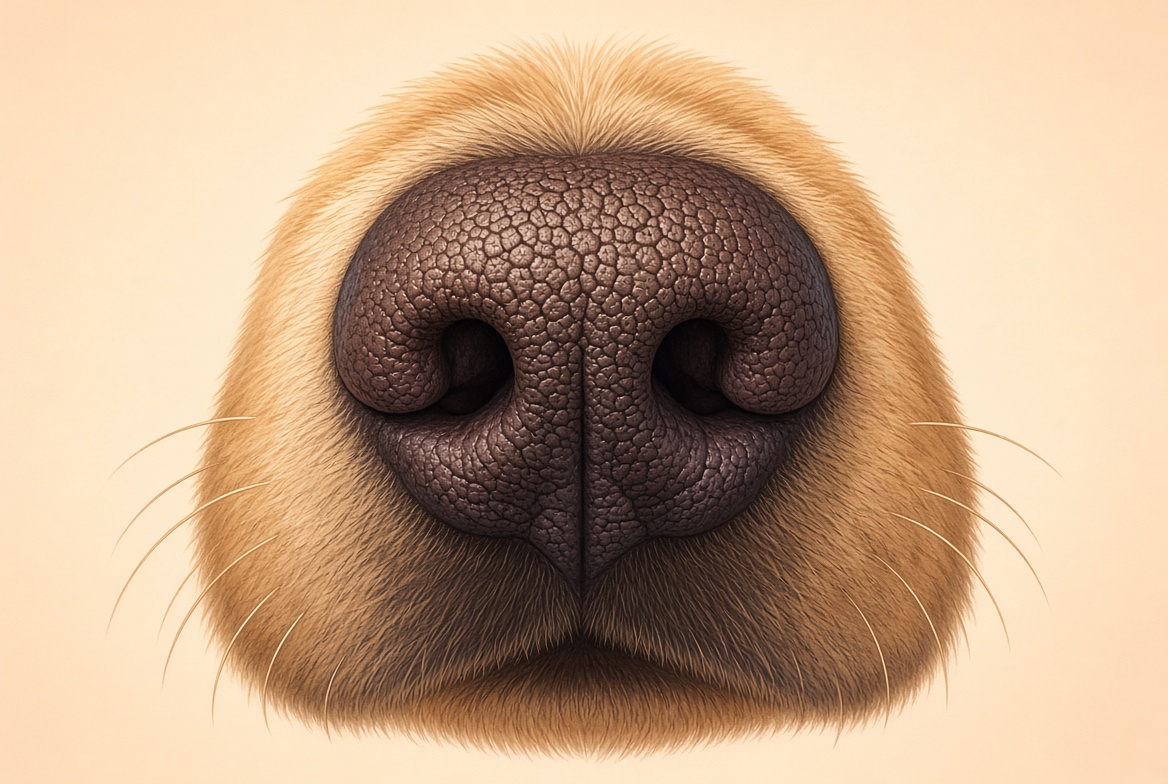
In some countries, nose prints have even been used as a method of identification, similar to fingerprinting. While microchipping is far more practical today, the uniqueness of a dog’s nose remains a fascinating biological detail most owners never consider.
2. Dogs Can Smell Time
Dogs experience the passage of time partly through scent. As you leave the house, your scent begins to fade gradually in the environment. Dogs are highly sensitive to these changes in odor concentration.
This helps explain why some dogs seem to anticipate when their owners are about to come home. They are not watching the clock — they are reading how much of your scent is still present in the air and on surfaces. To a dog, time has a smell.
3. Tail Wagging Direction Actually Matters
Most people assume a wagging tail always means a happy dog. In reality, the direction of the wag carries information.

Studies have shown that dogs tend to wag more to the right when they feel positive or approach something they like, and more to the left when they feel anxious, unsure, or negative. Other dogs can pick up on these subtle differences. A wagging tail signals emotional arousal, but the type of emotion depends on context and direction.
4. Dogs Dream (and Sometimes Act Out Their Dreams)
Dogs experience sleep cycles similar to humans, including REM sleep — the stage most associated with dreaming. During this phase, you may notice their legs twitching, paws moving, or soft woofs and whimpers.

Puppies and older dogs tend to dream more frequently than young adult dogs. While we cannot know exactly what they dream about, evidence suggests they often replay daily activities such as chasing, playing, or interacting with their owners.
5. They Have a Third Eyelid
Dogs (and many other animals) have a third eyelid called the nictitating membrane. It sits in the inner corner of the eye and helps protect the eye, spread tear film, and remove debris.
Most of the time you barely notice it. However, when a dog is tired, sick, or has an eye issue, the third eyelid may become more visible. Seeing it more prominently than usual can sometimes be an early sign that something is wrong.
6. Dogs Can Detect Human Emotions by Smell
Dogs do not just read our body language and tone of voice. They can also smell chemical changes linked to human emotions.
When people feel stress, fear, or happiness, their body chemistry shifts slightly. Dogs can detect these scent differences. This is one reason dogs often respond so quickly when their owner is upset or anxious — they are picking up on both visible cues and invisible scent signals.

7. Yawning Is Contagious Between Dogs and Humans
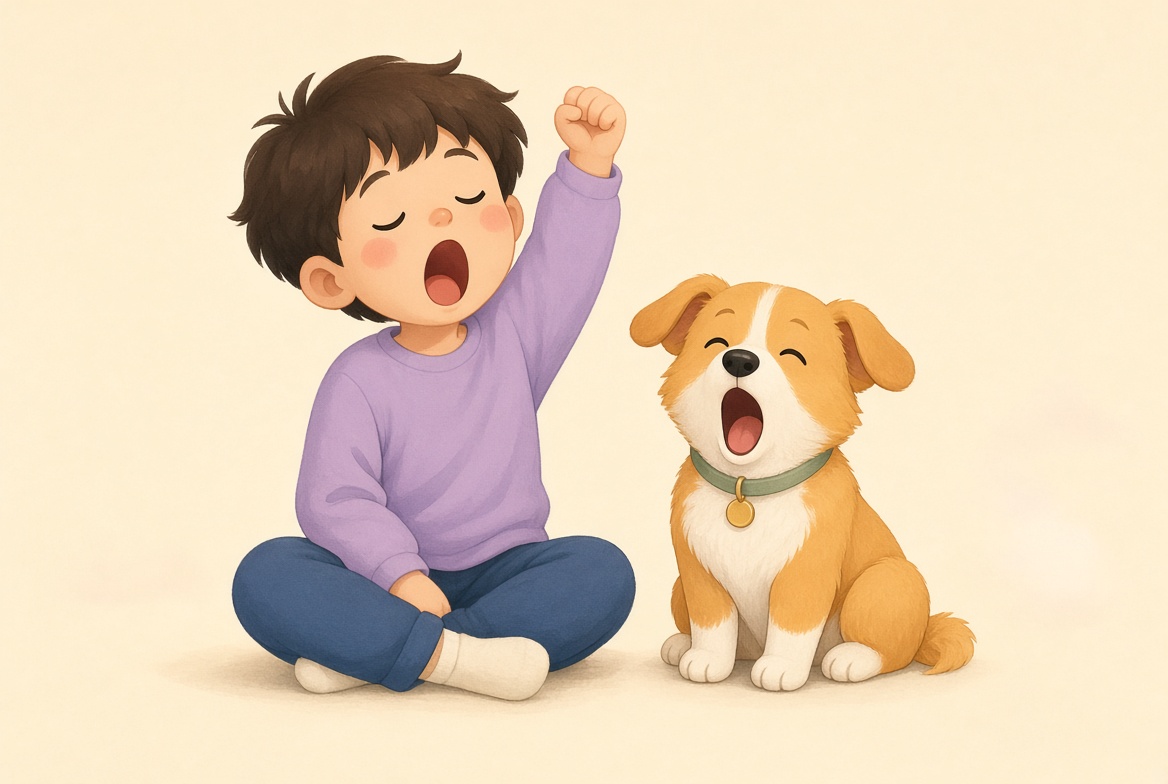
Contagious yawning is often linked to empathy in humans. Interestingly, dogs can catch yawns from people, especially from their own owners.
Research suggests that dogs are more likely to yawn in response to a familiar person’s yawn than a stranger’s. This points to a form of social connection and emotional sensitivity that goes beyond simple mimicry.
8. Dogs Don’t See the World in Black and White
The old belief that dogs see only in black and white is false. Dogs do see color, but their spectrum is more limited than ours.
They primarily perceive blues and yellows well, while reds and greens appear more muted or washed out. A bright red toy on green grass may not stand out to a dog the way it does to a human. Blue and yellow toys are often easier for them to distinguish outdoors.
9. Their Paws Have Scent Glands
Dogs have sweat glands and scent glands in their paw pads. When they scratch the ground after going to the bathroom or walk across soft earth, they are often leaving behind scent marks.
This is one reason dogs may dig or scrape with their hind legs after eliminating. They are reinforcing a scent message for other dogs. Their paws are not just for walking — they are part of how dogs communicate.
10. Dogs Understand More Words Than Most Owners Realize
Many dogs can learn dozens of words, and some highly trained dogs have demonstrated knowledge of more than 100 object names. Border Collies are especially famous for this, but other breeds can also build impressive vocabularies with consistent training.
Dogs respond not only to the words themselves but also to tone, body language, and context. Even if a dog does not understand every word in a sentence, they are often tracking more language than owners assume.
Final Thoughts
Dogs experience the world primarily through scent, subtle social cues, and emotional signals that humans often overlook. The more we understand these hidden abilities, the better we can communicate with them and meet their needs.
None of these facts require you to become a canine scientist. Simply knowing that your dog can smell time, detect your emotions, or dream at night already changes how you see the animal living in your home.
Which of these facts surprised you the most?