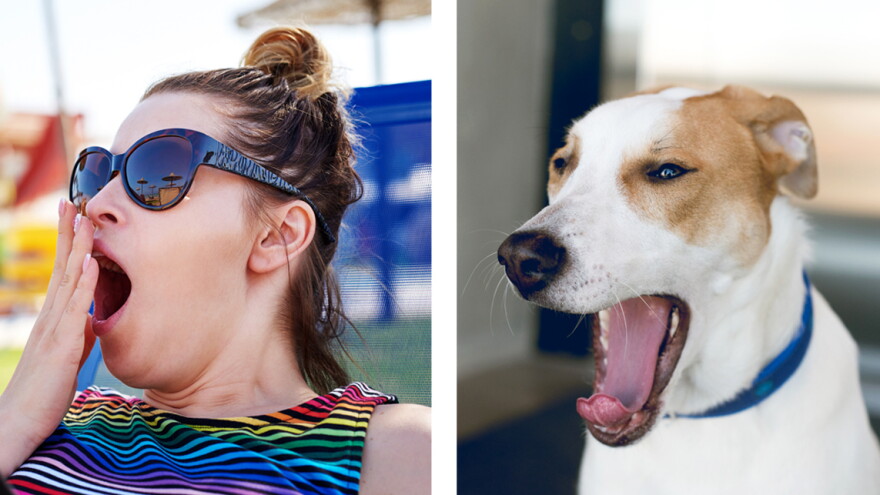
Introduction to Interspecies Contagious Yawning
You sit back on the couch after a long day, extend your arms, and let out a deep, relaxed yawn. Moments later, you notice your dog sitting across the room opening its jaws, letting out a mirrored yawn of its own. While it is easy to assume your canine companion is simply tired or ready for sleep, behavioral scientists have uncovered a much more fascinating explanation: your dog may have caught that yawn directly from you.
The phenomenon of catching a yawn from another individual is well-documented in human psychology, but its occurrence across different species is far rarer. Known in cognitive biology as interspecies contagious yawning, this subtle interaction provides a unique window into the cognitive and emotional capabilities of domestic dogs. It suggests that the bond between humans and dogs extends beyond simple conditioning or routine feeding schedules; it operates on a deep, neurological level.
At the heart of this behavior is canine emotional contagion—the subconscious ability of an animal to absorb and reflect the emotional states and physiological cues of those around it. Over tens of thousands of years of cohabitation and selective breeding, dogs have developed an extraordinary sensitivity to human body language, tone of voice, and micro-expressions. Exploring why and how contagious yawning dogs humans experience occurs reveals deep insights into animal empathy, social cognition, and the evolutionary history of man’s best friend.
The Science Behind Canine Yawns
To understand why a dog mirrors a human yawn, it is essential to first look at how yawning functions in the mammalian brain. Physiological yawning serves basic biological functions, such as regulating brain temperature, increasing blood oxygenation, and facilitating transitions between states of alertness and relaxation. However, when a yawn spreads from one individual to another, its primary function shifts from biological maintenance to social communication.
Empathy and Social Bonding
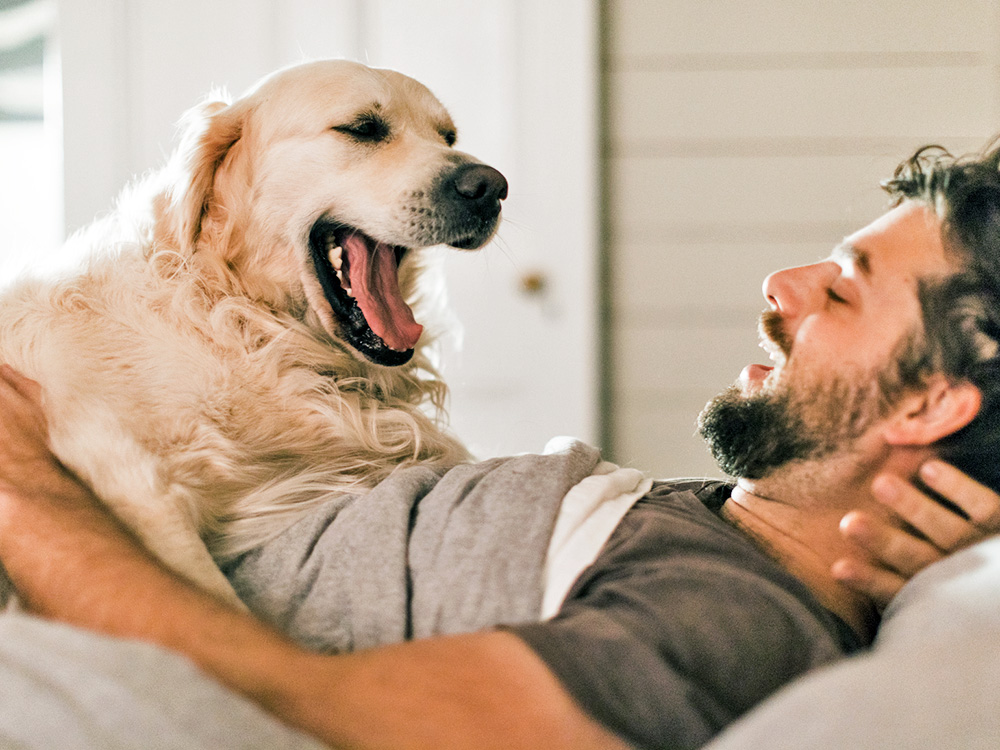
In social mammals, contagious yawning is widely recognized as an elementary form of empathy, often referred to by researchers as primitive or affective empathy. Rather than requiring complex reasoning, affective empathy operates through automated neural pathways. When a dog observes a human displaying a physical action tied to a state of relaxation or transition, the mirror neuron system in the dog’s brain activates, prompting a involuntary physical repetition of that action.
This process of dog empathy contagious yawning relies on both visual and auditory cues:
- Visual Triggers: A dog watches the distinct facial changes that accompany a human yawn, including wide eye movement, opening of the mouth, and slight tilting of the head.
- Auditory Triggers: Even when a dog’s eyes are closed or turned away, the distinct vocalization and long exhaling sound of a human yawn can trigger a corresponding response.
This sensory sensitivity highlights the strength of the dog human bond yawning phenomenon. Because domestic dogs view their human caregivers as primary social partners, their nervous systems are uniquely tuned to register subtle physiological shifts in their owners.
Stress Signal vs. Emotional Mirroring
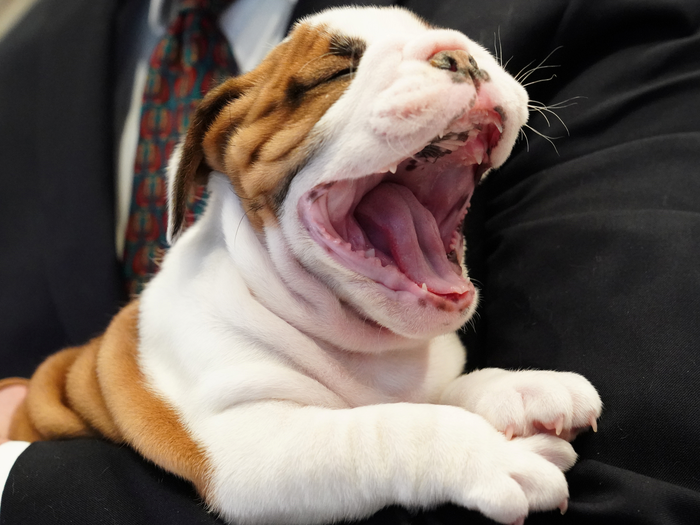
While contagious yawning is linked to social bonding, it is crucial for dog owners and behavioral enthusiasts to distinguish between empathetic mirroring and anxiety-driven yawning. In canine body language, yawning serves a dual purpose and frequently functions as a stress signal or appeasement behavior.
When a dog yawns independently during a veterinary exam, training session, or intense social interaction, it is often displaying what animal behaviorists term a “displacement behavior.” In this context, the yawn acts as a self-soothing mechanism designed to reduce physiological arousal and signal non-aggression to surrounding animals or humans.
To accurately read a dog’s posture, consider the contextual cues outlined below:
| Behavioral Context | Empathetic / Contagious Yawn | Stress / Appeasement Yawn |
|---|---|---|
| Body Posture | Loose, soft, relaxed muscle tone; often lying down or resting. | Stiff, tense muscle tone; leaning away or ducking the head. |
| Facial Expressions | Soft gaze; neutral ear position; normal blinking patterns. | “Whale eye” (showing whites of eyes); ears pinned back; tight lips. |
| Accompanying Actions | Stretching slowly, settling down, or resting head on paws. | Lip licking, panting, turning head away, avoiding direct eye contact. |
| Primary Trigger | Observing or hearing an owner yawn in a calm environment. | High-energy environment, physical restraint, or perceived pressure. |
Understanding these subtle physical differences allows pet owners to determine why do dogs yawn when humans yawn in specific situations, ensuring that signs of distress are not confused with social mirroring.
What Research Says About Dogs and Human Yawns
The scientific exploration of cross-species contagious yawning began in earnest in the late 2000s, when cognitive scientists began investigating whether dogs possessed forms of social intelligence previously thought to belong exclusively to primates.
A landmark study conducted in 2008 by researchers at Birkbeck College, University of London, provided the first empirical evidence of this behavior. In the experiment, 29 domestic dogs were exposed to human actors who either yawned visibly and audibly or merely opened their mouths without yawning. The results were striking: 21 out of the 29 dogs (72%) caught the yawn from the human demonstrator. The researchers noted that the dogs did not react to simple mouth movements, proving that the response was specifically tied to the action of yawning.
Building upon this initial breakthrough, subsequent studies sought to uncover whether emotional closeness altered the frequency of the behavior. A key study published in 2013 investigated whether dogs demonstrated a “familiarity bias”—meaning they were more likely to catch a yawn from a beloved family member than from a complete stranger.
The findings demonstrated several key aspects of canine emotional contagion:
- Familiarity Matters: Dogs caught yawns significantly more often when the yawn originated from their primary owner compared to an unfamiliar person, indicating that emotional attachment amplifies the neurological response.
- Auditory Recognition: In controlled settings where dogs could only hear recorded audio of human yawns without visual context, they still yawned in response, showing a higher frequency of response to their owner’s recorded voice.
- Absence of Stress Correlates: Heart rate monitors used during these studies confirmed that the dogs’ heart rates remained stable during contagious yawning events, confirming that the responses were driven by social connection rather than stress or anxiety.
These studies highlight the evolutionary uniqueness of domestic dogs. While wild wolves display contagious yawning within their own packs, they rarely copy human yawns in the same effortless manner. Thousands of years of selective adaptation have rewired canine social cognition, allowing dogs to bridge the species barrier and connect with human emotional expressions.

Frequently Asked Questions
Why do dogs catch yawns from humans?
Dogs catch yawns from humans due to a process known as interspecies emotional contagion. When a dog sees or hears its human owner yawn, mirror neurons in the dog’s brain trigger an involuntary physiological response. This subconscious mirroring reflects the deep social tuning and cognitive adaptability that dogs have developed over thousands of years of living alongside humans.
Is contagious yawning in dogs a sign of empathy and emotional bonding?
Yes, scientific research suggests that contagious yawning is a primitive form of empathy. Known as affective empathy, it allows animals to register and share basic physiological and emotional states with social partners. Dogs demonstrate higher rates of contagious yawning with familiar family members than with strangers, indicating that emotional bonding directly influences this behavior.
Do dogs yawn more frequently in response to their owners compared to strangers?
Behavioral studies have confirmed that dogs exhibit a strong familiarity bias when it comes to contagious yawning. While a dog may occasionally catch a yawn from a stranger, it is statistically far more likely to mirror a yawn coming from its primary caregiver or a familiar human household member.
What have scientific studies revealed about cross-species contagious yawning?
Studies show that over 70% of domestic dogs are susceptible to contagious yawning from humans. Research confirms that dogs react to both visual and auditory cues (such as the sound of a yawn) and that this behavior is accompanied by steady, relaxed heart rates, proving it is a social and empathetic response rather than a reaction to stress.
Does contagious yawning mean a dog is tired, stressed, or mirroring emotion?
It depends entirely on the context and accompanying body language. If a dog yawns in a quiet, low-stress environment immediately after seeing its owner yawn—accompanied by soft eyes and a relaxed posture—it is mirroring emotion. However, if the yawn occurs during a high-energy situation, vet visit, or training session and is accompanied by lip licking or eye avoidance, it serves as a stress signal or calming mechanism.
Conclusion
The phenomenon of contagious yawning dogs humans experience serves as a powerful reminder of the extraordinary bond shared between humans and their canine companions. Far from being a random muscle reflex or a simple sign of drowsiness, contagious yawning reflects millions of subtle interactions shaped by thousands of years of shared history.
By learning to observe the subtle contextual differences between a stress-induced displacement yawn and a relaxed, empathetic mirror response, dog owners gain a clearer understanding of their pet’s emotional state. The next time you yawn and see your dog open its mouth in response, you can appreciate the moment for what it truly is: a silent, scientifically proven gesture of cross-species connection and biological empathy.