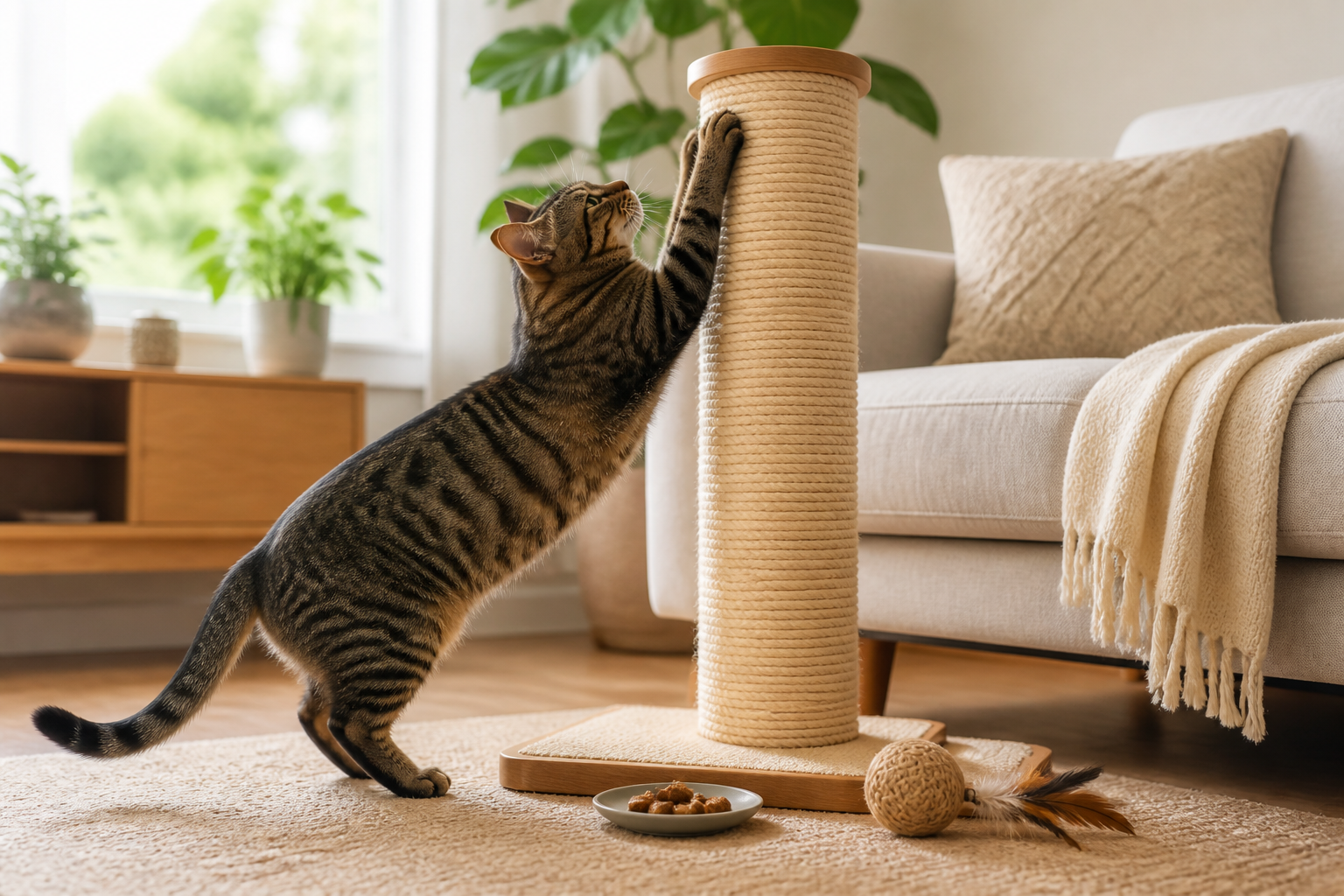
Scratching is a normal part of being a cat, but it can become frustrating when your pet chooses the sofa, curtains, or door frames instead of a scratching post. The good news is that most cats can learn to use an appropriate scratching surface when it matches their preferences and is placed in the right location.
The goal is not to stop scratching altogether. Scratching helps cats stretch, maintain their claws, mark familiar areas, and release tension. Successful training means redirecting this natural behavior toward a surface that is safe for your cat and your home.
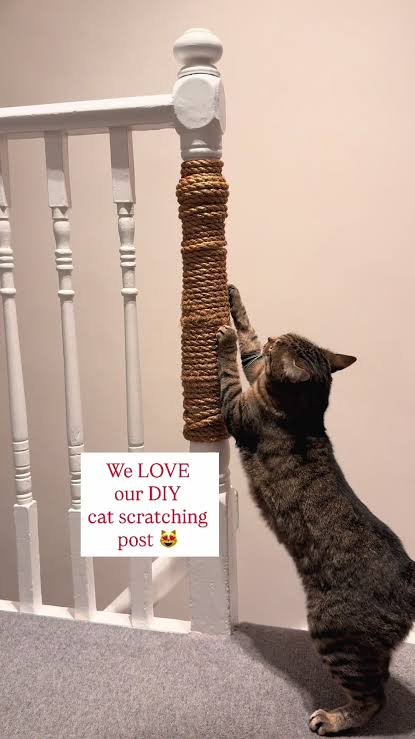
Why Cats Scratch
Understanding cat scratching behavior makes training more effective. Scratching serves several physical and emotional purposes:
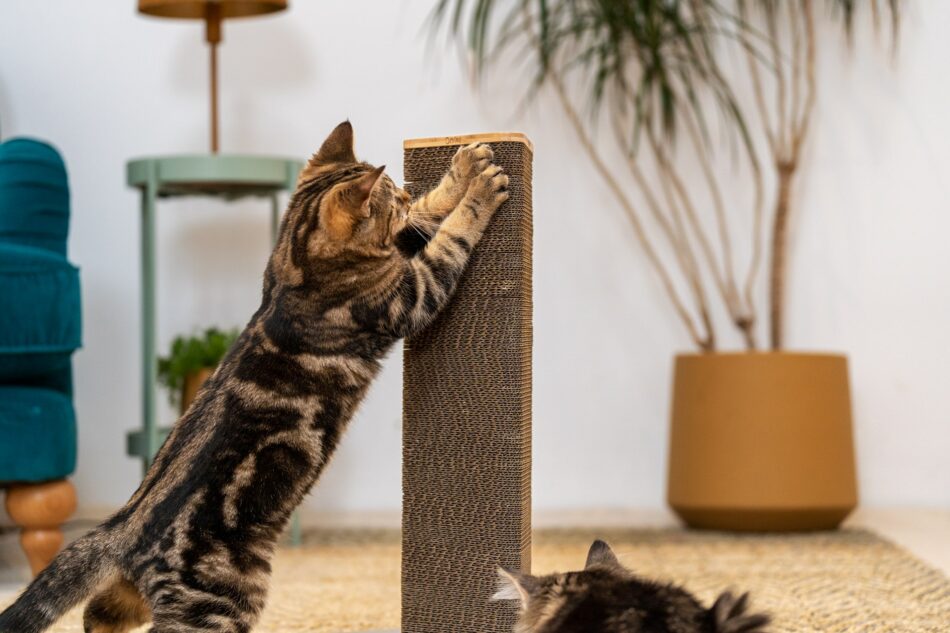
- Stretching: A tall scratching post lets a cat extend its shoulders, back, and legs after resting.
- Claw maintenance: Scratching helps remove worn outer layers from the claws.
- Scent marking: Cats have scent glands in their paws. Scratching leaves both a visible mark and a familiar scent.
- Communication: Scratched areas can signal that a cat considers a space part of its territory.
- Stress release: Some cats scratch when they are excited, unsettled, or eager to engage in activity.
Because scratching is instinctive, punishment is unlikely to solve the problem. Yelling, spraying water, or physically moving a cat’s paws can create fear without teaching the behavior you want. A better approach is to make the scratching post appealing, interrupt unwanted scratching calmly, and reward the cat for choosing the correct surface.
Choose the Right Scratching Post
The best scratching post for cats is not necessarily the most expensive one. It is the one that suits your cat’s scratching style and remains stable during use.
Match the post to your cat’s preferred position
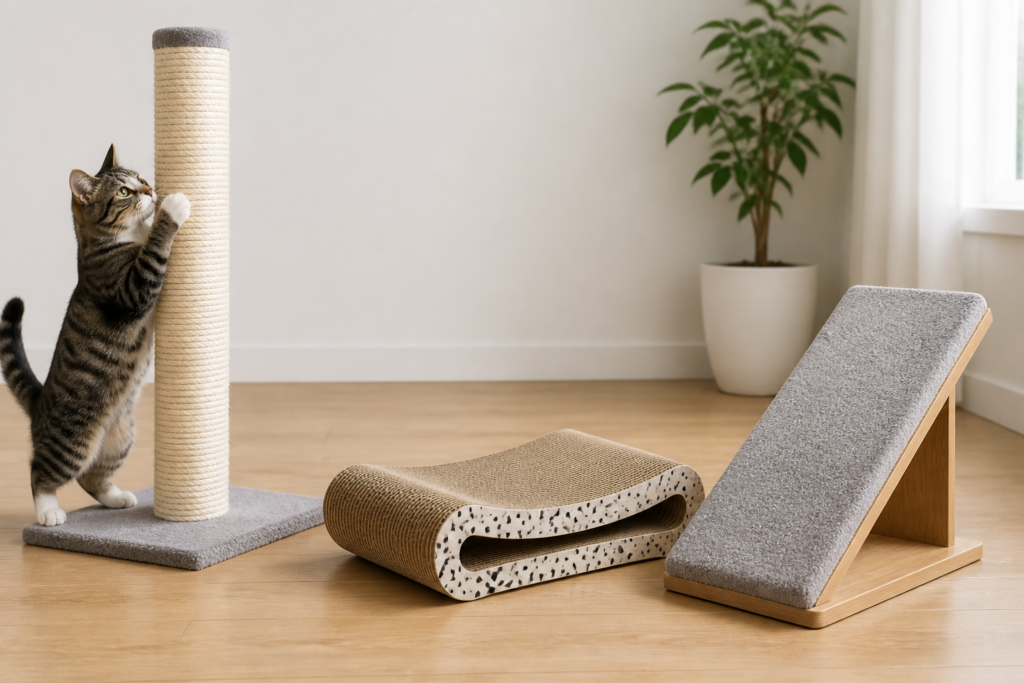
Watch where and how your cat currently scratches. If your cat stretches upward against the side of a sofa, choose a vertical post. If it scratches rugs or carpet, a horizontal scratcher may be more appealing. Some cats prefer an angled surface, while others enjoy having both vertical and horizontal options.
If you are unsure, offer more than one style for a short trial period. A vertical post beside a flat cardboard scratcher can reveal which position your cat prefers.
Prioritize stability and size
A post that wobbles or tips over can make a cat avoid it. Choose a broad, sturdy base, and check that the post remains secure when your cat pulls against it. A vertical post should be tall enough for your cat to stretch nearly its full body length. Kittens may use smaller equipment, but they will eventually need a larger surface as they grow.
Try different textures
Scratching surfaces come in several materials, including sisal, cardboard, carpet, and wood. Cats have individual preferences. Sisal is durable and provides a distinct texture, while cardboard can be immediately attractive to many cats. Some cats prefer carpet-like surfaces, especially if they already scratch rugs.
It is worth testing texture as well as shape. If a cat ignores a sisal post, that does not mean it will reject every scratching post.
Place the Scratching Post Strategically
Location can matter as much as the post itself. A scratching post hidden in an unused corner may be overlooked, even if it is sturdy and comfortable.
Start by placing the post near furniture or another area your cat already scratches. This makes it easier to redirect the behavior. Once your cat uses the post regularly, you can gradually move it a short distance at a time if necessary.
Sleeping areas are also useful locations. Cats often stretch and scratch after waking, so placing a post near a favorite bed, sofa cushion, or window perch can capture that natural moment.
Keep the post visible and easy to reach. High-traffic areas of the home can work well because cats often mark places where people and other pets spend time. Avoid placing the only post behind a closed door or in an area your cat rarely visits.
In a larger home, provide scratching options in more than one living area. In a multi-cat household, several posts can reduce competition and give each cat access to a preferred surface.
How to Train Your Cat to Use a Scratching Post
Make the post appealing
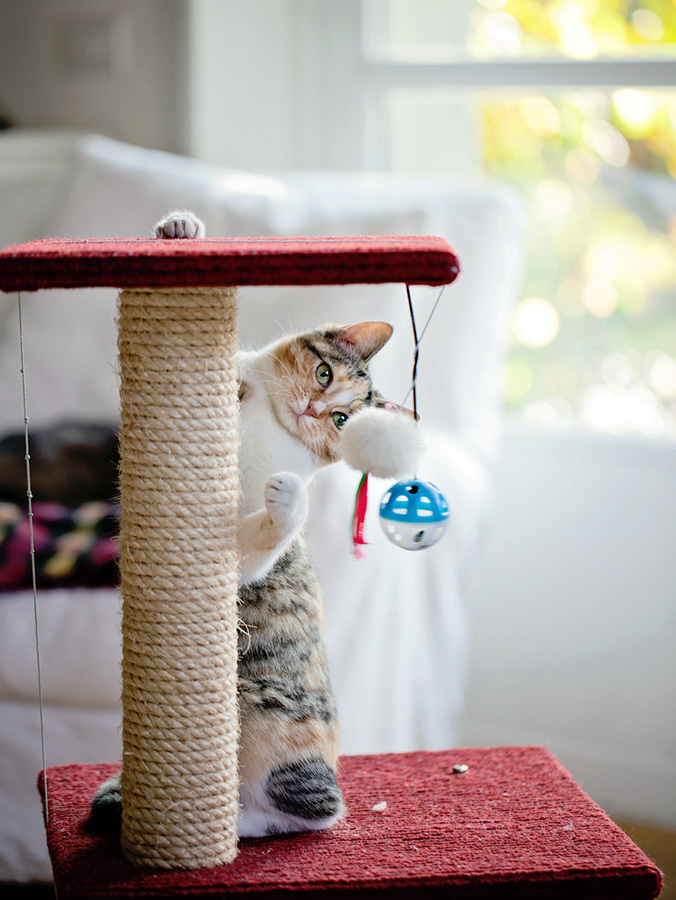
Introduce the post without pressure. Place a favorite toy beside it or use an interactive toy to lead your cat near the surface. You can move a wand toy slowly up a vertical post or across a horizontal scratcher so your cat has a natural reason to touch it.
Some cats respond to catnip, while others do not. If your cat enjoys catnip, a small amount on or near the post may encourage investigation. Catnip does not attract every cat, and some young kittens show little interest in it. Silver vine is another option for cats that do not respond to catnip, but it is not necessary for successful training.
Do not force your cat’s paws onto the scratching surface. This can make the post seem threatening and may cause your cat to avoid it. Let your pet approach, sniff, touch, and explore at its own pace.
Reward desired scratching
Timing is important. When your cat scratches the post, offer praise, a small treat, or a short play session immediately afterward. The reward should follow the behavior within a few seconds so your cat can make the connection.
Some cats respond well to a cheerful voice, while others prefer food or play. Use the reward your cat values most. Keep the experience calm and consistent rather than making a sudden movement that could startle your pet.
Rewarding small steps can also help. Praise your cat for approaching the post, touching it, or rubbing against it at first. Once the cat begins scratching, reward that behavior more generously. With repetition, the post becomes associated with pleasant results.
Redirect furniture scratching
If you see your cat scratching furniture, calmly interrupt without shouting. Use a neutral sound, call the cat gently, or place the nearby scratching post directly beside the target area. When your cat moves to the post, reward the choice.
Temporary furniture protection can make redirection easier. Depending on the item, you might use a fitted cover, a smooth protective panel, or cat-safe double-sided tape designed for furniture. These measures reduce the appeal of the surface while your cat learns a new habit. Check any product regularly and keep it away from areas where it could become a chewing or entanglement hazard.
Do not punish your cat after finding a scratched sofa or chair. Cats do not reliably connect delayed punishment with an earlier action, and fear can make other behavior problems more likely. Focus on changing the environment and reinforcing the behavior you want.
What to Do If Your Cat Ignores the Scratching Post
If your cat shows no interest, treat the situation as a troubleshooting exercise rather than a failure. Try these adjustments:
- Change the location: Move the post beside the furniture your cat prefers or near a sleeping area.
- Change the orientation: Test vertical, horizontal, and angled surfaces.
- Test another texture: Offer cardboard, sisal, carpet, or wood.
- Improve stability: Make sure the post does not wobble, slide, or tip when used.
- Increase the size: A small post may not allow a full stretch or comfortable scratching motion.
- Use play strategically: Draw a toy across the surface rather than placing the cat on it.
- Refresh the surface: Replace worn cardboard or repair a damaged post when it no longer provides a satisfying texture.
Some cats prefer a well-used scratcher, while others lose interest once it becomes too damaged. Observe your cat’s response and adjust accordingly. Give each change enough time to evaluate, but do not hesitate to try a different setup if the current one is clearly unsuitable.
How Many Scratching Posts Does a Cat Need?
There is no single number that suits every household, but one post in each major living area is a practical starting point. A cat that spends time upstairs and downstairs may benefit from access to a post on both levels. Likewise, a home with several rooms may need more than one option so the cat does not have to travel far to scratch.
Multi-cat homes often need multiple scratching surfaces. Providing several posts can give cats more choice and reduce competition around a single resource. Place them near the cats’ preferred resting areas and along routes they commonly use.
How Long Does Scratching Post Training Take?
Some cats begin using a suitable post within a few days. Others need several weeks of consistent encouragement, especially if they have already developed a strong preference for a particular piece of furniture.
Progress usually depends on four factors: choosing the right equipment, placing it strategically, protecting tempting furniture, and rewarding the desired behavior immediately. Keep the routine consistent, and avoid repeatedly moving the post during the early stages. Once your cat uses it reliably, you can experiment with its location if needed.
When Scratching Behavior May Signal a Problem
Most scratching is normal, but a sudden or dramatic change deserves attention. Scratching accompanied by aggression, hiding, appetite changes, excessive vocalizing, house-soiling, or other unusual behavior may indicate stress or a health concern.
Consider recent changes such as moving, new pets, construction noise, a change in schedule, or conflict between household animals. If the behavior persists, becomes extreme, or appears alongside signs of pain or illness, contact a veterinarian. A qualified cat behavior professional can also help identify environmental triggers and create a humane behavior plan.
Frequently Asked Questions
Why do cats scratch?
Cats scratch to stretch, maintain their claws, mark territory, communicate, and release excitement or tension. It is a normal behavior, so the practical goal is to direct it to suitable surfaces rather than eliminate it.
How do you choose the best scratching post for a cat?
Choose a post that is stable, tall or long enough for a full-body stretch, and covered in a texture your cat enjoys. Match the orientation to your cat’s existing habit. If the preference is unclear, offer both vertical and horizontal options.
Where should you place a scratching post?
Place it near furniture or other areas your cat already scratches, beside favorite sleeping spots, and in visible parts of the home. In larger or multi-cat homes, provide posts in multiple living areas.
How can you encourage a cat to use a scratching post?
Use play, a favorite toy, or catnip if your cat responds to it. Let the cat explore freely, and provide a treat, praise, or play immediately after it uses the post. Never force the cat’s paws onto the surface.
How do you stop a cat from scratching furniture?
Calmly redirect the cat to a nearby scratching post, reward the switch, and temporarily protect the furniture with cat-safe covers or deterrents. Avoid yelling or physical punishment, which does not teach the preferred alternative.
Should scratching posts be vertical, horizontal, or both?
Use the style that matches your cat’s current scratching pattern. Cats that scratch sofa sides may prefer vertical posts, while cats that scratch rugs may prefer horizontal ones. When uncertain, offer both.
How many scratching posts does a cat need?
A useful starting point is one post in each major living area, with additional options for larger homes or multiple cats. Posts should be easy to access and placed near preferred scratching and sleeping locations.
What should you do if your cat ignores the scratching post?
Try changing its location, texture, orientation, size, or stability. Use play to make it interesting, and check whether the surface is worn out. Avoid forcing your cat to use it and allow time for learning.
How long does it take to train a cat to use a scratching post?
Some cats respond within days, while others need several weeks. Consistency, suitable equipment, strategic placement, furniture protection, and immediate rewards can all improve the process.
When might scratching behavior indicate stress or a health concern?
Sudden or excessive scratching, especially when combined with hiding, aggression, appetite changes, vocalizing, or other unusual behavior, may signal stress or illness. Consult a veterinarian or qualified behavior professional if the change persists or concerns you.
A Practical Path to Better Scratching Habits
Training a cat to use a scratching post works best when you respect the behavior rather than fight it. Choose a stable surface that fits your cat’s preferred style, place it where scratching already happens, and make the alternative rewarding. Protect vulnerable furniture while the new habit develops, and redirect your cat calmly every time.
With patience and consistent positive reinforcement, many cats learn that the scratching post is the most satisfying place to stretch, scratch, and leave their mark.