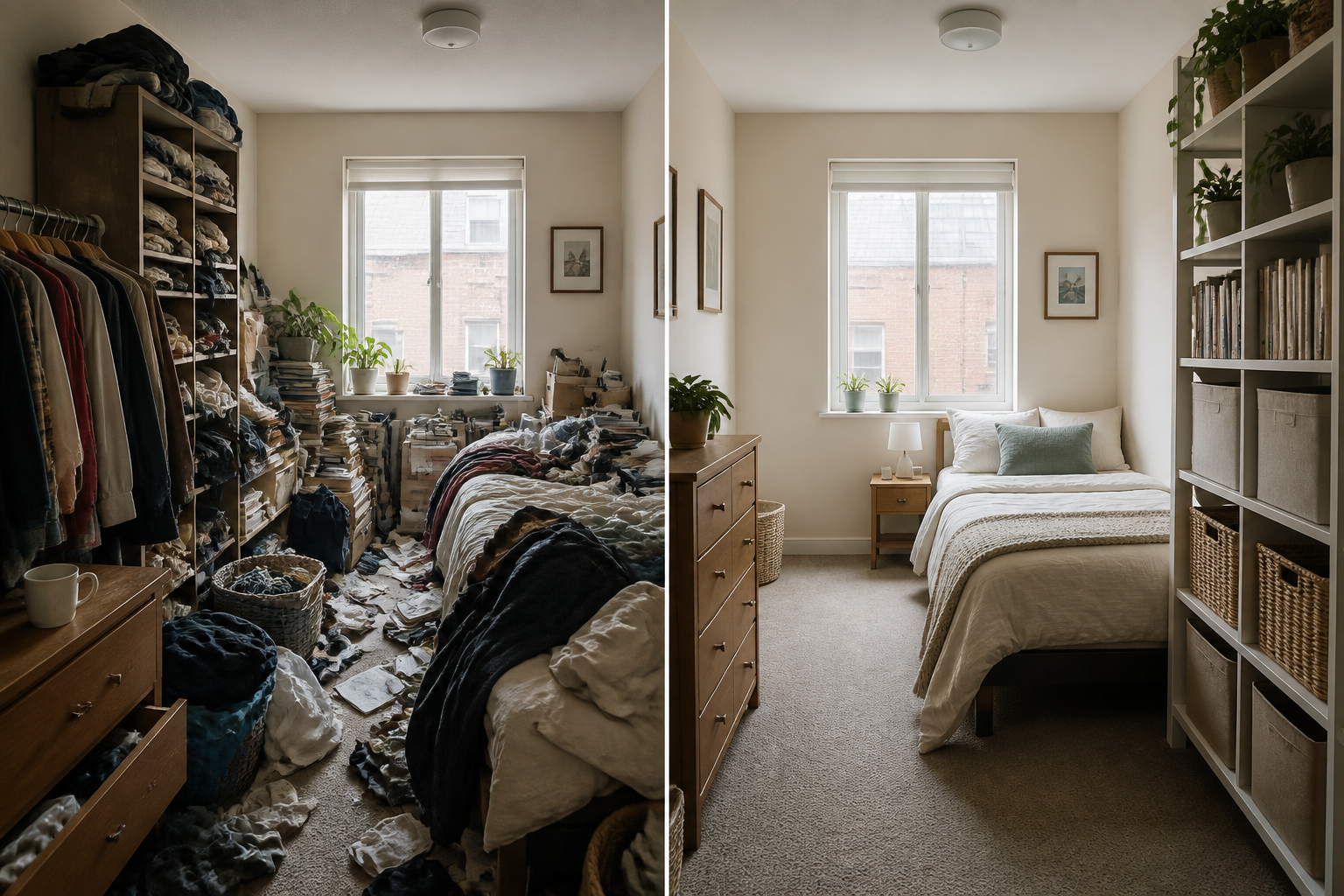
A small bedroom can feel impossible to manage when clothing, books, paperwork, hobby supplies, and everyday items all compete for the same limited space. The solution is not to force more belongings into already crowded drawers. Instead, focus on reducing what you own, deciding what truly belongs in the room, and using storage that makes the most of the space available.
Learning how to organize a small bedroom with too much stuff is a gradual process. You do not need to transform the entire room in one day. By working in manageable sections and giving every retained item a practical home, you can create a bedroom that feels calmer, easier to clean, and more comfortable to use.
Start by Clearing and Sorting the Room
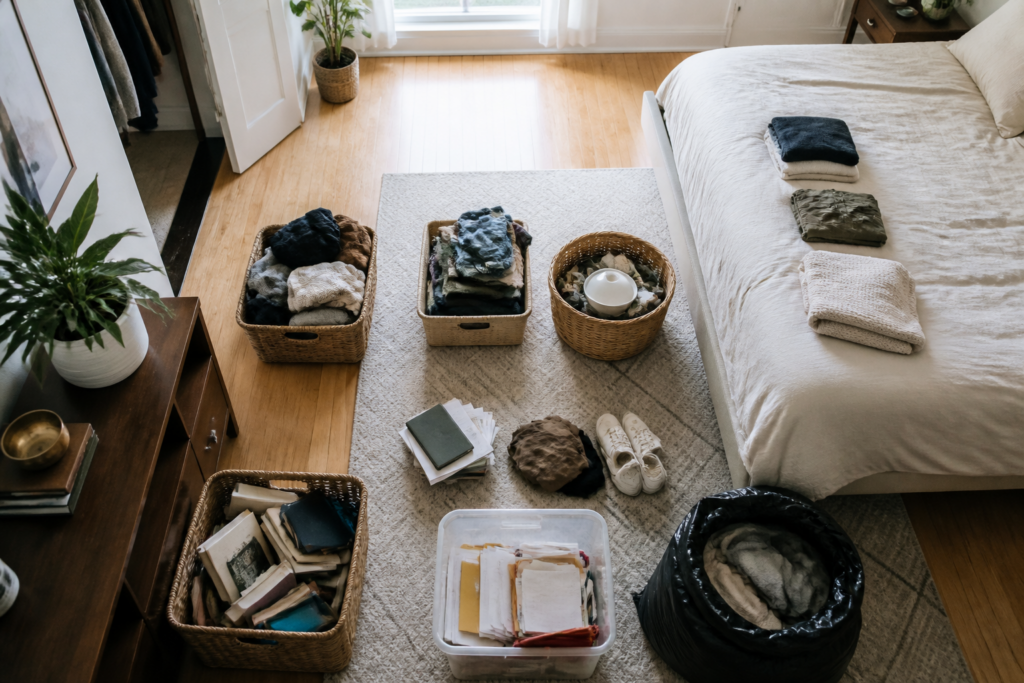
Before buying organizers or rearranging furniture, create a clear view of what you already have. Begin with the floor, bed, desk, dresser top, and other easy-to-reach surfaces. Remove loose items and place them in one temporary sorting area, such as the bed or a cleared section of floor.
If the room is extremely cluttered, work in small zones rather than trying to empty everything at once. For example, start with one corner, a single drawer, or half of the closet. Completing a small area gives you visible progress and prevents the project from becoming overwhelming.
Sort belongings into five categories:
- Keep: Items you use, need, or genuinely value.
- Donate: Useful items that no longer suit your needs.
- Sell: Belongings with enough value to justify the time and effort involved.
- Relocate: Items that belong in another room or storage area.
- Discard: Broken, damaged, expired, or unusable items.
Try not to create a large “maybe” pile that simply delays the decision. If you are uncertain, ask when you last used the item, whether you would buy it again today, and whether you have a suitable place to store it. Keep sentimental decisions separate from routine decluttering so that a few difficult items do not stop your progress.
Decide What Belongs in the Bedroom
One of the most effective small bedroom organization strategies is limiting the room to items that support sleep, dressing, relaxation, or regular personal routines. Items used every day or several times a week deserve convenient storage. Rarely used belongings may be better placed elsewhere.
Documents, extra kitchen supplies, old electronics, seasonal decorations, and hobby materials often accumulate in bedrooms simply because the room has available corners. If another storage location exists, move these items out. If not, group them into clearly labeled containers rather than allowing them to spread across multiple surfaces.
Consider whether the bedroom needs to store every item in a category. You may not need a large collection of spare linens, several similar bags, or clothing for every possible occasion. Keep the belongings that fit your current lifestyle, not an imagined future version of it.
A simple one-in, one-out rule can help control future accumulation. When you buy a new sweater, pair of shoes, or decorative item, identify something similar to donate or remove. This keeps the total number of possessions more stable as time passes.
Make the Most of Existing Storage
Organize the Closet
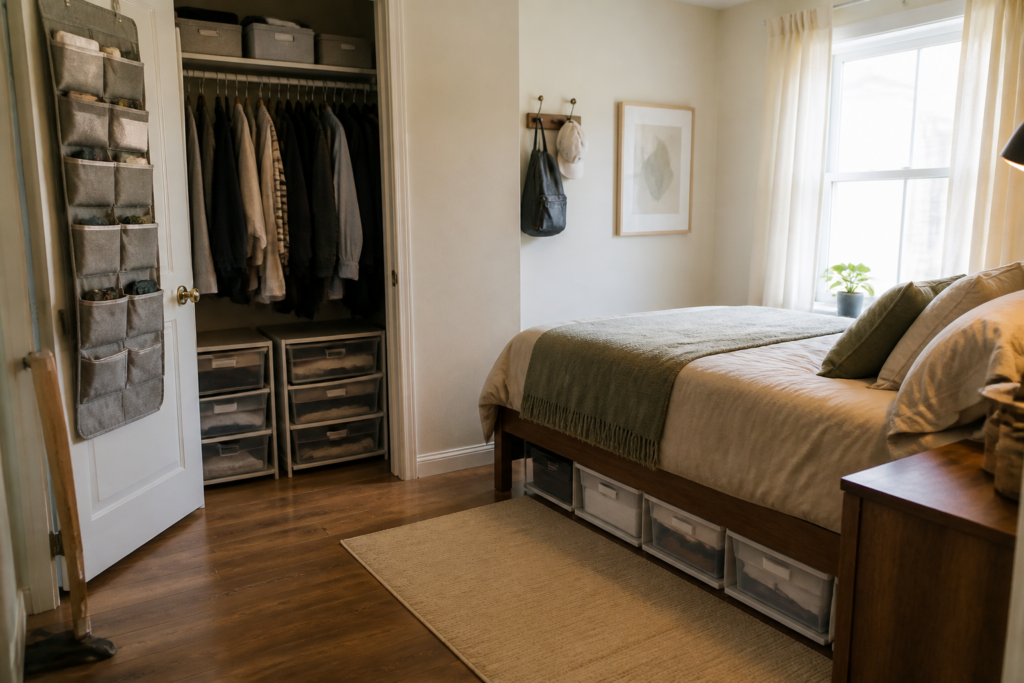
A crowded closet becomes easier to use when similar items are grouped together. Arrange clothing by type, such as shirts, pants, jackets, and formal wear. You can also organize by frequency of use, keeping everyday clothing at eye level and occasional items higher or farther back.
Slim hangers can create additional hanging space without changing the closet itself. Use shelf dividers to prevent folded stacks from collapsing, and place small bins on high shelves for accessories, belts, or seldom-used items. Label containers so you do not have to open every box when looking for something.
Keep the clothing you wear most often within easy reach. Seasonal pieces can be stored in a separate section, vacuum bags where appropriate, or low-profile containers. Before storing clothing for several months, make sure it is clean and completely dry to reduce the risk of odors or damage.
Closet doors also offer useful space. An over-the-door organizer can hold shoes, scarves, toiletries, or small accessories. If you rent, choose a removable or hanging model that does not require drilling. Avoid filling the door so heavily that it becomes difficult to open or puts strain on the hinges.
Use Under-Bed Storage
The area under the bed is one of the most valuable storage solutions for small bedrooms because it uses space that would otherwise remain empty. Low containers work well for seasonal clothing, extra bedding, shoes, luggage, and items needed only occasionally.
Choose containers with lids or zippered covers to protect belongings from dust. Clear containers make it easier to identify contents, while opaque bins can create a neater appearance. In either case, use labels and keep a simple list if you store several similar boxes.
Under-bed storage should not become a place where everything difficult is pushed out of sight. Avoid storing items you need every morning or evening. If accessing a container requires moving several other objects, the system is likely to become frustrating and eventually disorganized.
Use Vertical and Overlooked Space
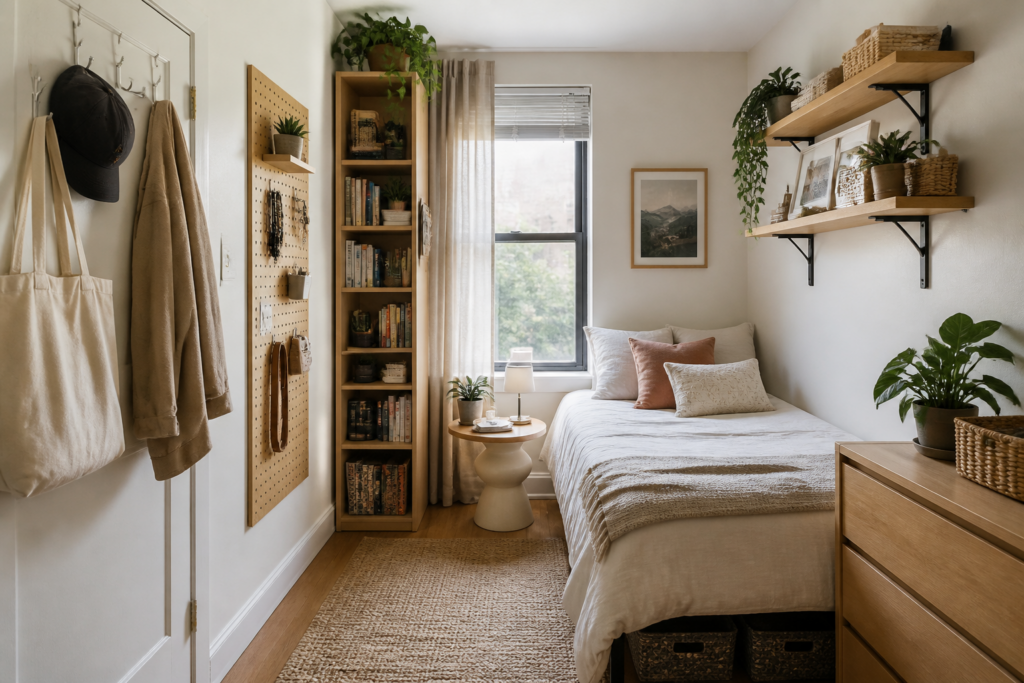
When floor space is limited, look upward. Vertical storage ideas allow you to use wall height without taking up much walking area. A tall bookcase, narrow shelving unit, or wall-mounted cabinet can hold more than a wide, low piece of furniture while preserving valuable floor space.
Wall shelves are useful for books, folded accessories, plants, or attractive storage boxes. Keep frequently used items on lower shelves and less-used belongings higher up. Heavy items should be placed on sturdy shelves that are properly secured to the wall.
A pegboard can organize headphones, bags, craft supplies, or small equipment while keeping items visible. Hooks are helpful near the door for coats, robes, hats, and frequently used bags. A row of hooks may prevent these items from ending up on a chair or the floor.
Do not overlook the backs and sides of furniture. The back of a door can hold an accessory organizer, while the side of a wardrobe may accommodate hooks or a narrow hanging rack. If you use these areas, keep the arrangement slim enough to preserve clear pathways and avoid making the room feel boxed in.
Choose Furniture That Adds Storage
Furniture has a major effect on how to maximize bedroom space. When replacing or adding a piece, look for one that serves more than one purpose. A bed with built-in drawers can store clothing or linens. A storage ottoman can provide seating and conceal blankets, bags, or extra pillows. A nightstand with shelves or drawers is usually more useful than a simple table.
A lift-up storage bed may provide substantial concealed space, but it should be easy enough to open regularly. If storage is difficult to access, it may become a neglected compartment rather than a practical part of the room.
Measure carefully before buying anything. Record the available width, depth, and height, including the clearance needed for doors, drawers, windows, and walking paths. Oversized furniture can eliminate the open area that makes a small room feel comfortable. Whenever possible, leave enough space to move around the bed and reach essential storage without squeezing between pieces.
Furniture with legs can also make a room appear more open because more of the floor remains visible. However, open space underneath should only be used for storage if you can keep it contained and orderly.
Organize Clothes and Everyday Items
Clothing is often the largest source of clutter in a bedroom. Fold items in a vertical arrangement inside drawers so you can see each piece without lifting an entire stack. Drawer dividers can separate socks, undergarments, workout clothing, and accessories.
Use dedicated drop zones for items that enter the room every day. A small tray near the bed can hold glasses, a watch, or other nighttime essentials. A hook or basket near the door can contain keys, bags, and frequently worn accessories. A laundry hamper with a defined location helps prevent worn clothing from collecting on the floor.
Electronics need their own system as well. Use a cable box, small pouch, or drawer divider for chargers and cords. Label unusual cables and recycle or remove duplicates that no longer work with your devices. Keeping electronics contained reduces visual clutter and makes it easier to find what you need.
Baskets and trays are useful for small items, but they should support organization rather than hide disorder. Give each container a clear purpose, such as “hair accessories,” “stationery,” or “current projects.” If a basket becomes a general dumping area, empty and reassess it during your weekly reset.
Keep the Room From Becoming Cluttered Again
Once your bedroom is organized, maintenance should be simple enough to repeat. Return items to their assigned locations after use, even when the task takes only a few seconds. If an item repeatedly ends up in the same wrong place, that may indicate its storage location is inconvenient.
Schedule a short weekly reset. During this time, put away clothing, clear surfaces, return items to other rooms, empty the trash, and check the floor. A 10- or 15-minute routine can prevent small problems from becoming another major decluttering project.
Review clothing and storage containers periodically. Donate items that no longer fit your life, discard damaged belongings, and remove duplicates. Leave some empty capacity in drawers, shelves, and containers. Storage works better when it has room for normal daily movement rather than being packed to the limit.
When considering a new purchase, decide where it will be stored before bringing it home. This small step helps prevent impulse purchases from creating another round of organizing.
Affordable and Renter-Friendly Organization Ideas
You do not need expensive built-ins to improve a small bedroom. Removable adhesive hooks can hold lightweight accessories, robes, or bags, provided they are used within the manufacturer’s weight limits. Freestanding shelves and narrow bookcases offer vertical storage without permanent installation.
Fabric bins are lightweight and easy to move, while baskets can make open shelves look more orderly. Tension rods can create additional hanging space inside a closet or support lightweight curtains that conceal stored items. Always check that a rod is firmly installed and suitable for the intended load.
Reuse sturdy boxes, shoeboxes, and containers when practical. Covering mismatched boxes with simple paper or placing them inside a larger basket can create a more consistent appearance. However, do not keep a container simply because it is free. If it takes up more room than the items inside it, choose a smaller option or remove unnecessary contents.
Renters should avoid drilling, permanent adhesive, or modifications that could damage walls or violate a lease. When mounting anything, follow the property rules and use appropriate hardware. Freestanding storage, over-the-door organizers, and removable solutions are often the safest choices.
Frequently Asked Questions
Where should I start when a small bedroom is extremely cluttered?
Clear one small area first, such as a section of floor or a single surface. Sort items into keep, donate, sell, relocate, and discard categories. Creating an open work zone gives you room to continue without feeling overwhelmed.
How do I decide what to keep, donate, sell, or discard?
Keep items that are useful, regularly used, or genuinely meaningful. Donate or sell belongings that are in good condition but no longer suit your needs. Discard damaged, broken, expired, or unusable items. Remove duplicates unless you have a clear reason to keep them.
What storage solutions work best in a small bedroom?
Under-bed containers, vertical shelving, closet organizers, door storage, and multipurpose furniture are especially useful. Prioritize solutions that keep items contained while preserving clear walking space.
How can I maximize vertical space?
Use tall bookcases, wall shelves, hooks, pegboards, and the upper sections of closets. Place everyday items within reach and store less frequently used belongings higher up, provided they can be accessed safely.
How can I organize a small bedroom closet?
Group similar clothing together, use slim hangers, add shelf dividers, and separate seasonal items from everyday pieces. Keep the clothing you wear most often at eye level and label bins on upper shelves.
What furniture is best for a small bedroom?
Choose compact, multipurpose furniture with built-in storage, such as a bed with drawers, a storage ottoman, or a nightstand with shelves. Measure carefully and avoid pieces that restrict comfortable movement.
How can I create storage without making the room feel crowded?
Use concealed storage, match containers to the room, and keep surfaces mostly clear. Do not fill every available space. A small amount of open space helps the bedroom feel more orderly and comfortable.
What are affordable and renter-friendly organization ideas?
Try removable hooks, freestanding shelves, fabric bins, baskets, tension rods, and reusable containers. These options add storage without requiring permanent changes to walls or cabinetry.
How do I prevent the bedroom from becoming cluttered again?
Give every retained item an assigned location, complete a short weekly reset, and remove an existing item before bringing in a similar new one. Regular maintenance is easier than repeating a major clear-out.
Final Thoughts
Organizing an overcrowded small bedroom starts with reducing possessions, not purchasing more containers. Once you decide what belongs in the room, use under-bed space, vertical areas, closet organizers, and multipurpose furniture to give each remaining item a practical home.
You do not have to complete the entire project at once. One drawer, shelf, or corner can make a noticeable difference. With small, consistent changes and a simple reset routine, even a very limited bedroom can become more functional, comfortable, and easier to maintain.