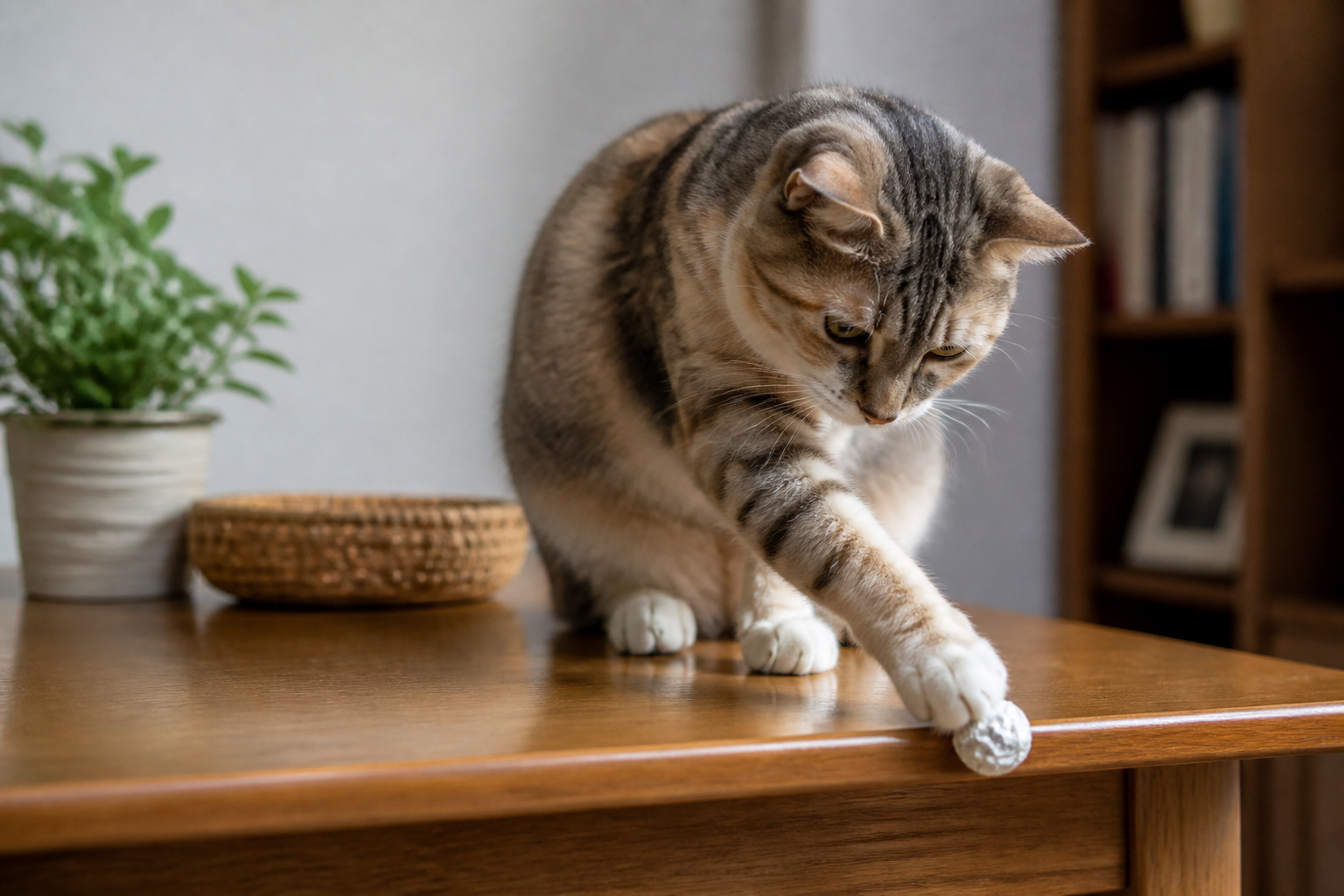
When a cat knocks something off a table, it is usually exploring, playing, hunting, seeking attention, or trying to reach something—not being spiteful. A paw can reveal whether an object moves, makes a noise, rolls, or produces an interesting reaction. Sometimes the object is simply brushed aside accidentally.
The same behavior can have different causes at different times. Look at what the cat targets, when it happens, what the cat does afterward, and how people respond.
What may be motivating your cat?
Curiosity and sensory testing
New, reflective, noisy, dangling, or unstable objects are especially tempting. A cat may tap an unfamiliar item to find out whether it moves, makes a sound, or has an interesting smell. This is usually simple investigation.
Hunting and play
If the cat watches the object closely, bats it, chases it after it falls, pounces, or returns to attack it, the movement may be satisfying as play. Lightweight objects that roll or slide are easy to turn into improvised toys, though they should be removed if they can break apart or be swallowed.

Boredom or excess energy
Table-clearing may increase when a cat has few opportunities to play, climb, explore, or watch activity. If it happens most often during long quiet periods and the cat also seems restless, the objects may simply be a convenient outlet.
Learned attention
A cat may repeat the behavior if knocking something down reliably makes its owner look over, speak, stand up, or approach. Looking toward the owner before or after the object falls, or choosing items that create a large reaction, can point to attention as part of the reward. This may occur alongside curiosity or play.
Access or accidental movement
Sometimes the cat is trying to reach a window, food, a resting place, or another animal. If it immediately moves into the cleared space or heads toward something beyond the object, access may be the real goal.
How to reduce the behavior without punishment
First, make the area safe. Remove fragile, sharp, toxic, or valuable objects from surfaces the cat can reach. Be especially careful with hot drinks, glass, small parts, and anything that could be swallowed.
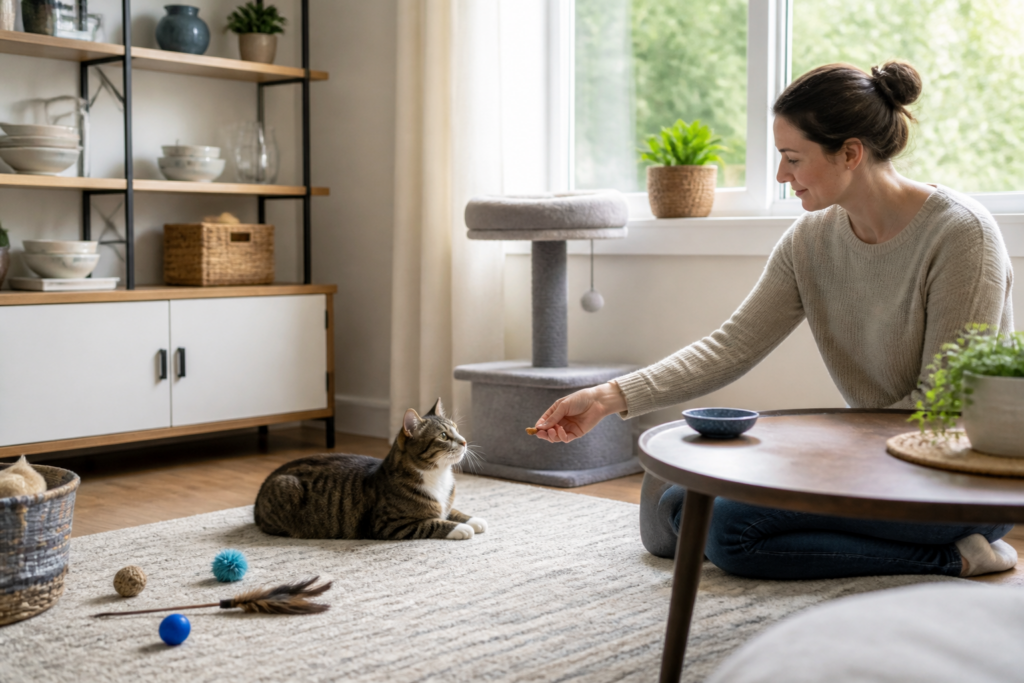
If an object is safe and the cat is not in danger, avoid turning the incident into a dramatic interaction. Calmly retrieve it and limit scolding, chasing, or repeated attention. If the cat is about to knock over something hazardous, quietly block access and remove the hazard instead of waiting for it to fall.
Offer a better outlet nearby. A stable perch by a window can satisfy an interest in watching the outside world, while safe toys for batting and chasing can replace table objects. Brief interactive play is most useful before the time when the cat usually starts clearing the table. Rotating a few suitable toys can help maintain their novelty.
Reward the behavior you want instead. When the cat uses its perch, plays with an appropriate toy, or settles near the table without touching anything, offer attention, petting, or a short play session if those are rewarding to that cat. Keep the response consistent across the household: protect dangerous items, avoid making the behavior exciting, and make acceptable activities easy to access.
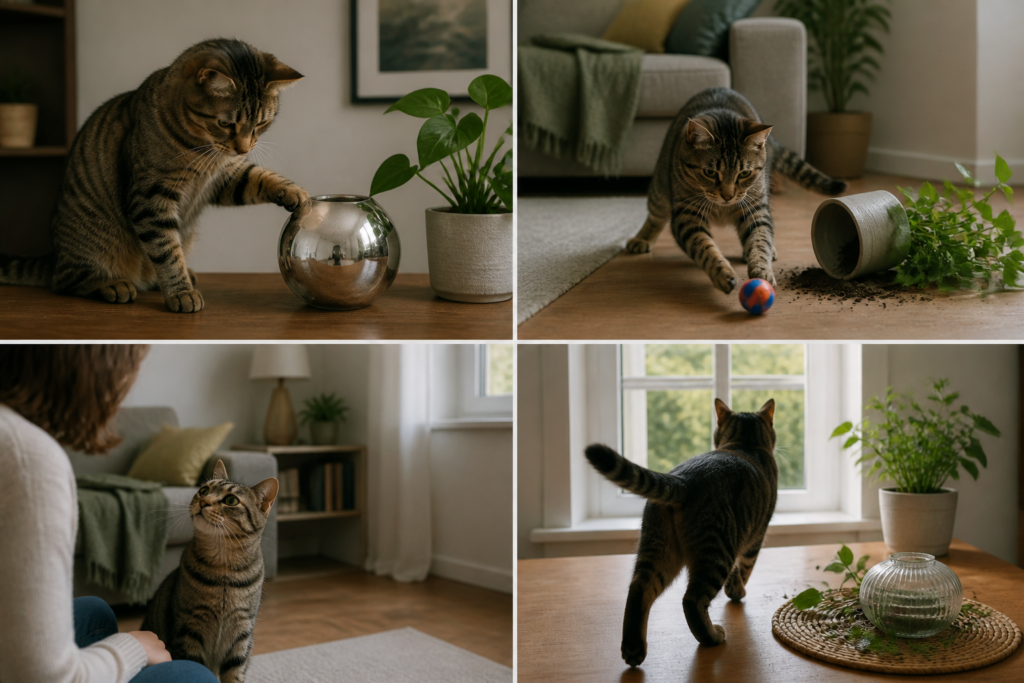
Do not yell, hit, spray, or physically punish the cat. Punishment can create fear and may still give an attention-seeking cat an intense reaction without addressing why the behavior is rewarding.
When the change deserves closer attention
For a cat with a stable pattern of occasionally batting objects from a table, the behavior is usually normal. A veterinary check is reasonable if it begins suddenly, becomes unusually intense, or occurs alongside changes in appetite, thirst, sleep, movement, vocalization, litter-box use, or social behavior.
Also seek advice if the cat seems confused, painful, distressed, unusually restless, unable to settle, or repeatedly injures itself or damages household items. The behavior alone does not identify a medical problem, but noting when it happens, how often, what objects are involved, and what else has changed can help a veterinarian assess it.