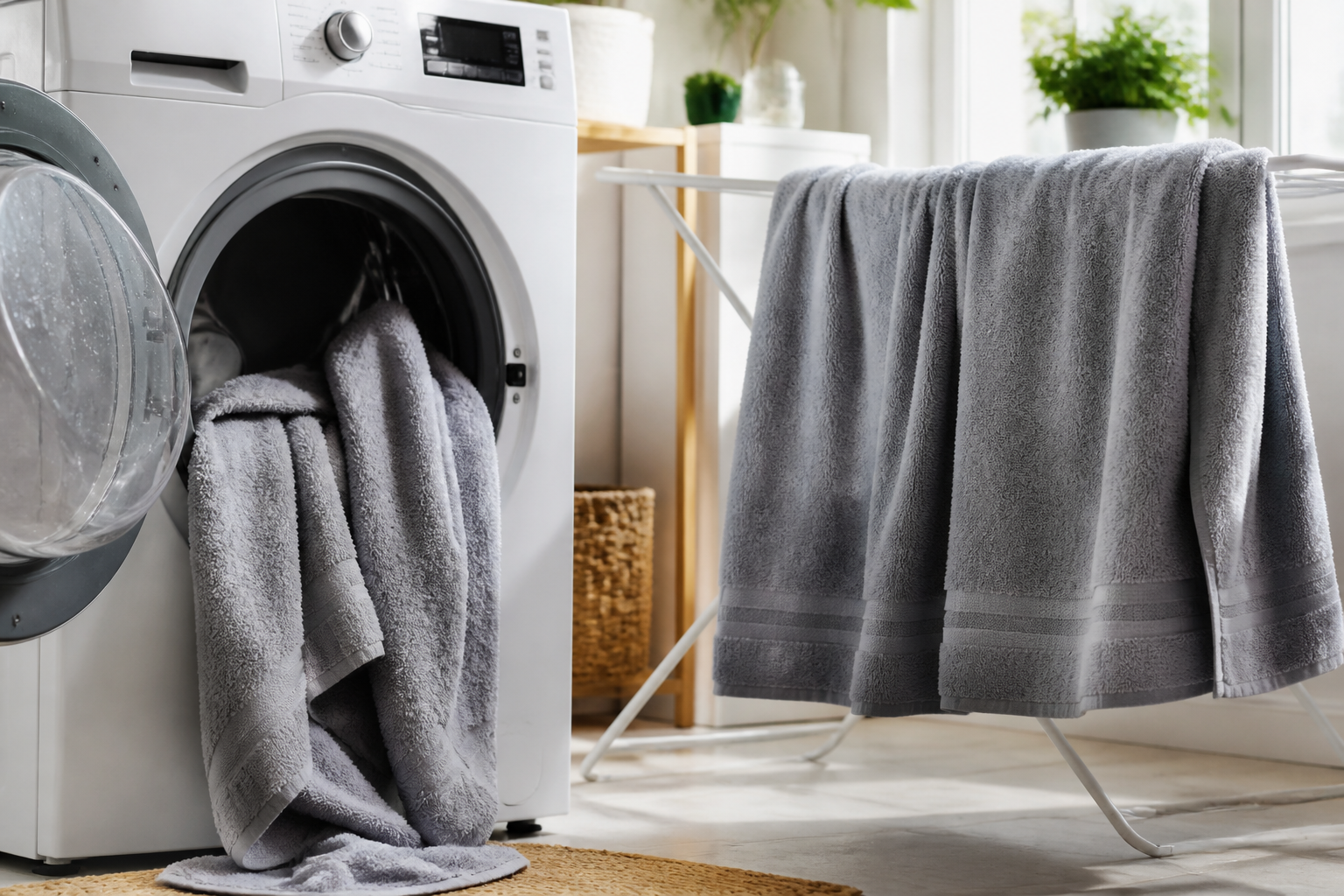
Musty towels are usually not permanently ruined. The smell most often comes from trapped moisture, detergent or softener residue, poor airflow, or a washing machine that needs cleaning. The practical fix is to identify when the odor appears, rewash the towels without adding buildup, dry them completely, and inspect the washer if the smell returns.
Why Clean Towels Smell Musty
Thick towels hold a lot of water, so they can stay damp long enough for musty odors to develop. Common trouble spots include the washer after a cycle, a crowded hamper, a bunched-up bathroom towel, or slow indoor drying.
When the smell appears helps identify the likely cause. A sour or damp odor immediately after washing points to an incomplete rinse, excess detergent, an overloaded load, incomplete drying, or odor inside the washer. If the towel smells fresh at first but becomes musty after use, slow drying and poor airflow are more likely.
Too much detergent or fabric softener can leave a coating that holds body oils, moisture, and odor in the fibers. A washer with residue, stagnant water, or mildew can also transfer smells to clean laundry.
Rewash Musty Towels Without Creating More Buildup
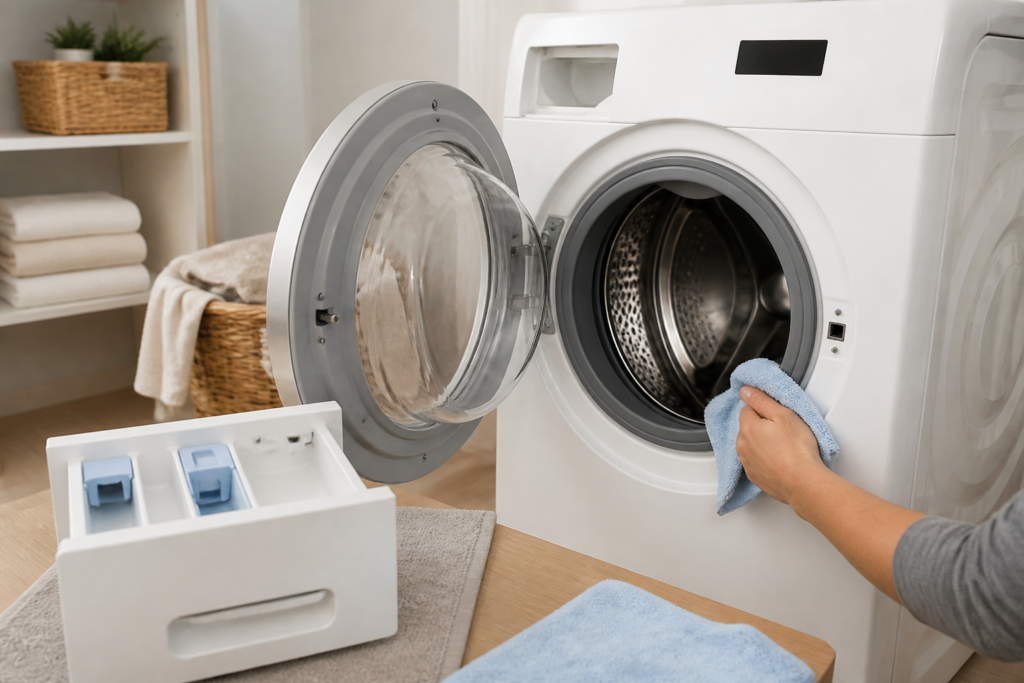
Start with one controlled reset wash rather than adding several products at once:
- Check the care label and choose the warmest setting the towel and washer safely allow.
- Load the drum loosely enough for the towels to move and rinse properly.
- Use the recommended amount of regular detergent, not extra detergent to compensate for the odor.
- Skip fabric softener, scent boosters, and other fragrance products during this wash.
- Use an extra-rinse option if the towels feel waxy, stiff, heavily fragranced, or coated.
Hotter water is not automatically better. Follow the care label, especially for blends or towels with details that could shrink or become damaged. If you use an oxygen-based laundry product or washing-machine sanitizer for a stubborn odor, confirm that it is suitable for the towels and follow its label exactly. It should support proper washing and drying, not replace them.
Never mix chlorine bleach with vinegar, acids, ammonia, or other cleaning products. The combination can produce dangerous fumes. Follow product labels and ventilate the area.
Dry Towels Completely and Quickly
Move towels to the dryer or drying line promptly when the wash ends. Leaving them in the washer or a heap gives dampness and odor more time to develop.
Dry the thickest parts completely, including hems, seams, folded corners, and areas that stayed compressed. A towel can feel warm or dry on the surface while still holding moisture inside.
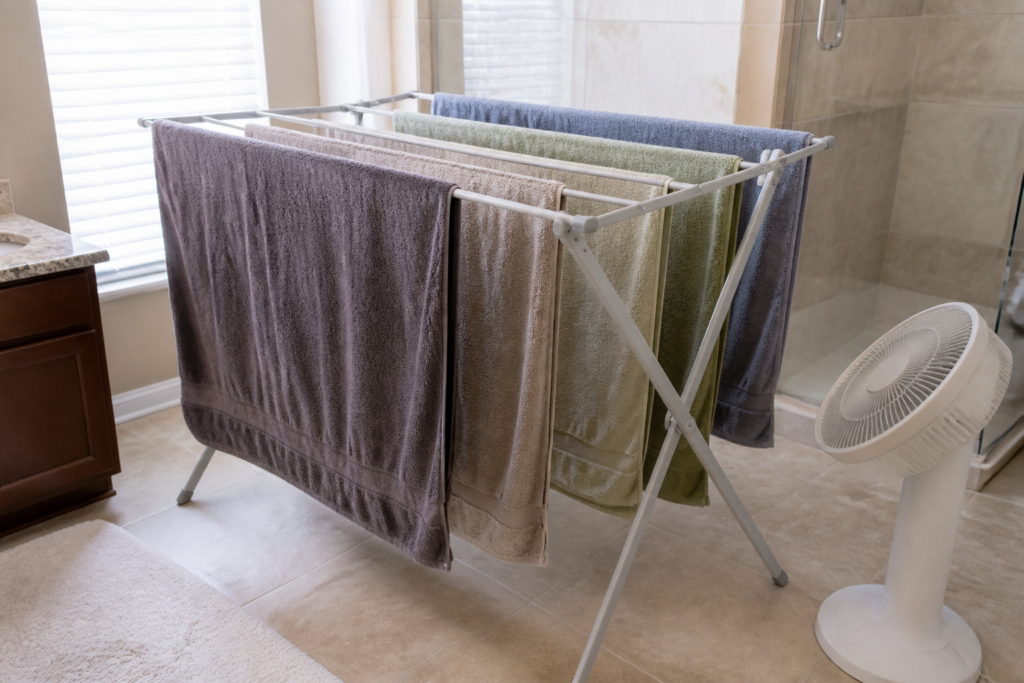
In a dryer, avoid overloading the drum and use a setting suitable for the fabric. Check the thickest towel before ending the cycle and continue drying if it remains cool or damp. For air-drying, spread each towel fully open, leave space between towels, and provide airflow around both sides. A fan or better ventilation can help in humid conditions.
Prevent Musty Odor Between Washes
After use, hang each towel spread out rather than bunched on a hook, over a hamper, or on the floor. Let it dry before placing it in a closed hamper, especially if the laundry will not be washed soon.
Store clean towels only when they are fully dry. Keep them in a dry cupboard and avoid compressing them tightly in a humid space. Storage will not remove an existing odor, so rewash and dry a musty towel before putting it away.
Wash towels according to how quickly they dry and how heavily they are used. Towels shared by several people or used in a humid bathroom may need more frequent washing if they remain damp between uses.
Clean the Washing Machine if the Smell Keeps Returning
If several loads develop the same odor, the washer is a strong suspect. Run its cleaning cycle if it has one; otherwise, follow the manufacturer’s instructions for that model.
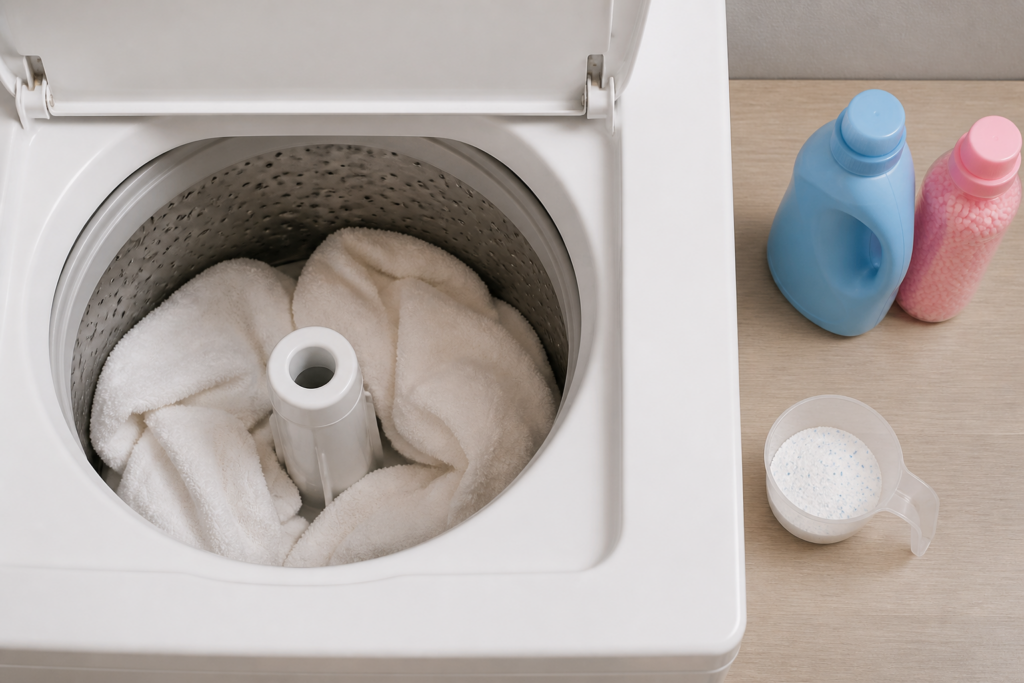
Wipe areas where residue and standing water collect, such as:
- the door gasket on a front-loading machine;
- the detergent and softener drawer;
- the underside of the lid or rim on a top-loading machine; and
- accessible seals and edges around the drum.
Check and clean a filter or drain area only if the manual permits user access and explains the procedure. Do not combine cleaning agents, especially bleach with vinegar or another acidic product. Leave the door or lid open between loads when safe, and leave the detergent drawer partly open so damp areas can dry. Keep the machine closed if children or pets could reach it.
A strong smell from an empty washer, poor drainage, visible standing water, or an odor that continues transferring to clean laundry after proper cleaning may indicate a problem with the drain system, filter, seal, or another component. Contact the manufacturer or an appliance professional in that situation.
Choose the Next Step
- Only one or two towels smell: Rewash them with the correct detergent amount, enough drum space, and an appropriate temperature, then dry them immediately and completely.
- The smell returns after each use: Spread the towels open after use and improve airflow so they dry faster.
- Freshly washed towels smell musty: Reduce detergent, skip softener, avoid overloading, use an extra rinse if residue is likely, and clean the washer according to its manual.
- A few towels still smell after the routine and washer are corrected: They may have deeply retained odor; replacement may be more practical than repeated treatment.