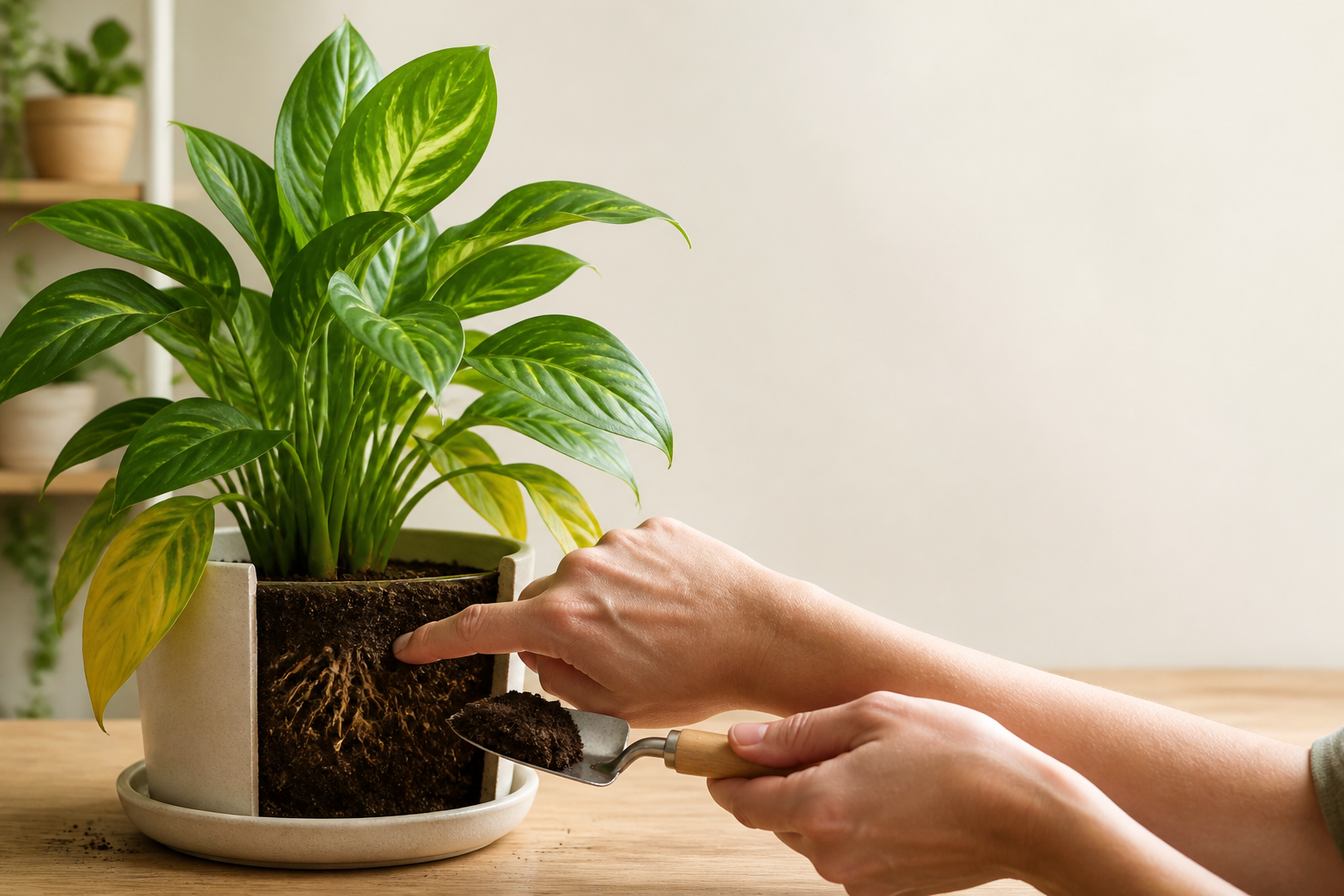
Yellow leaves can result from excess water, dry roots, unsuitable light, temperature stress, pests, nutrient problems, or normal aging. The pattern of yellowing and the plant’s growing conditions provide better clues than color alone.
Before changing anything, note which leaves are affected, how quickly the change is spreading, whether the leaves are soft or crispy, and how damp the soil is below the surface.
Decide Whether the Yellowing Is Normal
One older, lower leaf turning yellow while new growth looks healthy can be normal. Plants shed aging leaves, and no treatment may be needed if the yellowing stops after one or two leaves.
Investigate when several leaves turn yellow at once, new growth is affected, or the plant is also dropping leaves, growing slowly, developing soft stems, or worsening over days or weeks. Exact symptoms vary by species, especially in plants with naturally pale or variegated foliage.
Check Watering and Drainage First
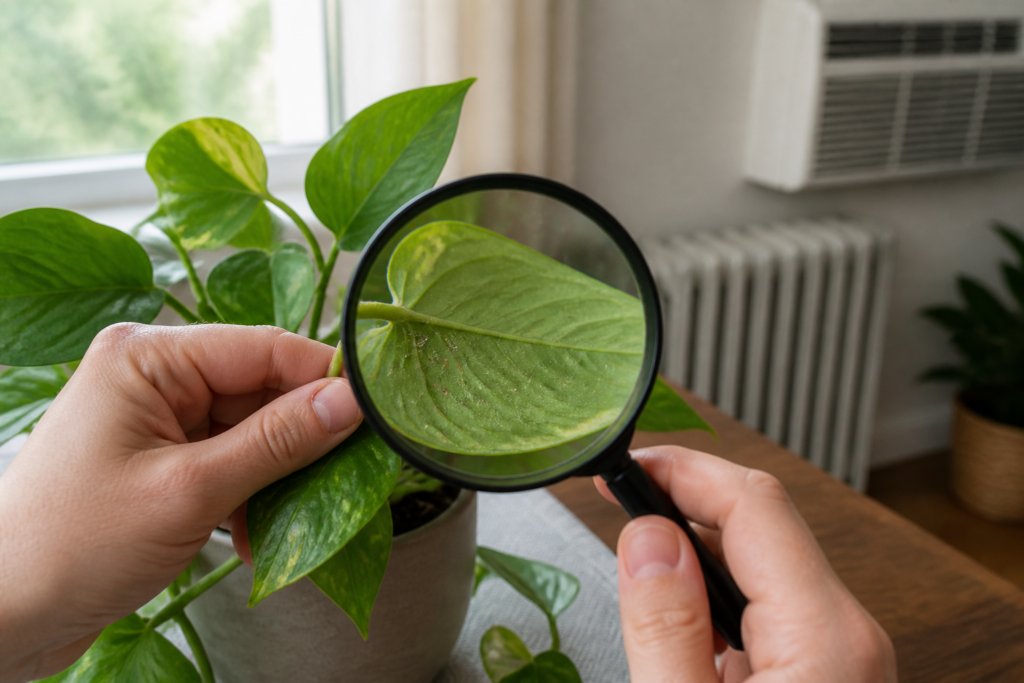
Both too much and too little water can cause yellow leaves. Check the root zone rather than relying on a calendar or the dry surface of the soil.
- Wet-soil clues: soil that stays saturated, yellowing lower leaves, slow growth, a sour smell, or soft stems. These may indicate overwatering or poor drainage.
- Dry-soil clues: a very light pot, dry soil below the surface, drooping, and crispy brown edges. These often accompany leaves that feel thin or brittle.
Make sure the pot has drainage holes and that water is not collecting in a saucer or decorative container. If the soil is wet, pause watering and do not add fertilizer. If it remains saturated, inspect the roots for signs of damage; mushy, discolored, or foul-smelling roots can indicate a serious problem.
If the root ball is severely dry, water it thoroughly until excess drains from the pot, then empty the saucer. Very dry mix may need to be rehydrated gradually rather than with one quick splash.
Check Light, Temperature, and Pests
Too little light can cause weak growth and persistent pale foliage. Strong direct sun, especially after a sudden move, can bleach or scorch leaves. Change the plant’s position gradually and match the light to the species rather than moving a plant from a dim corner directly into intense sun.
Cold drafts, cold windows, heating vents, air-conditioning outlets, and sudden temperature changes can also cause yellowing or leaf drop. Keep conditions as stable as possible.
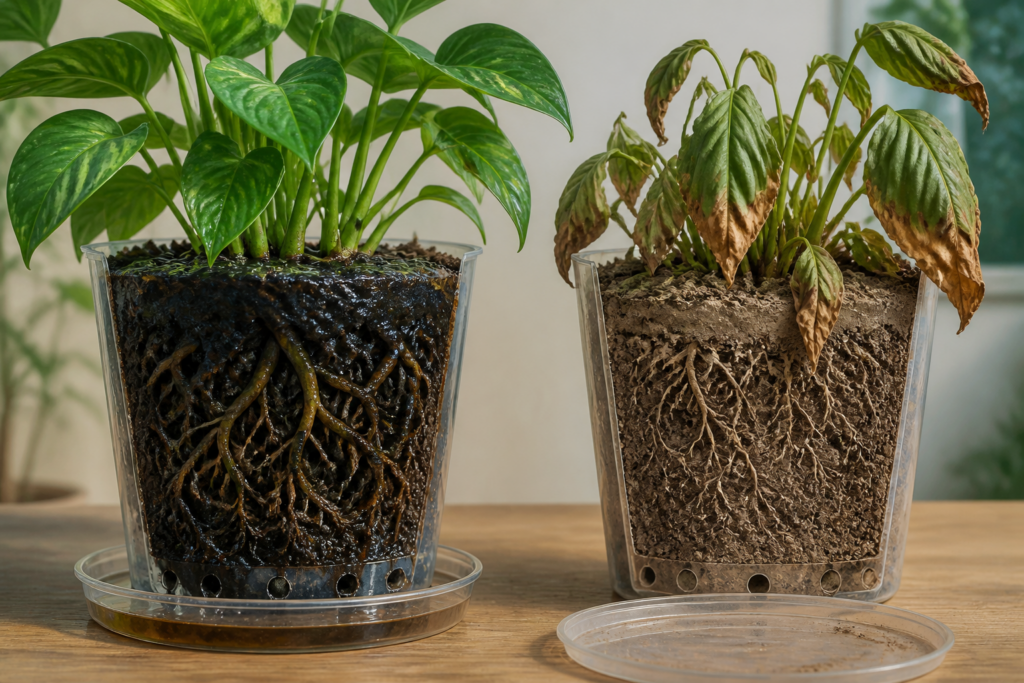
Inspect leaf undersides, stems, and leaf joints for fine webbing, sticky residue, cottony material, shell-like bumps, clusters of insects, or distorted new growth. If pests are possible, isolate the plant while you inspect it. Wipe or rinse accessible pests only if the plant tolerates that treatment, and follow any pesticide label exactly.
Consider Nutrients Only After the Basics
Do not use fertilizer as the default response. A deficiency is more plausible when moisture, drainage, light, temperature, and pests appear well managed but a consistent pale pattern continues. Yellowing between green veins can be a clue, but root damage, soil conditions, water quality, and other stresses can look similar.
Never fertilize a plant with waterlogged, damaged, or severely dry roots. If the plant is actively growing and its basic conditions are sound, use a balanced houseplant fertilizer diluted and timed according to the product label. Species, potting mix, season, and water quality all affect nutrient needs.
Make One Correction and Monitor
Correct the most likely cause first: adjust watering, improve drainage, change light gradually, stabilize temperature, or address a confirmed pest problem. Avoid repotting, heavy pruning, fertilizer, and several treatments at the same time; doing so can add stress and make the result difficult to interpret.
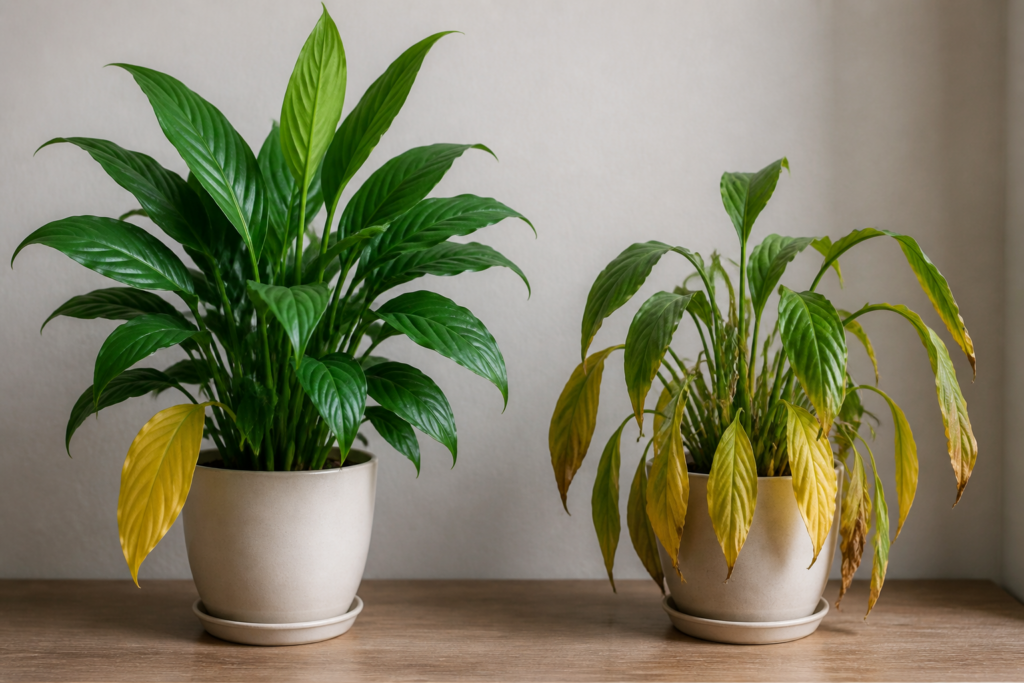
Remove fully yellow or dead leaves with clean scissors. Leave partly green leaves unless they are diseased or badly damaged. Yellow leaves usually will not turn green again, so judge recovery by the rate of further yellowing and the quality of new growth.
Repot only for a clear reason, such as persistently saturated mix, blocked drainage, extensive root damage, or a container that is clearly too small. Use a container with drainage and an appropriate potting mix rather than automatically choosing a much larger pot.
Seek help from a local nursery, extension service, or plant specialist if the plant continues to decline after basic corrections, the roots are extensively damaged, or a pest is spreading and cannot be identified or controlled.