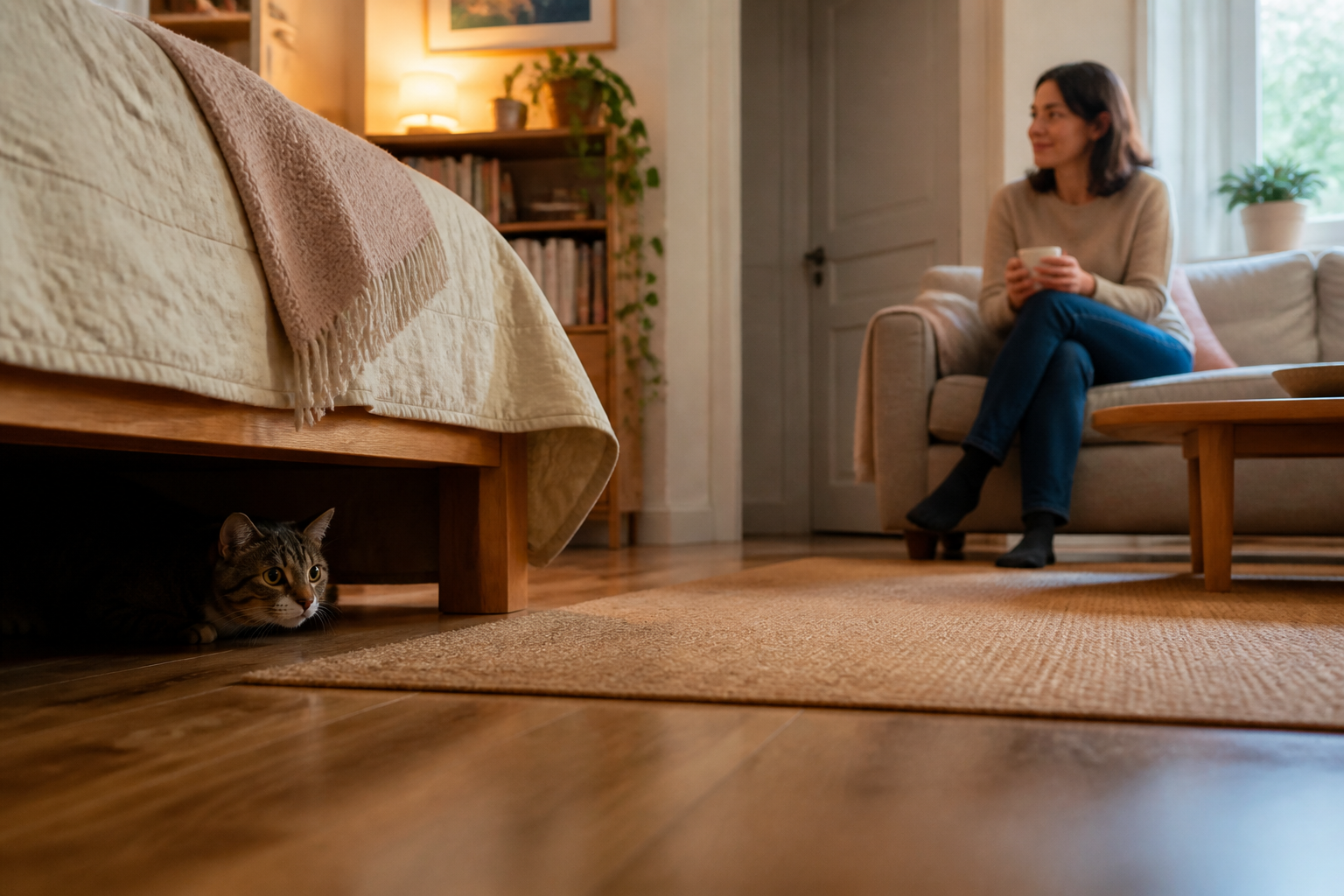
When a cat hides as soon as someone comes over, it is usually trying to create distance from an unfamiliar or unpredictable situation. Hiding is a self-protective response, not a sign that your cat is being rude, stubborn, or “antisocial.”
Some cats eventually come out to observe a visitor. Others stay hidden for the entire visit and return to normal afterward. Both can be normal, especially for cats that are naturally cautious, had little early exposure to visitors, or are still adjusting after adoption.
The most helpful response is to provide a secure retreat and let your cat decide whether to come out. The goal is not necessarily to make your cat greet people; it is to help the cat feel safe.
Why Visitors Can Make a Cat Hide
Your cat knows the people, sounds, smells, and movements that make up daily life at home. A visitor changes that familiar pattern. New footsteps, voices, clothing smells, perfumes, bags, and gestures can make the environment feel less predictable.
Direct attention can be intimidating too. A visitor who stares at the cat, walks toward it, reaches down, or tries to pick it up may mean to be friendly. From the cat’s perspective, an unfamiliar person is suddenly closing the distance without permission.
Some cats are cautious by nature. Others may have had little experience with visitors or found earlier interactions frightening. A cat can be relaxed and affectionate with household members while treating guests as a separate, more threatening category of person.
Hiding gives the cat distance and control. Under a bed, behind furniture, inside an open carrier, or in another quiet room, the cat can monitor what is happening without being approached. A cat that watches from a safe place, eats normally, uses the litter box, and returns to its usual behavior after the visit may simply prefer privacy.
How to Tell Normal Caution From Too Much Stress
Look at how your cat behaves before, during, and after the visit. Mild, situational caution may involve running when the doorbell rings, staying hidden for a while, or watching the visitor from a distance. Once the home is quiet, the cat may groom, eat, use the litter box, play, or resume its normal routine.
More intense stress can include:
- Flattened ears, a tightly crouched body, or a tucked tail
- Very large pupils, trembling, hissing, or growling
- Frantic escape attempts or crashing into furniture
- Refusing food or treats while the visitor is present
- Remaining distressed long after the visitor has left
- Urinating or defecating outside the litter box during or after visits
Your cat does not need to show every sign for the visit to be stressful. Consider whether the hiding is limited to visitors or also occurs during ordinary household activity. Recovery matters too: a cat that returns to normal after the home is quiet presents a different concern from one that remains withdrawn for hours or days.
Do not pull your cat out to inspect it or prove that it is fine. Forced exposure can make the hiding place feel unsafe and may increase fear during future visits.
What to Do Before and During a Visit
Prepare the retreat before the visitor arrives. This might be a quiet bedroom, a covered bed, an open carrier, a cat tree, or a space behind furniture. Use a place the cat already trusts, and make sure it can leave freely.
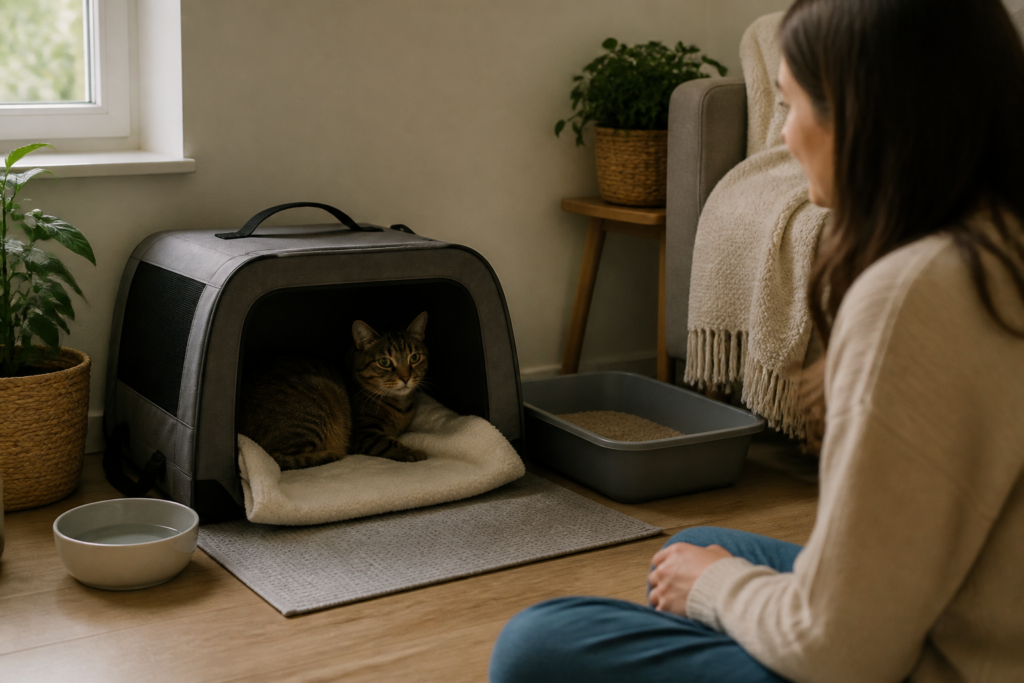
If the cat will stay in a separate room, provide water, a litter box, and a comfortable resting area. For a longer visit, food may also be appropriate. The cat should not have to pass an unfamiliar person to reach something essential.
When the visitor arrives, let the cat hide. Do not carry it into the room, block its escape route, reach into the hiding place, or repeatedly coax it out. Punishment and cornering can increase fear rather than teach the cat to feel safer.
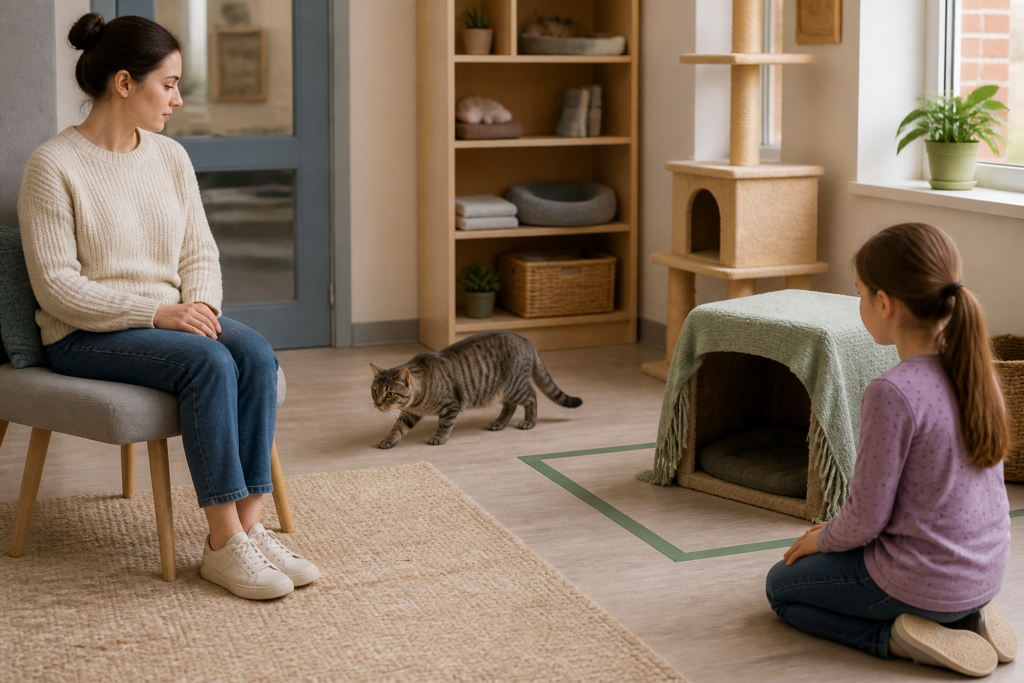
Ask the visitor to ignore the cat at first. Calm voices, slow movements, and avoiding direct staring are less threatening than excited greetings. The visitor can sit quietly and allow the cat to observe from a distance.
If your cat comes out, let it choose the pace. It may sniff a shoe, watch from under a chair, or approach briefly before retreating. Approaching does not automatically mean the cat wants to be touched. Keep your hands still and low, and wait for clear signs that the cat is inviting contact.
Treats or a favorite toy can help create a positive association, but only if the cat is calm enough to use them. If it will not eat, do not push treats closer or lure it out of hiding. Bringing the cat into the open and then reaching to touch it can make the reward feel like a trap.
Give children a simple rule: the hiding place is off-limits. They should not crawl after the cat, reach under furniture, or try to carry it out. For a large gathering, loud guests, or visitors who will not follow these instructions, keeping the cat in a comfortable separate room is often the kindest option. It protects the cat from repeated approaches and gives it a predictable place to settle.
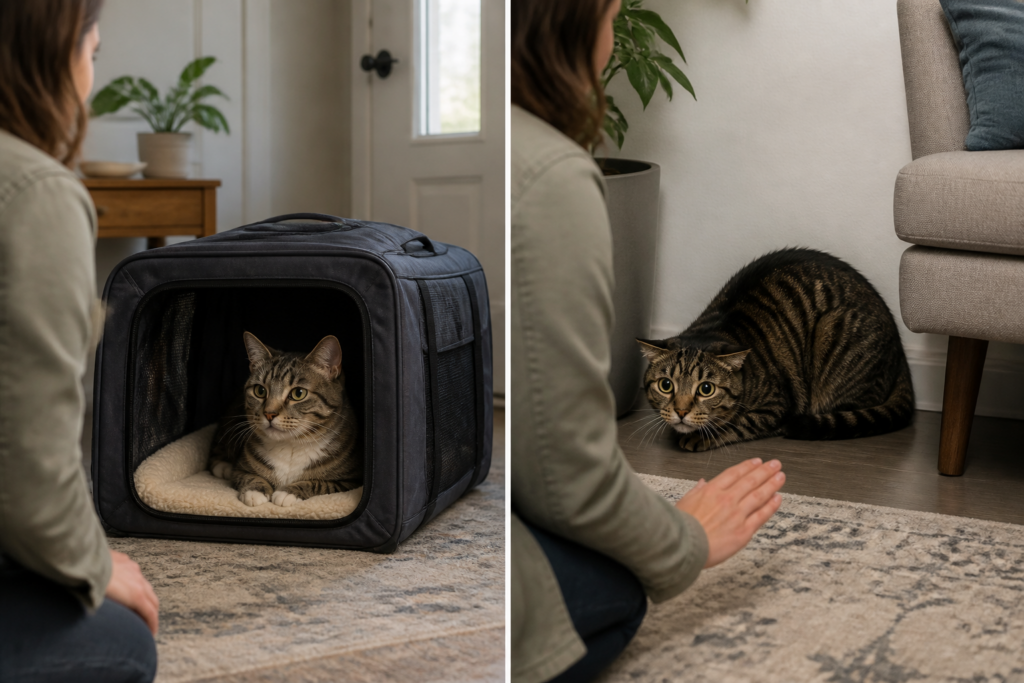
Do not deliberately overwhelm the cat in the hope that it will eventually “get used to” visitors. Some cats become more comfortable with calm, controlled experiences, but overwhelming exposure can make the problem worse. Reduce the intensity instead: increase the distance, shorten the interaction, or let the cat remain in its quiet room for the entire visit.
When to Seek Veterinary or Behavior Support
Visitor-related hiding is usually less concerning when it is predictable, limited to visits, and followed by normal recovery. Contact your veterinarian if the behavior begins suddenly, becomes much worse, starts happening when no visitors are present, or continues long after visits end.
Hiding can sometimes accompany pain or illness. Seek veterinary advice if you also notice reduced appetite, changes in litter-box use, vomiting, low energy, trouble moving, unusual grooming, weight loss, or other changes in behavior.
If your cat remains intensely distressed despite having a quiet retreat, ask your veterinarian about further help. A veterinarian can consider medical causes and, if needed, recommend a qualified feline behavior professional.
For many cats, successful management does not mean greeting every guest. It means having a reliable safe place, avoiding panic, and returning to normal when the visitor leaves. Respecting that preference may be the most effective way to help.