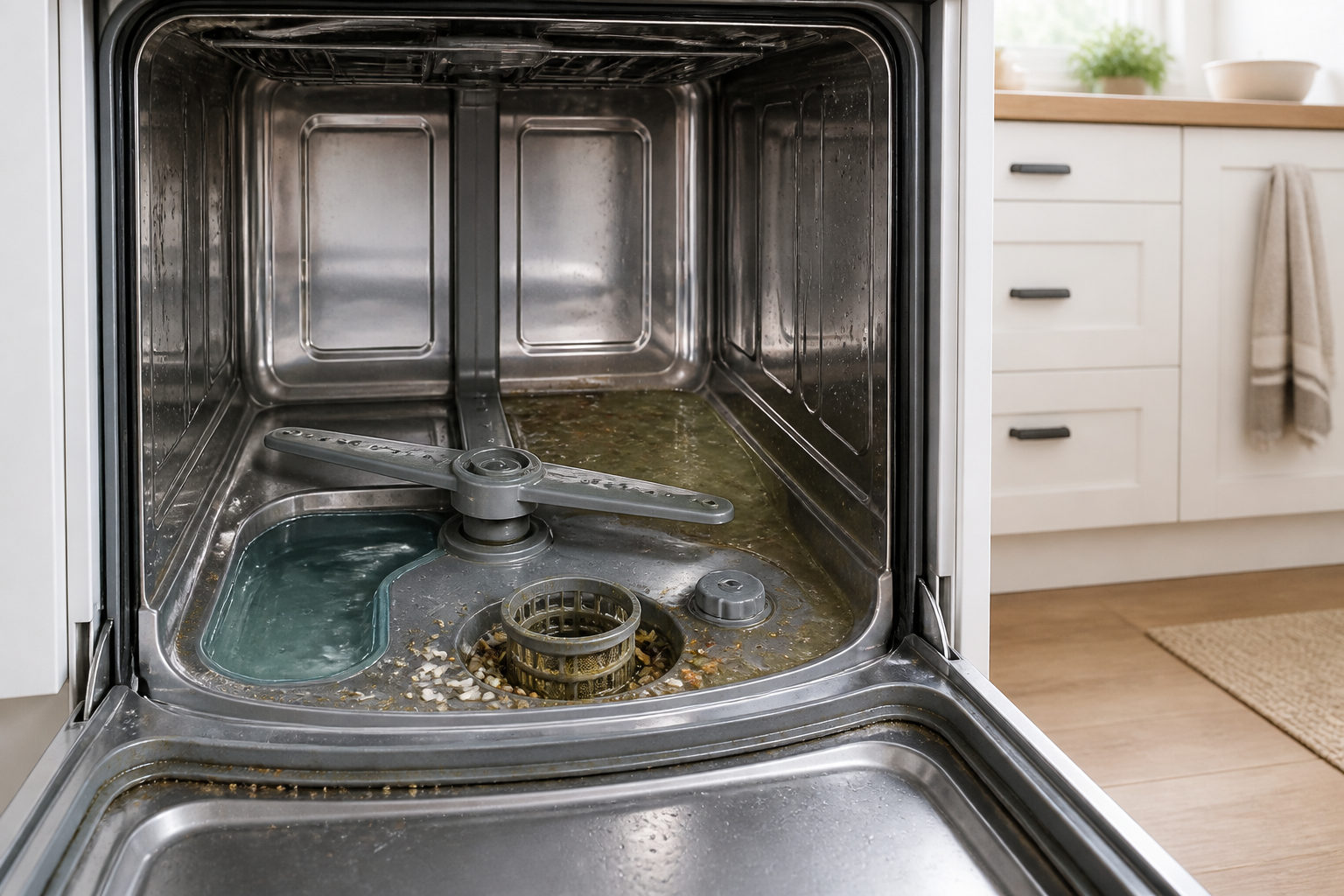
Why Does My Dishwasher Smell Bad and How Can I Fix It?
Most dishwasher odors come from trapped food, a dirty filter, damp residue, or poor drainage. Start with the filter and drain area, then clean the surfaces that hold residue. If the smell returns immediately or dirty water remains in the tub, investigate drainage instead of repeatedly running cleaning cycles.
Remove the dishes and turn off the dishwasher before removing parts. Check the owner’s manual first: filter, spray-arm, and sump designs vary, and forcing a cover or component can damage it.
1. Identify the likely source
- Sour or rotten-food smell: Food may be trapped in the filter, filter housing, sump area, drain opening, or spray arms.
- Musty smell: Moisture and residue often collect around the door gasket, underside of the door, or other damp surfaces.
- Sewage-like smell: Wastewater may be flowing back into the dishwasher, or the drain hose or shared sink plumbing may have a problem.
- Burning or electrical smell: Stop using the appliance and arrange service. This is not a cleaning issue.
Notice where the odor is strongest: inside the tub, near the bottom, around the door, or under the sink. Also check for standing water. A small amount of clean water in a designed sump area may be normal, but dirty water spread across the bottom of the tub is not.
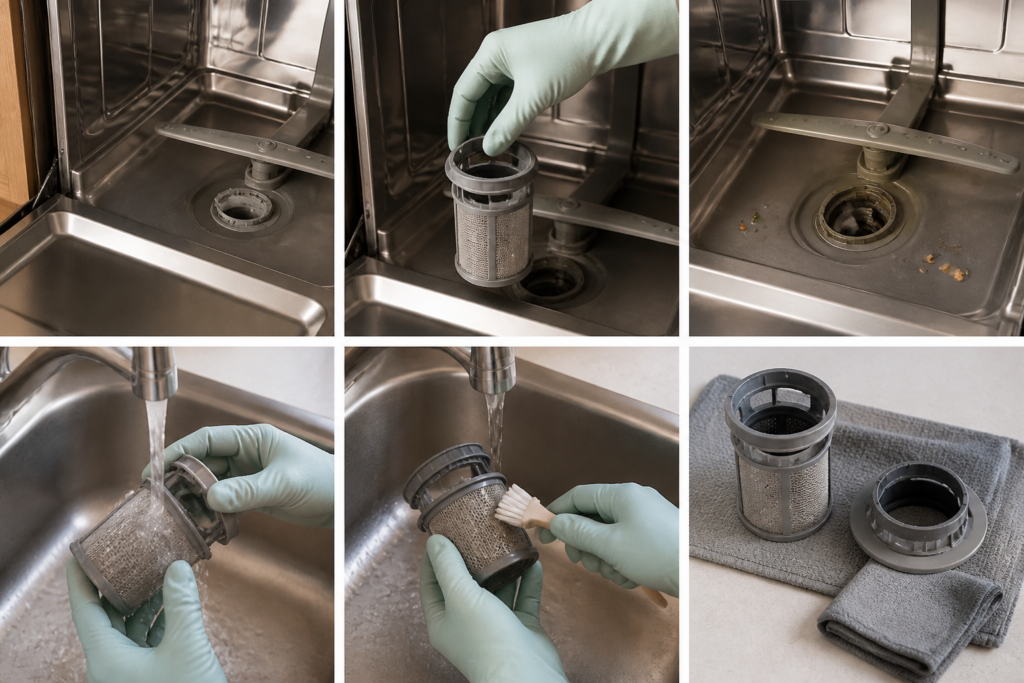
2. Clean the filter and drain area first
- Remove the lower rack and locate the removable filter.
- Remove it according to the owner’s manual. Do not pry up a cover or force a filter that does not release easily.
- Rinse the filter under warm running water and use a soft brush with a little dish soap to loosen grease and residue.
- Wipe the filter housing and the accessible area around the drain with a damp cloth or paper towel.
- Look for labels, bones, glass fragments, or other debris blocking the drain opening.
- Rinse and reinstall the filter securely.
The removable filter is different from the housing or sump beneath it. Cleaning only the filter may leave sludge where the odor can quickly return. Wear gloves and handle the bottom of the tub carefully if broken glass may be present. Never pour caustic drain cleaner into the dishwasher.
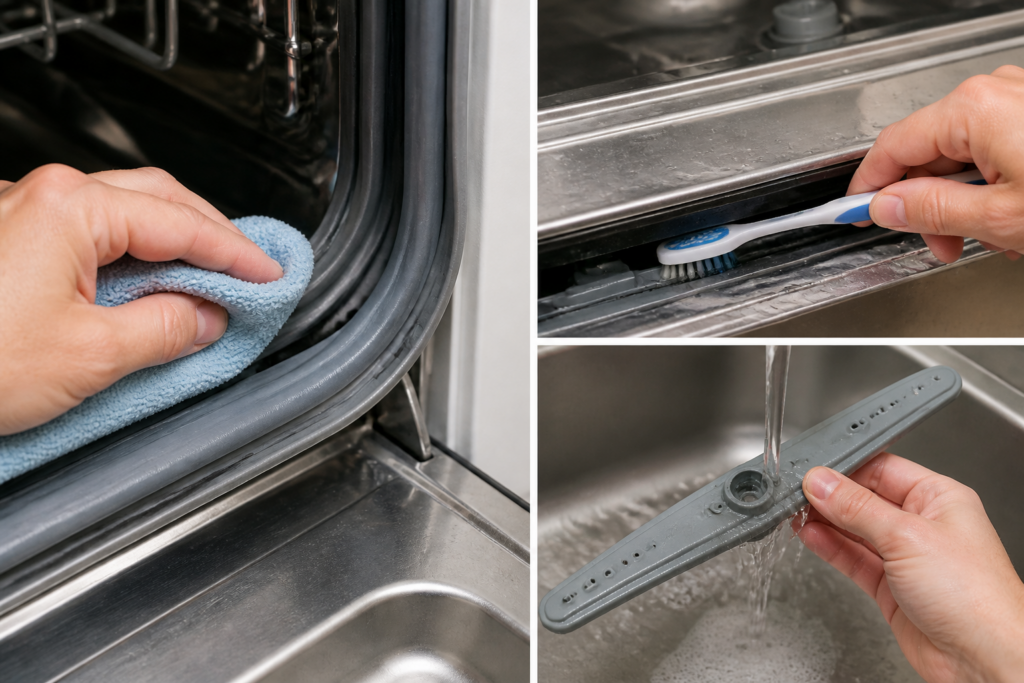
3. Clean surfaces that hold residue
Wipe the rubber door gasket, its channel, the lower edge and underside of the door, and the detergent-dispenser area with warm water and a little dish soap. A soft cloth or old toothbrush can reach the gasket channel, but avoid scrubbing hard enough to deform the seal.
Inspect the spray-arm holes for food or mineral buildup. If the arms are designed to come off, remove them according to the manual and rinse them. A soft brush or wooden toothpick can clear individual holes. Do not use a sharp metal object or force an arm that does not release easily.
Wipe the tub walls, corners, door edges, and area around the bottom drain. For remaining grease or light hard-water film, run an empty cycle with a dishwasher cleaner or descaler labeled for the appliance, following the product instructions. Use only one cleaning product at a time. Never mix bleach with vinegar, ammonia, dishwasher cleaner, or anything else, and do not use chlorine bleach on stainless-steel interiors or components unless the manufacturer explicitly allows it.
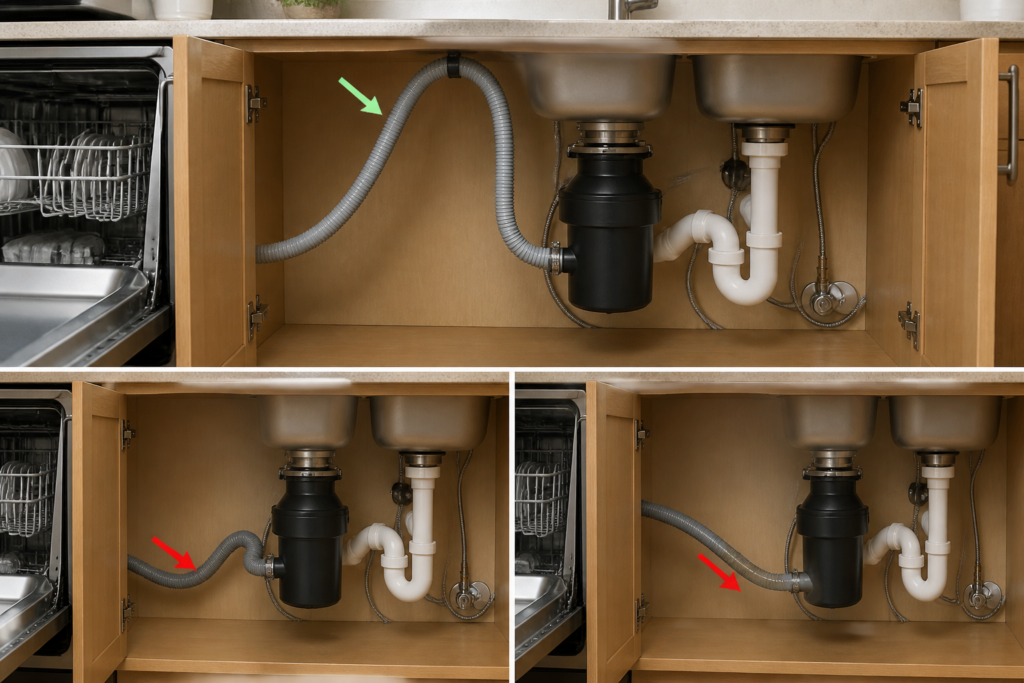
4. Check drainage before repeating the cleaning
If the odor returns immediately or dirty water remains in the tub, check the drain path.
- Look under the sink for a drain hose that is kinked, crushed, or routed low enough to allow sink water to flow back.
- If the dishwasher drains through a garbage disposal, confirm that the dishwasher inlet plug was removed when the disposal was installed or replaced.
- Check whether the sink or garbage disposal drains slowly, smells, or gurgles when the dishwasher pumps out.
- Notice whether dirty water appears in the dishwasher after using the sink.
Drain-hose routing varies by dishwasher, disposal, and local plumbing requirements, so follow the manufacturer’s instructions. Do not disconnect hoses or open electrical panels as part of ordinary odor troubleshooting.
After cleaning, run a normal empty cycle and check the bottom when it finishes. A small amount of water may remain in the designated sump, depending on the design. Water spread across the tub, dirty water returning after the cycle, or a strong sewage odor indicates a drainage or plumbing problem rather than a surface-cleaning problem.
5. Prevent the smell from returning
- Scrape large food scraps into the trash or compost; pre-rinsing every dish is usually unnecessary.
- Inspect the filter regularly, especially after greasy meals or during heavy use.
- Do not overload the racks, and use the detergent amount recommended for the appliance and detergent.
- Use an appropriate normal or hot cycle when washing greasy loads.
- If the manufacturer permits it, leave the door slightly ajar after a cycle so the interior can dry.
- Wipe the gasket when it is damp or dirty and remove clean dishes when practical.
Do not use fragrance products to mask the smell. If it returns quickly despite a clean filter and dry interior, return to the drainage checks.
6. Know when cleaning is not the solution
Arrange appliance service if the dishwasher fails to drain, makes unusual pump noises, shows an error code, leaks, or repeatedly leaves standing water. Contact a plumber when the odor clearly comes from the sink drain, garbage disposal, drain hose, or sewage connection.
If the dishwasher is rented or under warranty, document the symptoms and contact the property manager or service provider before changing connections. Stop using the appliance if you notice a burning or electrical smell. Do not disassemble the pump, motor, wiring, or sealed plumbing components for routine odor removal. The owner’s manual is the authority for removable parts, approved cleaners, and sanitation-cycle instructions.