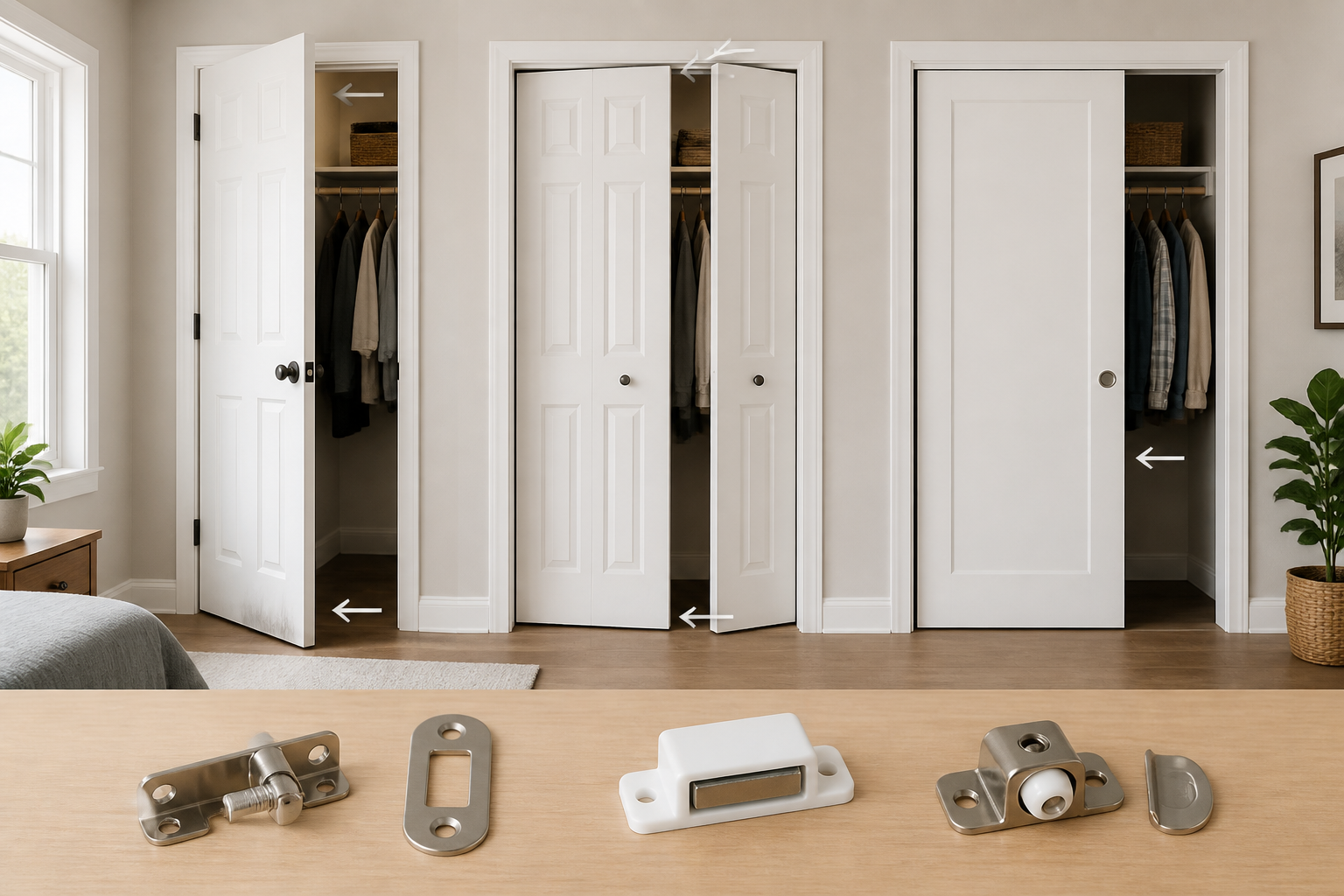
A closet door that will not stay closed usually has one of four problems: something is obstructing it, the door is misaligned, the hardware is loose, or the latch, catch, or magnet is no longer holding properly. The right fix depends on the door style—hinged, bi-fold, or sliding—so start by watching exactly what happens during the last few inches of closing.
Start With the Door’s Behavior
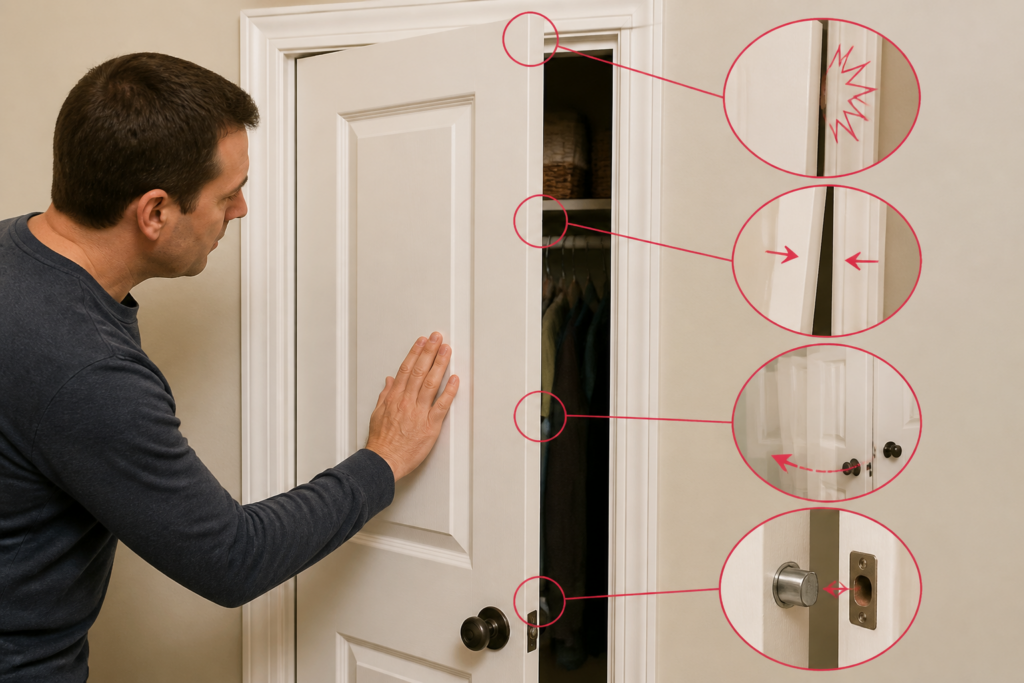
Open and close the door slowly while looking at the gaps around it. Notice whether it rubs against the frame, floor, or another panel, and whether it moves smoothly or springs back.
- It rubs, drags, or springs back: suspect misalignment, a sagging hinge, a loose pivot, a poorly adjusted roller, or a dirty or damaged track.
- It reaches the frame but pops open: the latch, strike plate, magnetic catch, or roller catch may be out of alignment or worn.
- It closes only when pushed hard: check for an obstruction, swollen wood, a warped panel, or a frame that has shifted.
- It sits unevenly: inspect the hinges, bi-fold pivots, sliding rollers, and track before replacing the closure hardware.
Do not start by forcing the door or tightening every screw you can see. If the door is physically out of position, a stronger catch may only hide the problem and put extra strain on the frame.
Rule Out Obstructions and Loose Hardware
First remove anything that could be pushing against the door. Check for clothing, hangers, shelf contents, trim, carpet edges, and debris on the floor or inside the track. A single hanger caught behind a door can make a hardware problem look much more complicated.
Next, inspect the accessible fasteners. Tighten loose screws on:
- hinges on a standard hinged door;
- top and bottom pivots or guides on a bi-fold door;
- roller brackets and track fasteners on a sliding door; and
- latches, strike plates, magnetic catches, and metal plates.
Use the correct screwdriver or bit so the screw head does not become stripped. Support a heavy or bi-fold door while tightening or adjusting its hardware. If a screw turns without becoming tight, the hole may no longer grip the screw. Repeatedly tightening it will not solve the problem. The hole may need a suitable wood repair, or the screw may need to be replaced with one that reaches solid framing, provided the location and door construction allow that.
For sliding doors, clean dust and debris from the track before applying any lubricant. Lubricant placed over dirt can create a gritty buildup that makes the rollers run worse. Check that each roller is seated in the track rather than riding on its edge.
Correct the Door’s Alignment
The door should reach its closed position naturally, with reasonably even gaps and no significant rubbing. Make one small adjustment at a time, then open and close the door fully before deciding whether another adjustment is needed.
Hinged closet doors
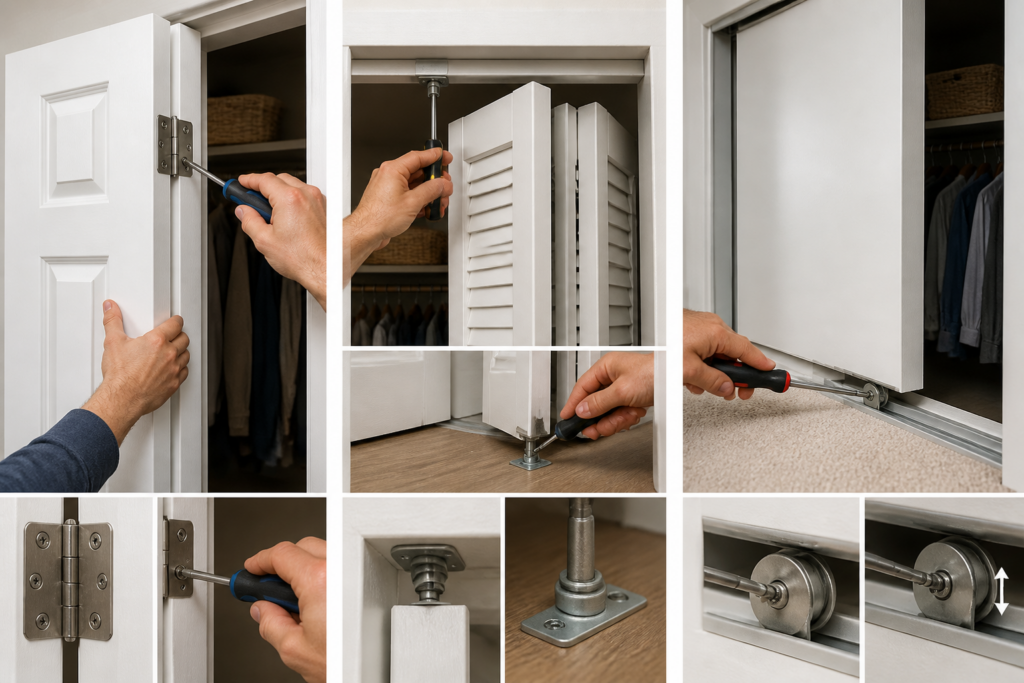
A sagging hinged door often leaves a larger gap at the top on the latch side and may rub near the bottom or along the jamb. Tighten the hinge screws while supporting the door. If the hinge itself is bent or worn, replacing it may be more effective than trying to force the door back into position.
If the screws on the hinge side no longer hold, the mounting hole may be stripped. A proper repair might involve restoring the hole or using an appropriately longer screw that reaches solid wood framing. Do not use a screw so long that it could damage wiring, plumbing, or the opposite face of the jamb.
Check the frame as well as the door. A shifted or uneven jamb can make a door appear warped even when the door panel is reasonably straight. If the door binds only during humid weather and the contact point is clear, very light sanding may help, but confirm the cause first. Removing too much material can create a permanent gap when the wood dries.
Bi-fold closet doors
Bi-fold doors commonly fail to close when a top pivot, bottom pivot, or guide is loose or out of adjustment. The panels should sit plumb and meet the jamb or each other evenly. If the leading edge sits too high, too low, or too far from the frame, adjust the relevant pivot or guide in small increments.
Keep the panels supported while making adjustments. A bi-fold door can shift suddenly when a pivot is loosened, especially if the door is tall or heavy. Also check the top track for loose fasteners, bends, or debris that could prevent the guide from traveling smoothly.
Sliding closet doors
Sliding doors usually have adjustable rollers near the bottom or at the sides of the lower edge. Adjusting roller height can bring the door parallel with the frame and help it meet the catch correctly. If one side is higher than the other, the door may roll away from the closure hardware instead of remaining against it.
Inspect the upper guide and lower track for bends or sections pulling away from the frame. A level door can still fail to stay closed if the track allows it to drift or if the catch is mounted too far away from the door’s path.
Repair or Replace the Closure Hardware
Once the door is aligned and reaches the correct closed position, test the part that is meant to hold it there. The specific part may be a latch, strike plate, roller catch, magnetic catch, or sliding-door catch.
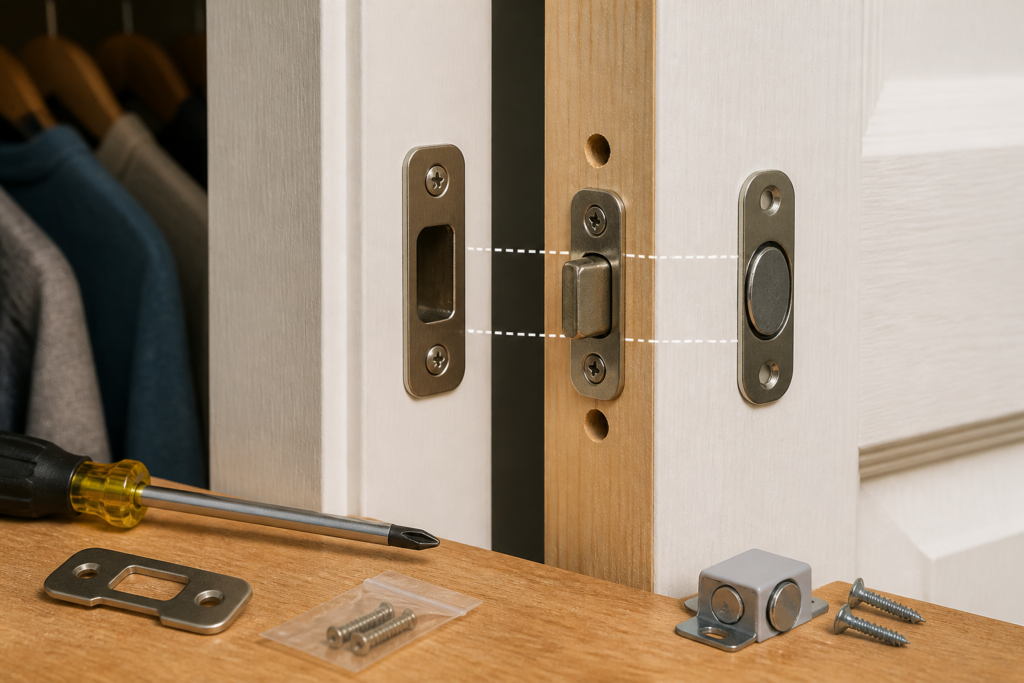
For a latch and strike plate, close the door slowly and see whether the latch lines up with the opening in the strike. If it hits the edge or misses the opening, mark the correct position and reposition the strike slightly. Make sure the latch enters cleanly rather than scraping hard against the plate.
For a magnetic catch, the magnet and metal plate should meet face-to-face when the door is closed. If they are offset, loosen one side, realign it, and retighten the screws. A magnet that no longer holds reliably may need replacement. The same applies to a worn roller catch, bent strike, or damaged latch.
Measure the old part and compare its mounting pattern before buying a replacement. Closet-door hardware varies, and a substitute that looks similar may not fit the existing holes or provide the right amount of holding force. Choose a catch strong enough to hold the door but not so strong that it pulls an aligned door out of position or makes opening difficult.
Pre-drill small pilot holes when appropriate, especially in thin jamb material, to reduce the chance of splitting the wood. If the mounting holes are already loose or damaged, repair the mounting surface rather than simply installing the new part into the same failing holes.
Know When a Basic Fix Is Not Enough
A simple adjustment may not solve the problem if the door is badly warped, the frame is visibly out of square, the wall has shifted, or the sliding track is bent or pulling away from its fasteners. In those cases, repeatedly moving the latch or rollers will usually produce only a temporary improvement.
Replace a damaged hinge, pivot, roller, latch, magnet, or track component when it is bent, cracked, excessively worn, or unable to hold its adjustment. Replacing the faulty part is often easier and more reliable than compensating for it with extra force.
If you rent, limit the first attempt to cleaning, tightening, and reversible adjustments. Drilling new holes, moving a strike plate, altering the jamb, or sanding the door may require the landlord’s approval. Take a photo of the problem and report structural issues such as a shifted frame or separating track.
Stop working if a heavy door or track could fall when hardware is loosened, or if the repair would require removing trim or opening the wall. Ask for help with unstable doors, damaged framing, and any situation where the door cannot be safely supported.
After making the repair, run the door through several complete open-and-close cycles. It should reach the closed position without excessive force, remain closed when released, and move without rubbing, binding, or pulling the catch out of alignment. If it passes those tests, the problem was likely a manageable alignment or hardware issue rather than a reason to replace the entire door.