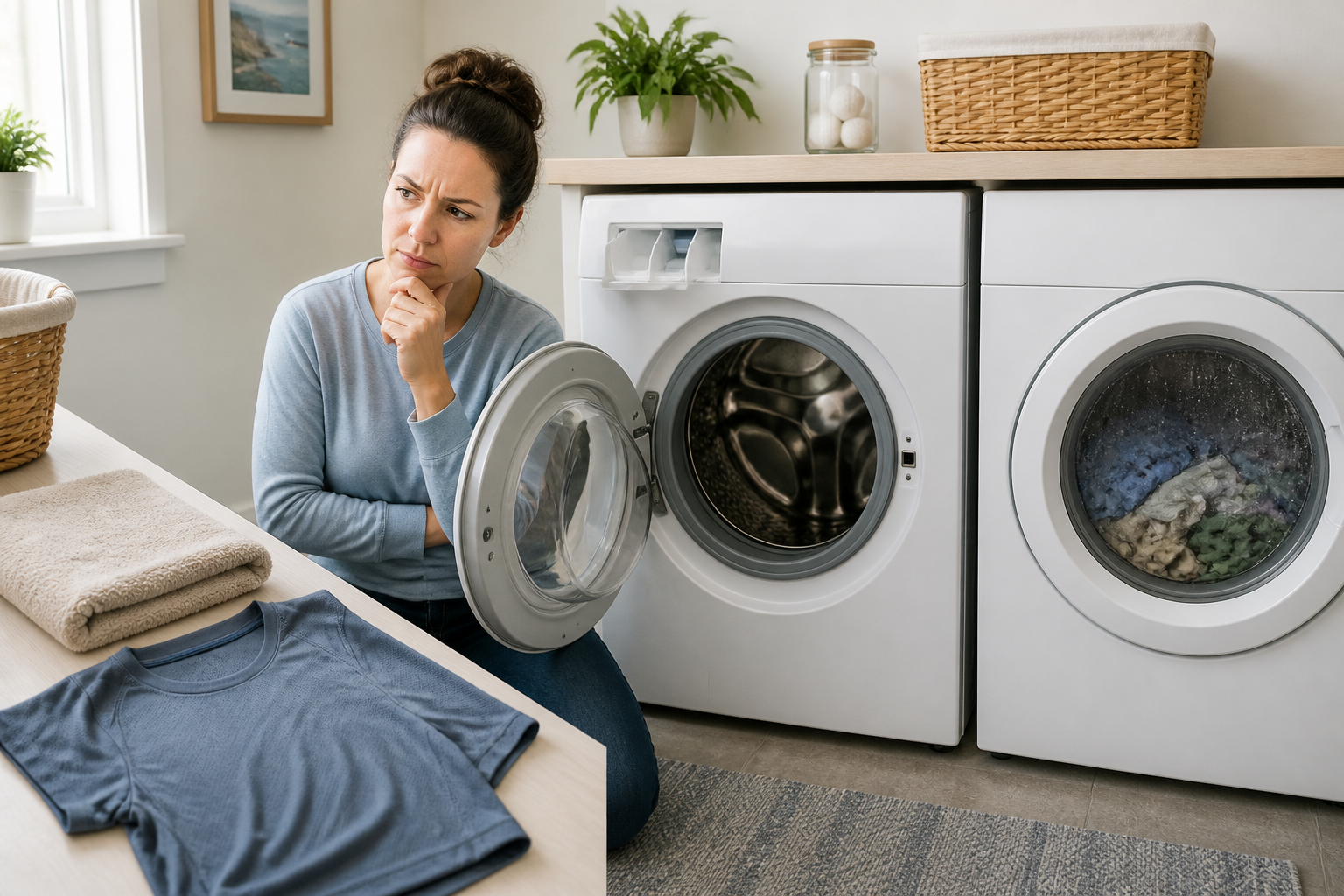
If laundry smells bad immediately after washing, first determine whether the odor comes from the fabric, the washing machine, or time spent damp. The next step depends on that distinction.
Find the source before rewashing
Smell the items when they are fully dry, then smell the empty washer.
- Only certain items smell: towels, workout clothes, and synthetic fabrics often retain body oils or dry slowly. Start with a controlled rewash.
- The empty washer smells, or several loads smell: clean and inspect the machine first. Otherwise, the washer may transfer the odor back to the laundry.
- The load smells after sitting wet: a load left overnight in a closed washer, for example, may need rewashing rather than simply drying.
- The smell is sewage-like, metallic, or unusually foul: check for a drainage or plumbing problem, particularly if other fixtures have a similar odor.
Odor descriptions are clues, not definitive diagnoses. Musty and sour smells can both result from damp storage, slow drying, or residue. Do not cover an unknown smell with fragrance beads, softener, or sprays; added scent can make the source harder to identify.
If the washer smells, clean it first
If the empty machine smells or the problem affects most loads, inspect the accessible areas before washing the laundry again:
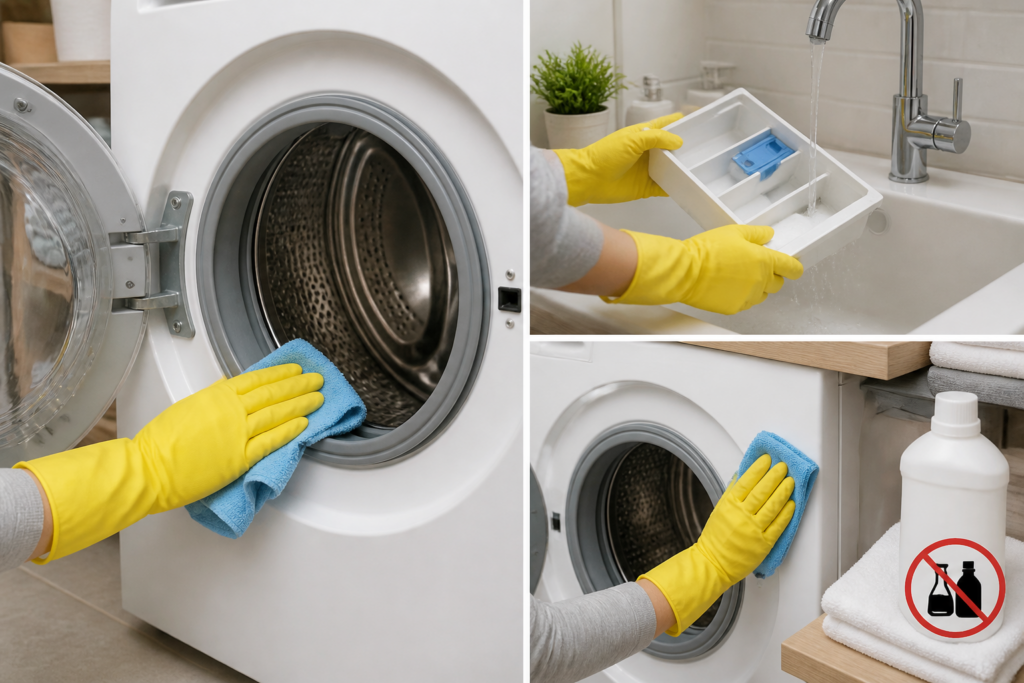
- Wipe the folds of a front-loader’s rubber gasket or the underside of a top-loader’s lid.
- Remove and wash the detergent drawer if the manual says it is removable.
- Clean visible residue around the drum opening and dispenser channels.
- Check the drain filter only as described in the appliance manual. Some filters release a substantial amount of water or debris when opened.
Wipe away visible buildup first, then run the washer’s cleaning cycle or use a cleaner approved for that appliance. Use one cleaning method at a time; never mix chlorine bleach with vinegar, ammonia, acidic products, or other cleaners.
If there is standing water, slow drainage, repeated drain failure, or a sewage-like odor, do not treat the problem as ordinary residue. Follow the manual and arrange appliance or plumbing help as appropriate.
After use, leave the door or lid open and the detergent drawer partly open so moisture can evaporate, but only when that is safe around children, pets, and the appliance’s location.
If the machine smells normal, rewash the affected items
Use one manageable test load rather than treating the entire hamper at once. Separate colors and fabrics as usual, and do not combine delicate items with towels or heavily soiled sportswear.
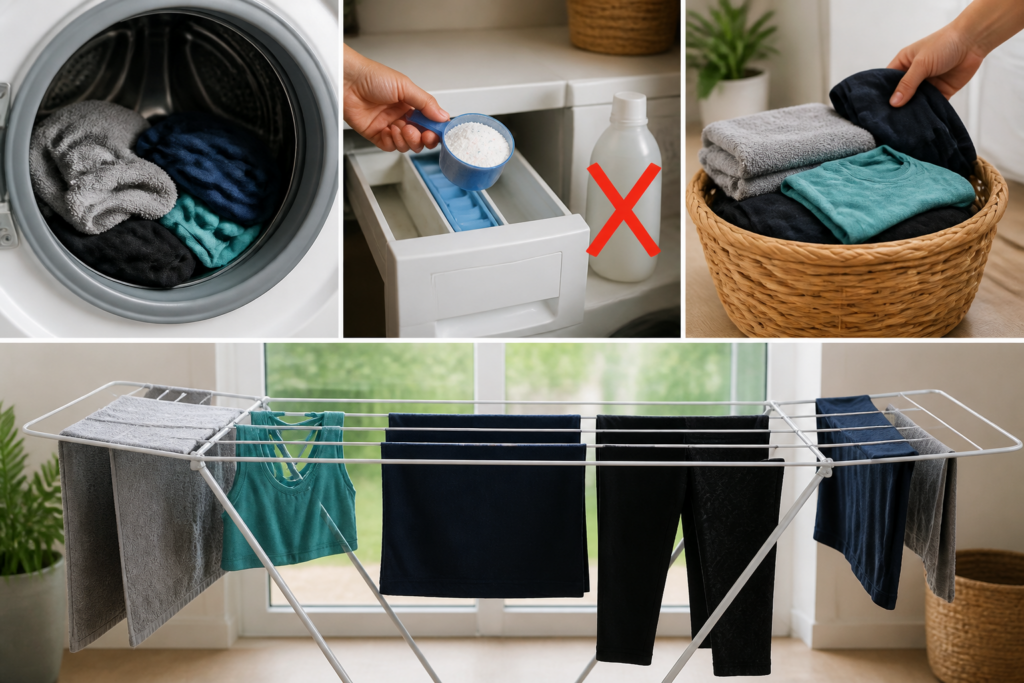
- Load the drum loosely enough that bulky items can move rather than forming a tightly compressed mass.
- Measure the detergent according to the product, machine, water conditions, and load size. More detergent can leave residue that traps oils and odors.
- Skip fabric softener, especially for towels and moisture-wicking clothing. Softener can coat fibers, reduce towel absorbency, and make some synthetic fabrics harder to clean.
- Choose a cycle and temperature suitable for the fabric and the soil. Use a warmer permitted setting for persistent odors when appropriate, but do not treat heat as the main solution.
- If the care label permits it, use an oxygen-based cleaner or product specifically labeled for odor removal. This is optional, not necessary for every load, and should be used exactly as directed.
- Remove the load as soon as the cycle ends and dry it completely, with enough space for air to circulate.
Use extra care with wool, silk, elastic, dark colors, delicate finishes, and special coatings. A product suitable for cotton towels may not be suitable for every garment. Avoid adding vinegar or baking soda as a substitute for correcting the wash or cleaning the machine; neither is required for the main fix, and vinegar must never be mixed with bleach or other cleaners.
If one properly handled rewash does not solve the odor, stop repeating cycles or escalating chemicals. Recheck the washer and drainage, consider whether the fabric has retained years of residue or contamination, and look for another source such as a damp hamper or incomplete drying.
Common problems that cause odor
Residue and unsuitable washing methods
Too much detergent or softener can remain in fabric and machine parts, where it combines with body oils, lint, and moisture. Overloading has a similar effect by preventing water and detergent from moving through the load. This is especially common with dense towels, blankets, jeans, and sweaty synthetic clothing.
Use the recommended amount of detergent, wash bulky items in a smaller load, and choose a cycle that matches the soil. Lightly worn clothes do not automatically need a hot or long cycle, while heavily sweaty sportswear and towels may need more time or a warmer setting if their care labels allow it.
Damp handling and slow drying
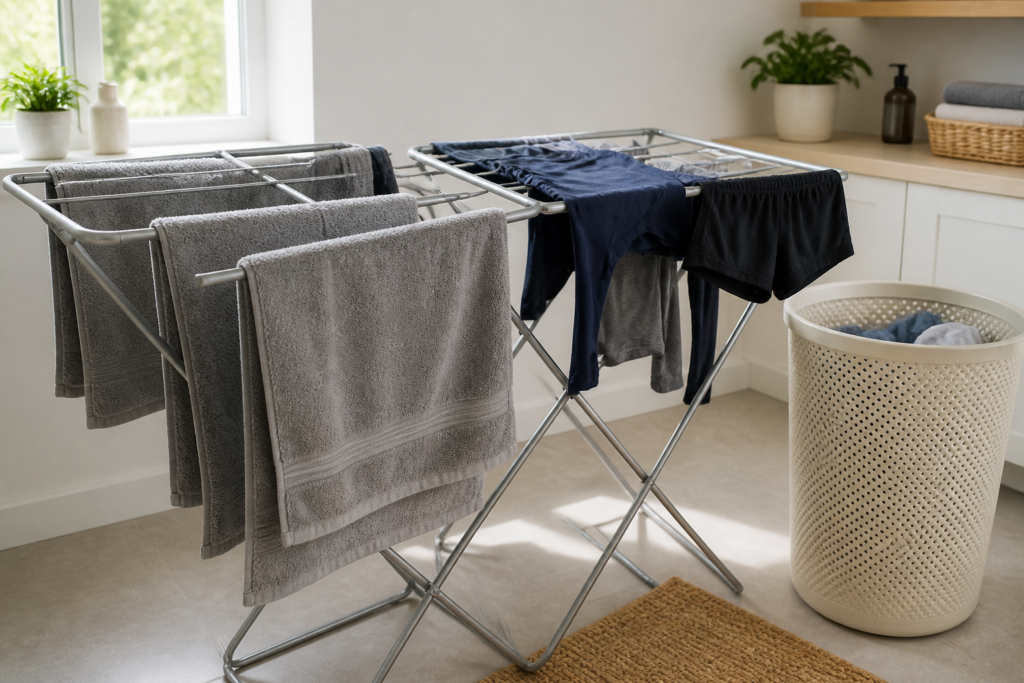
A washed load can develop a sour or musty odor when it sits wet in a closed machine or dries slowly in humid, still air. Drying may make the smell less noticeable without removing it, so the odor can return when the fabric becomes damp again.
Remove laundry promptly, spread it out, and check thick hems, pockets, seams, waistbands, and towel folds before storing it. If towels or sweaty clothes cannot be washed soon, hang them up or place them in a breathable hamper rather than sealing them damp in a closed one.
Prevent the problem from returning
- Recurring towel odor: use smaller loads, skip softener, and give towels more drying space.
- Recurring gym-clothing odor: wash those items separately when needed and avoid coatings that interfere with moisture-wicking fibers.
- Every-load odor: maintain the washer, including its gasket or lid area, dispenser, filter where applicable, and recommended cleaning cycle.
- Loads that sit damp: set a reminder, transfer them promptly, or spread them out immediately when washing cannot happen again at once.
Keep the washer loosely loaded, measure detergent rather than adding extra, and make sure laundry is fully dry before it goes into a drawer or closet.
When to get help or replace an item
Arrange appliance service if every load still smells after the accessible machine parts have been cleaned and the recommended cleaning cycle has been run, especially when there is standing water, slow drainage, or unusual noise.
A sewage-like odor, an odor that also appears in water from other fixtures, or a problem that began after plumbing work calls for plumbing advice rather than repeated laundry treatments. Visible or extensive mold and sewage contamination may require a different cleanup decision from ordinary fabric odor.
An item may be worth replacing only after the washer has been ruled out and the item has had one appropriate rewash and complete drying. Most ordinary cases improve when the source is corrected—whether that means cleaning the machine, reducing residue, handling damp laundry sooner, or improving airflow—instead of adding more fragrance.