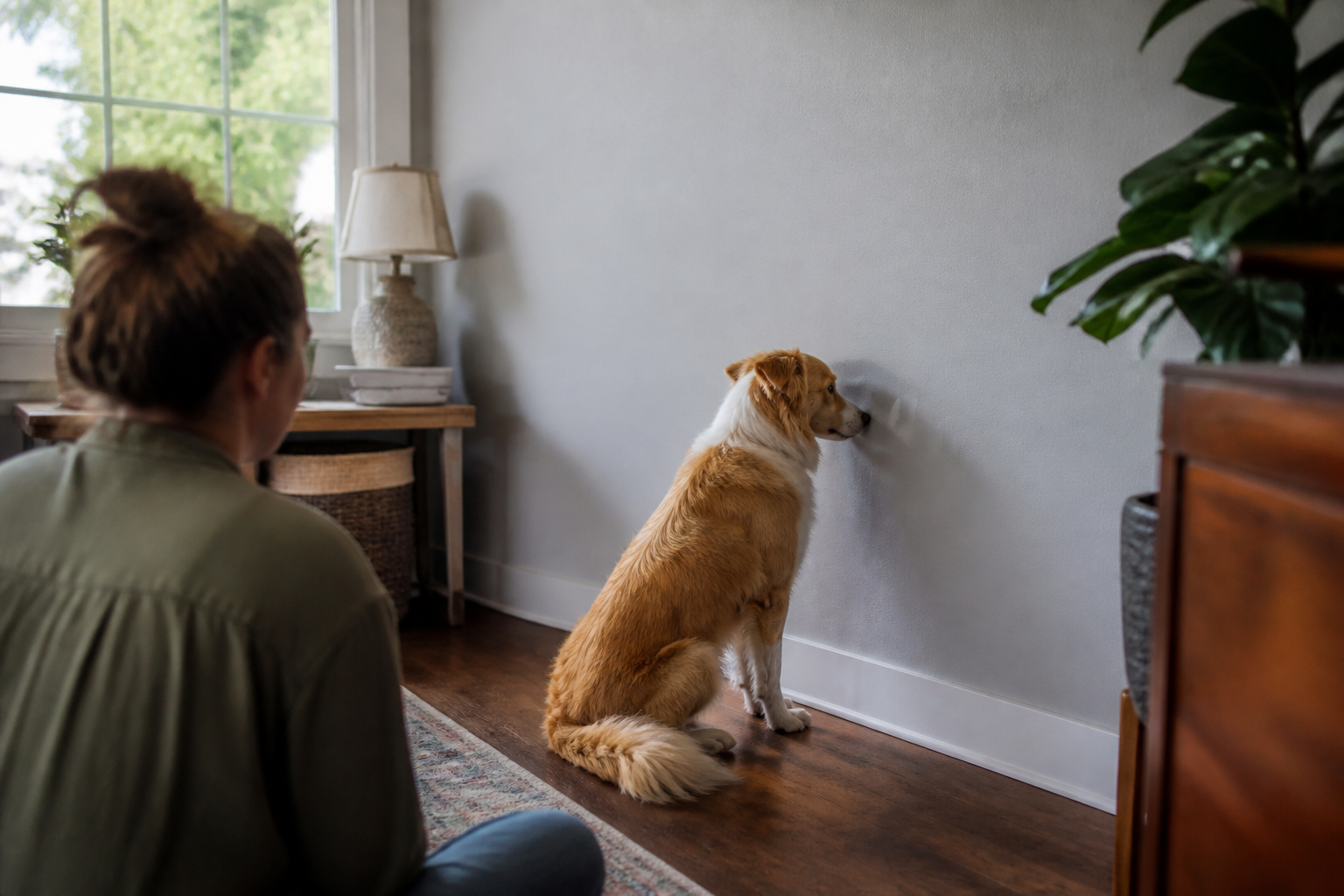
An occasional brief stare at a wall—lasting a few seconds or perhaps a minute— is often harmless if your dog is relaxed, can be calmly redirected, and is completely normal afterward. A sound behind the wall, an insect, a reflection, or a smell you cannot detect may be the cause.
The concern rises when the behavior is new, repeated, getting longer or more frequent, difficult to interrupt, or linked with changes in vision, awareness, movement, comfort, or normal daily routines.
What to do first
Watch from a safe distance. Notice where your dog is looking, how long the episode lasts, what happened beforehand, and whether your dog responds to its name or a familiar cue. Do not repeatedly call, wave objects, offer food, or touch the dog to test it—especially if the dog seems confused, painful, or unsafe.
A brief episode that stops when a noise, reflection, room, or light changes supports an environmental explanation, but it does not prove that one is responsible. You can quietly check for buzzing, scratching, dripping, drafts, insects, unusual odors, or reflections from windows, screens, mirrors, and glossy surfaces. Do not open walls, handle suspected pests, or expose your dog to a possible irritant. Do not startle or physically force the dog away.
If your dog remains relaxed, responsive, and normal afterward, occasional episodes can usually be monitored. Keep a brief log. If no trigger is found and the behavior continues or recurs, arrange a routine veterinary appointment rather than repeatedly trying to interrupt it.
When to arrange a veterinary visit
Book an appointment for a new pattern that keeps returning, lasts noticeably longer than usual, is becoming more frequent, occurs in several parts of the home, or interrupts eating, sleeping, play, or normal interaction. This applies even if your dog still responds to you; responsiveness does not rule out subtle vision, pain, cognitive, or neurological problems.
Age makes a new behavior more worth checking, but staring alone does not establish cognitive decline. In an older dog, concern is greater when it occurs with a broader pattern such as nighttime pacing, getting stuck in corners, confusion in familiar rooms, house-soiling, altered sleep, or difficulty recognizing familiar people.
Vision or eye problems
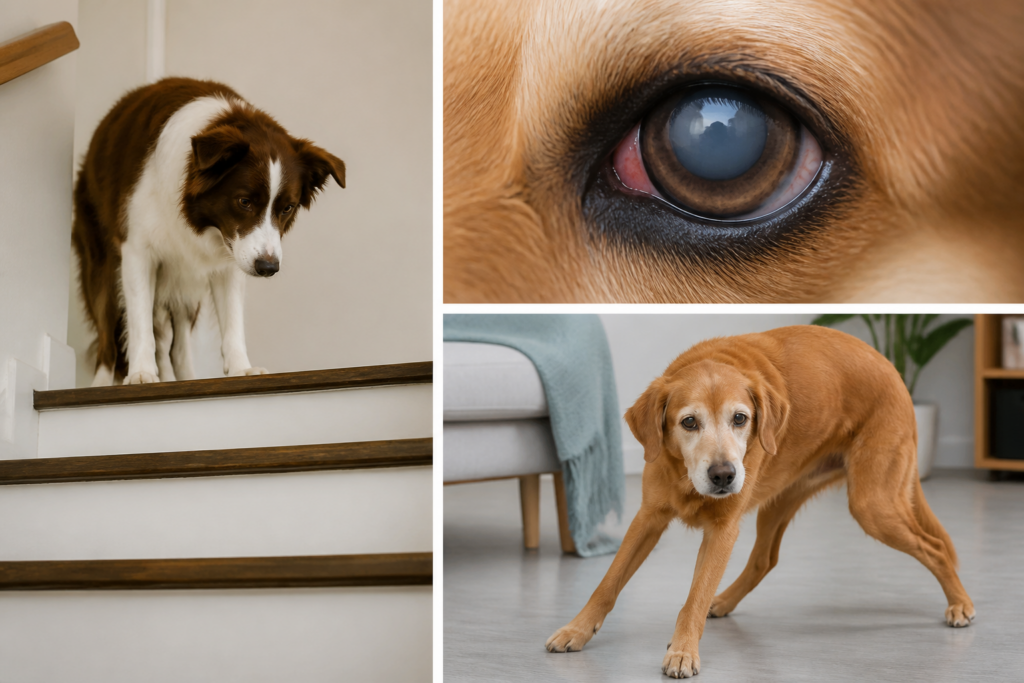
Watch for bumping into familiar objects, hesitating on stairs, difficulty finding food or toys, cloudy or red eyes, unequal pupils, squinting, light sensitivity, or reluctance to open an eye. Sudden trouble navigating, sudden blindness, marked redness, or obvious eye pain warrants prompt veterinary contact rather than several days of observation.
Pain or general illness
Staring is more concerning when paired with persistent panting or restlessness, hiding, a hunched or altered posture, sensitivity around the head or neck, refusal to eat, vomiting, weakness, or a marked change in mobility. These signs suggest that the dog may feel unwell; the wall itself may not be the source of the problem.
Neurological changes
Call a veterinarian promptly if staring occurs with altered awareness, facial twitching, circling, weakness, loss of balance, unusual limb movements, or confusion afterward. Lip licking, drooling, or jaw movements are nonspecific on their own, but are more concerning when they recur in a stereotyped episode with reduced awareness or a confused period afterward.
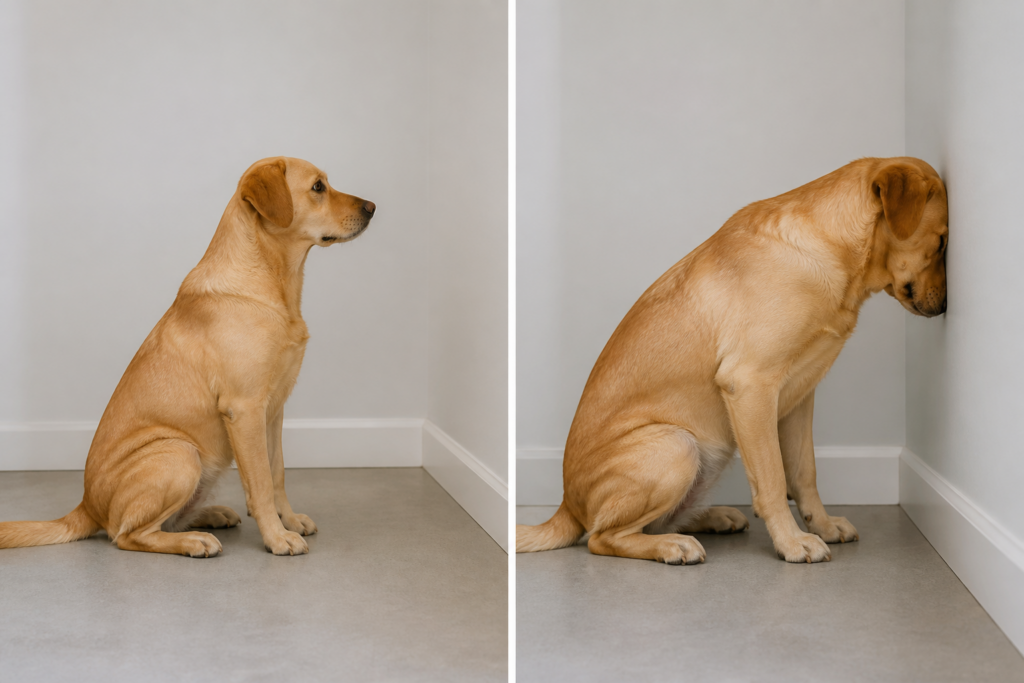
Distinguish ordinary looking from head pressing. Head pressing means forcefully and persistently pushing the forehead or head against a wall, corner, floor, or other object, usually with an abnormal or unwell presentation. It is not the same as briefly resting the head against furniture and requires urgent veterinary assessment.
When it is an emergency
Seek urgent veterinary care for:
- Head pressing
- A seizure, collapse, or severe unresponsiveness
- Sudden blindness or severe eye pain
- Repeated falling, inability to walk normally, or severe loss of balance
- Sudden extreme disorientation or rapidly worsening behavior
- Repeated vomiting together with unusual staring or other neurological signs
Do not give human medication or restrain the dog. Keep it away from stairs, traffic, balconies, pools, and other hazards. If you are unsure about the urgency, call a veterinary clinic and describe the onset, episode length, responsiveness, and any changes afterward. Do not delay urgent care while trying to record a video.
What to record
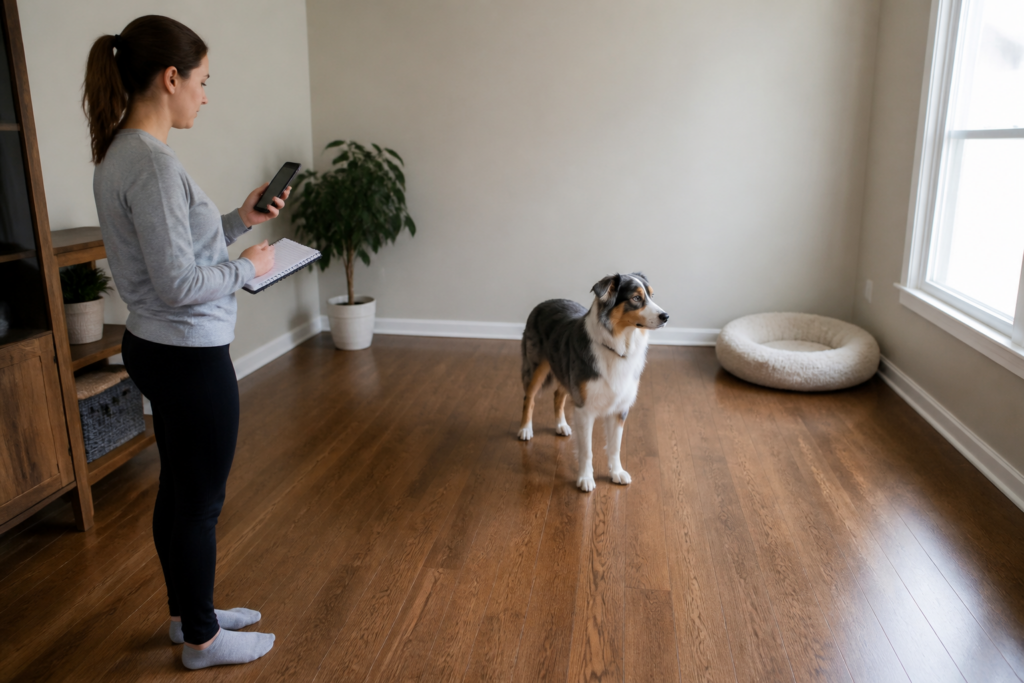
If the episodes are not urgent, record one from a safe distance without provoking or recreating it. Include the whole body if possible, along with posture, eye movement, walking, and what happens afterward.
Note the date, location, approximate duration, what happened beforehand, whether your dog responded to a familiar cue, and whether it returned to normal immediately. Also mention recent illness or injury, medication or supplement changes, appetite, sleep, movement, vision, and house-training.
A brief, occasional, easily explained episode in an otherwise normal dog can be monitored. A repeated or unexplained change deserves a routine veterinary appointment; sudden eye, neurological, mobility, or awareness changes call for prompt or urgent advice.