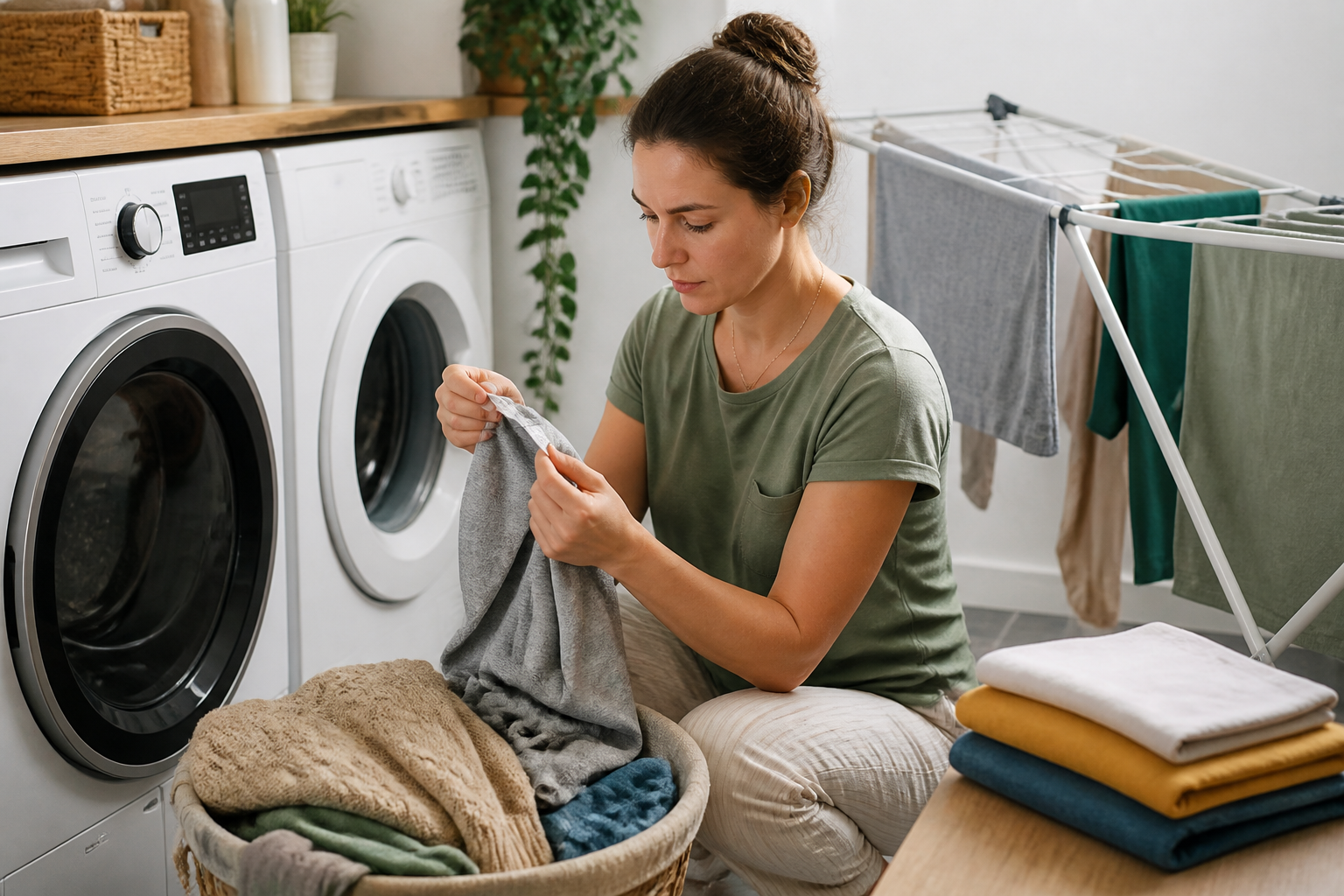
The easiest way to prevent clothes from shrinking is to check the care label, reduce heat, and avoid unnecessarily long drying cycles. For many everyday garments, changing the dryer setting is the most useful first step; washing in cold or cool water is a helpful secondary precaution. Some fabrics, especially wool and shape-sensitive knits, are more vulnerable during washing as well.
Check the Care Label First
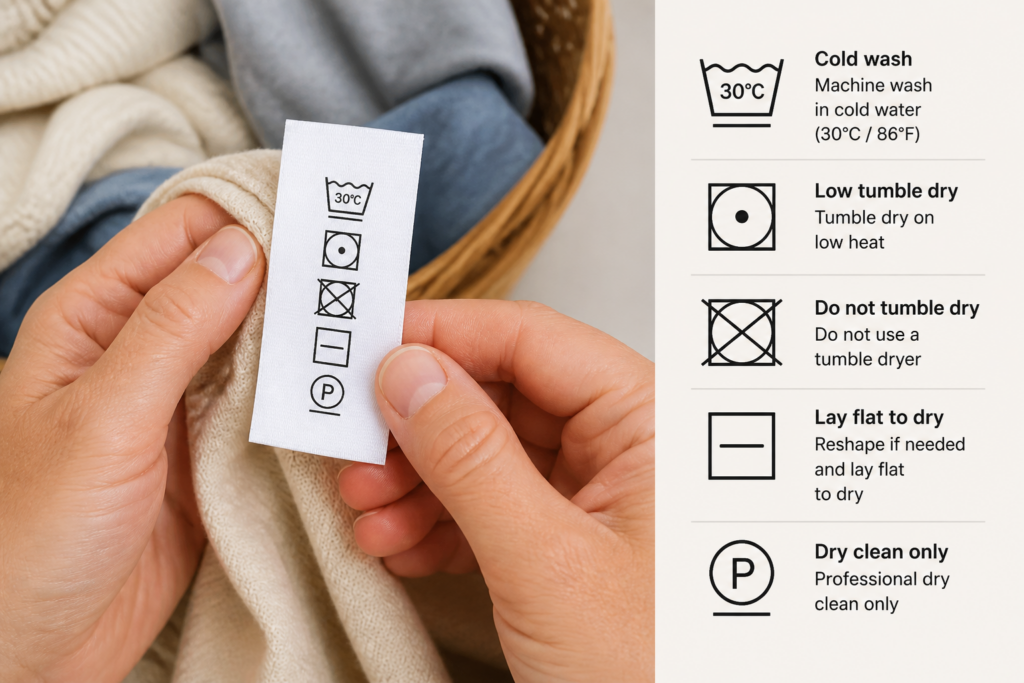
The label overrides general fabric advice because construction, finishing, and blends can change how a garment responds. Check both the washing and drying instructions, including care symbols if the label uses them.
- “Do not tumble dry”: keep the garment out of the dryer.
- “Lay flat to dry”: dry it horizontally so its wet weight does not pull it out of shape.
- “Dry clean only”: do not assume it can be safely washed at home.
- “Cold wash” or “warm wash”: this describes the wash temperature; it does not make a high-heat dryer safe.
- “Low tumble dry”: use low heat and do not extend the cycle unnecessarily.
If the label is missing or unclear, use cold water, gentler handling, and no dryer heat as a risk-reduction fallback—especially for an expensive, unfamiliar, or difficult-to-replace item. Those choices are conservative defaults, not a guarantee that every unknown garment can be washed safely.
A Practical Routine for Everyday Clothes
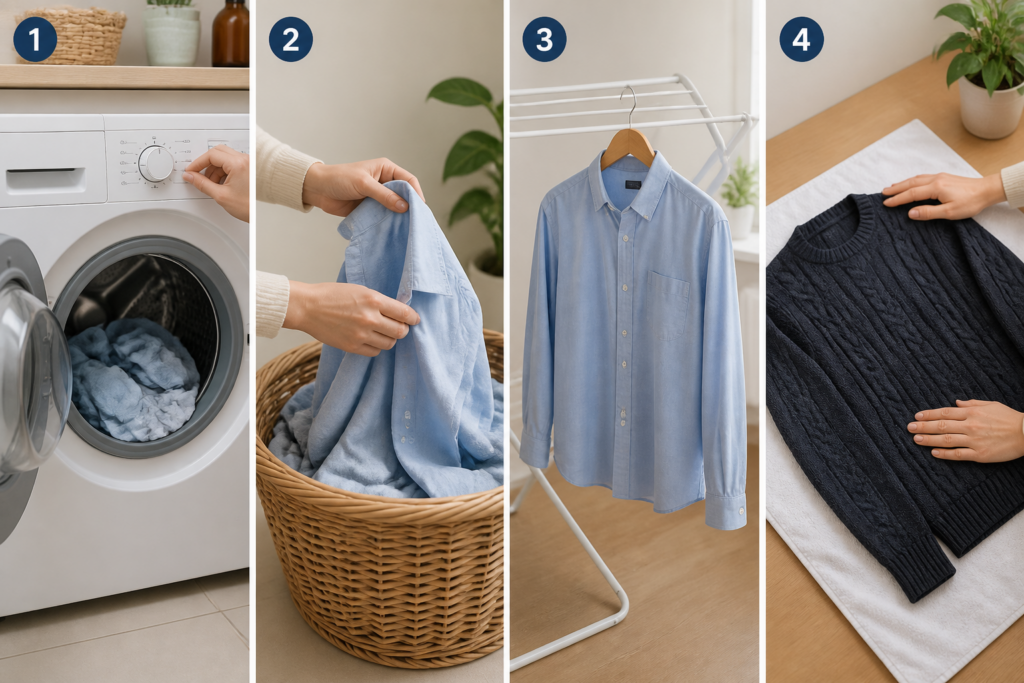
- Wash cool or cold when the label allows it. Hot water can contribute to shrinkage, but cold water does not eliminate the risk.
- Use the normal cycle for ordinary, durable clothing. Choose a gentle or low-agitation cycle for delicate, loosely knitted, fitted, or shape-sensitive garments. A gentler cycle protects fabric but may not clean heavily soiled clothes as effectively.
- Remove clothes promptly after washing. Reshape them while damp instead of leaving them compressed in the washer.
- Choose the safest drying method the label permits. Air-drying avoids dryer heat; if tumble-drying is allowed, use the lowest suitable heat and avoid over-drying.
Air-drying is not one single method. Sturdy, lightweight garments can usually go on a rack or hanger, but heavy knits and wet garments that may stretch at the shoulders or neckline should lie flat. If you remove an item while slightly damp, spread it out promptly so it can finish drying rather than sitting damp and developing an odor.
The main risk is often the combination of heat and movement, but fiber type, construction, blends, and prior finishing also matter. Even “pre-shrunk” clothing can change size when exposed to unsuitable heat or washing.
Garments That Need Extra Care
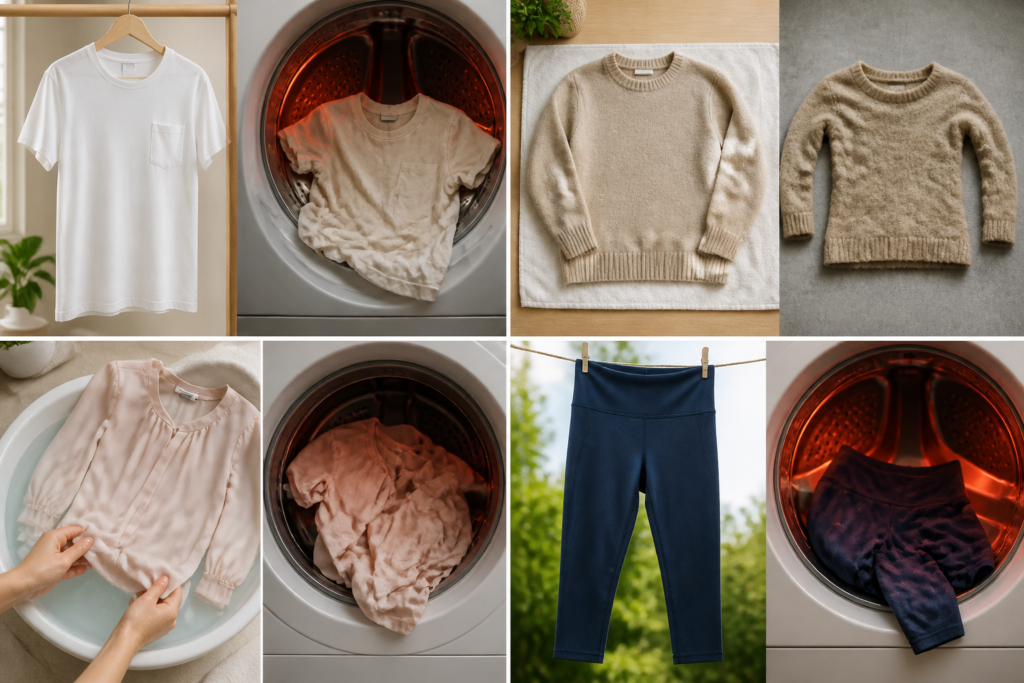
- Cotton: Ordinary woven cotton clothing can usually be cold-washed and tumble-dried on low heat when the label allows it. Air-drying is safer when the original fit matters, particularly for cotton knits, heavier items, or clothing that already fits closely.
- Wool and heavy knits: Heat and agitation can cause felting, which may be severe and permanent. Follow the wool-wash or hand-wash instructions, press out excess water without wringing, and lay the garment flat to dry.
- Rayon and viscose: Care varies widely. Some items are washable and others are dry-clean-only. Follow the individual label, and handle washable pieces gently while wet because they may weaken or lose shape when saturated.
- Stretch fabrics and elastic: Excessive heat can damage stretch and recovery, even when the garment does not shrink like cotton or wool. Use the label’s recommended temperature and avoid high dryer heat. Air-drying is often a sensible choice for swimwear, leggings, underwear, and fitted athletic clothing.
Why Clothes Shrink
Heat, moisture, and agitation can cause some fibers and fabric structures to contract or change shape. Hot washing can do this, but a dryer adds sustained heat and movement, making it a common preventable source of shrinkage. Wool can felt, while other fabrics may simply tighten, lose length, or become misshapen.
If a Garment Has Already Shrunk
Some garments may relax slightly when dampened and gently reshaped, but home recovery is unreliable. Do not add more heat in an attempt to restore the size; it can make the damage worse. Felted wool and heavily heat-set shrinkage may be permanent.
A valuable wool, cashmere, structured, or hard-to-replace garment may be worth showing to a cleaner or specialist before attempting anything. For a basic T-shirt, replacement is often more realistic than trying to restore its original size. The practical default is simple: check the label first, minimize heat, and do not over-dry.