A bathroom does not need hours of scrubbing to stay presentable. The most effective approach is to prevent moisture, residue, and clutter from building up in the first place. A few small habits—drying wet surfaces, improving airflow, and dealing with messes promptly—can make weekly cleaning much faster.
Whether you live in a small apartment or manage a busy family bathroom, a simple bathroom maintenance routine can help control odors, reduce soap scum, and lower the risk of mold and mildew. The goal is not perfection. It is to make easy tasks part of your normal routine so that deep cleaning becomes less frequent and less demanding.
Create a Simple Daily Bathroom Routine
Daily maintenance can take only a few minutes, especially when each task is connected to something you already do. After showering, washing your hands, or getting ready in the morning, take a moment to leave the room drier and less cluttered than you found it.
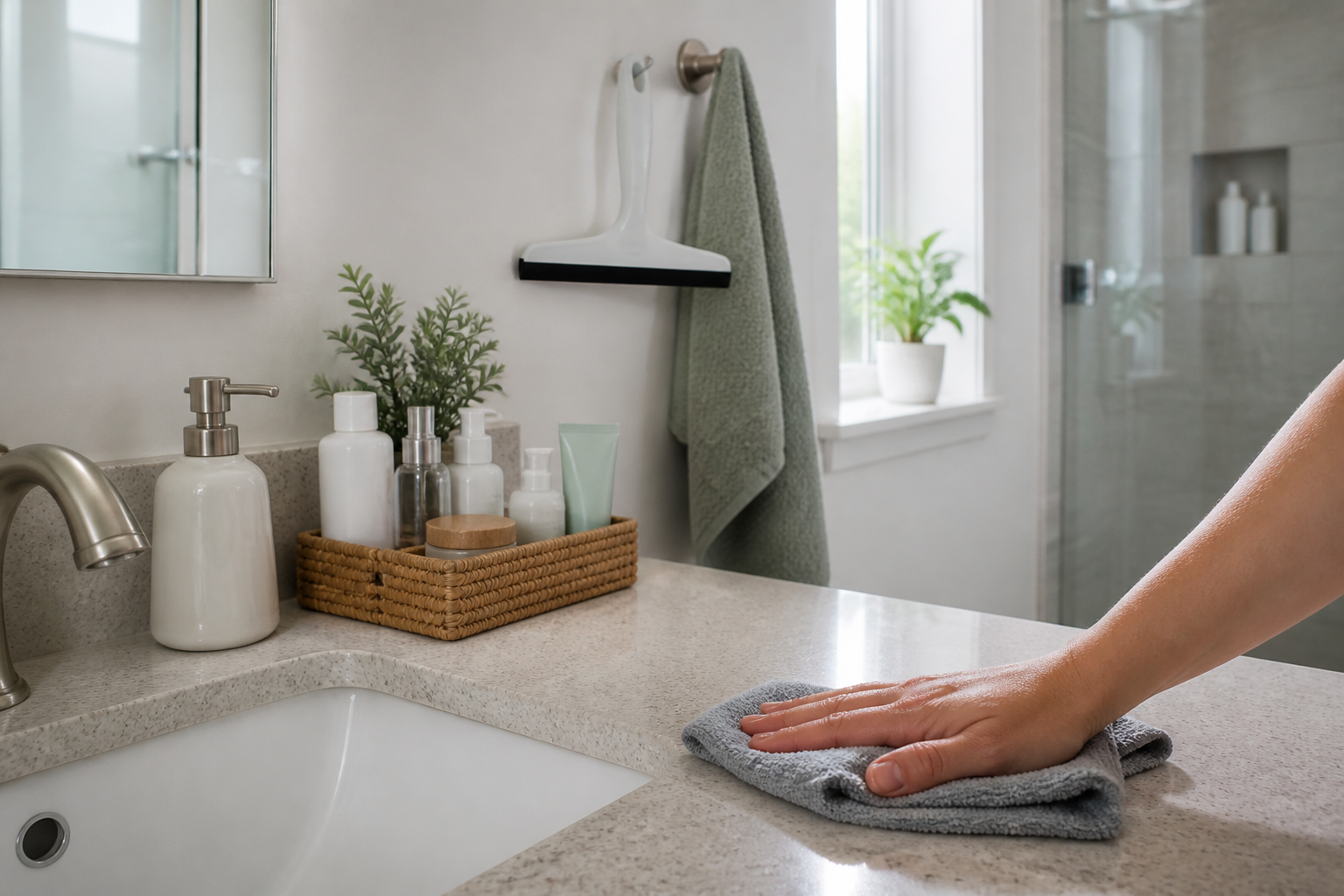
- Wipe water from the sink and counter. Use a small microfiber cloth to remove splashes around the faucet and basin. This helps prevent water spots, toothpaste residue, and sticky buildup.
- Rinse the shower area. A quick rinse can remove loose soap and shampoo from walls and fixtures. It is even more useful when followed by a squeegee on glass doors or smooth shower walls.
- Hang towels so they can dry fully. Spread towels over a bar or rack instead of leaving them in a heap. Damp fabric that remains bunched up is more likely to develop a stale smell.
- Put toiletries away. Keep frequently used products in a basket, cabinet, or shower organizer. Remove empty bottles promptly so they do not collect around the tub or sink.
- Check the floor for standing water. Wipe up puddles near the tub, toilet, or sink rather than allowing them to sit.
These habits are especially helpful in bathrooms used by several people. A quick reset after each busy period keeps small messes from becoming a larger cleaning project.
Use Ventilation to Control Moisture and Odors
Moisture is one of the main challenges in any bathroom. Steam from a hot shower can settle on walls, ceilings, mirrors, and cabinets. If the room does not dry properly, persistent dampness may contribute to musty odors and create conditions where mold and mildew can grow.
Run the exhaust fan while you shower and leave it on for about 15 to 20 minutes afterward, or follow the manufacturer’s instructions for your particular fan. If the bathroom has a window, open it when practical and weather conditions allow. Keep the door slightly open after bathing if doing so improves airflow and privacy is not an issue.
Ventilation works best when the fan is clean and functioning properly. Dust can collect on the cover and reduce airflow, so inspect it occasionally and clean it according to the manufacturer’s guidance. If the fan is unusually loud, weak, or unable to clear steam, it may need professional attention.
Leaks should also be handled promptly. Check beneath the sink, around the toilet, near the tub, and along visible supply lines. Even a small recurring leak can keep cabinets, flooring, or drywall damp. Dry any standing water and arrange repairs rather than relying on air fresheners to cover the resulting odor.
Follow a Low-Effort Weekly Cleaning Routine
A short weekly cleaning session is usually easier to manage than waiting until every surface has visible buildup. The exact schedule depends on how often the bathroom is used, but a consistent once-a-week routine is a practical starting point for many households.
Clean High-Use Surfaces First
Start with the areas that receive the most contact and attention:
- Toilet seat, lid, handle, and exterior surfaces
- Sink basin, counter, and faucet
- Mirror and other frequently touched fixtures
- Shower walls, tub, doors, and handles
- Floor areas around the toilet and sink
Clean from higher surfaces to lower ones so that dust or cleaner drips do not make you repeat work. You can also move from dry areas to wet areas. For example, dust the mirror and wipe cabinets before cleaning the sink or shower.
Choose a product that is labeled for the surface you are cleaning. Tile, glass, porcelain, stainless steel, painted cabinetry, and natural stone may require different care. Natural stone, including marble and some types of limestone, can be damaged by acidic cleaners, while abrasive products may scratch certain finishes. When in doubt, read the care instructions or test a product in a small, inconspicuous area.
Prevent Soap Scum and Water Spots
Soap scum becomes harder to remove when it is allowed to dry repeatedly. Using a squeegee after each shower is one of the quickest ways to reduce this buildup. Pull it across glass doors and smooth walls, directing water toward the drain. The process takes less than a minute once it becomes routine.
Hard-water areas may also leave mineral spots on faucets, showerheads, and glass. Wiping fixtures regularly with a suitable cloth can limit residue. If you use a descaling product, confirm that it is safe for the fixture’s finish and follow the label instructions. Avoid harsh scrubbing pads unless the manufacturer specifically recommends them; they can dull or scratch surfaces.
Do not overlook the edges of the tub, the base of the faucet, or the corners of the shower. These areas often stay wet and collect residue, but a quick weekly wipe is usually enough to keep buildup manageable.
Refresh Linens and Soft Furnishings
Towels and bath mats can make a clean bathroom smell stale if they remain damp. Hang towels after use and wash them regularly according to their care labels. Wash bath mats often enough to prevent them from staying damp or collecting visible dirt, and dry them completely before placing them back on the floor.
Shower curtains and liners also need attention. Fabric curtains can generally be laundered according to their instructions. Plastic or vinyl liners should be cleaned as directed and replaced when they develop persistent discoloration, cracking, or mildew that will not come off with appropriate cleaning. Make sure the curtain is spread out after a shower instead of being left bunched together.

Make Bathroom Cleaning Faster and Easier
The right setup can remove much of the friction from cleaning. Keep basic supplies in or near the bathroom so you do not have to search for them each time. A small caddy can hold a surface cleaner, microfiber cloths, a sponge suitable for the relevant surfaces, and disposable gloves if you prefer to use them.
A useful basic toolkit may include:
- A toilet brush for the bowl and a separate cloth for the exterior
- Microfiber cloths for counters, mirrors, and fixtures
- A shower squeegee
- A gentle cleaner appropriate for the room’s surfaces
- A small scrub brush for grout lines and tight corners
- A basket or caddy for keeping supplies together
Use separate cloths for the toilet and other surfaces, or wash cloths thoroughly between uses. A single cloth carried from the toilet to the sink can spread residue instead of removing it.
It also helps to work in a predictable order. Clear empty bottles and loose items first. Dust or wipe dry surfaces, then clean the sink and mirror, followed by the shower or tub and toilet. Finish by cleaning the floor. This approach keeps the routine organized and reduces unnecessary backtracking.
When you notice a small problem, handle it immediately if possible. Wipe toothpaste from the counter, rinse a product ring from the tub, or pick up a loose hair before it becomes part of a larger buildup. These small actions are the foundation of low-effort bathroom cleaning.
Keep the Bathroom Fresh Between Cleanings
A fresh-smelling bathroom is usually the result of removing odor sources rather than adding stronger fragrance. Empty the trash regularly, especially if it contains damp tissues, used personal-care items, or other materials that can develop an odor. Clean the toilet, sink drain, and shower drain according to their care needs, and remove visible hair or debris before it accumulates.
Keep the toilet lid closed when flushing if that suits your household routine. Closing it can help limit the spread of droplets from flushing, although it does not replace regular cleaning or handwashing. Always wash your hands thoroughly after using the toilet and before handling shared household items.
If an odor continues after routine cleaning, look for its source. Check damp towels, bath mats, the trash can, the area around the toilet, under-sink plumbing, and drains. A musty smell may indicate ongoing moisture rather than a need for air freshener. Fragrance products can temporarily mask a problem while leaving the underlying cause untouched.
Use cleaning products safely. Read labels, provide ventilation, and follow recommended contact times and dilution instructions. Never mix bleach with ammonia, acids, vinegar, or other incompatible cleaners. The resulting fumes can be dangerous. Store products securely, particularly in homes with children or pets.
Common Bathroom Cleaning Mistakes to Avoid
Several habits make bathroom maintenance harder than it needs to be:
- Ignoring poor ventilation. If mirrors remain fogged long after a shower or the room regularly smells musty, improve airflow or have the exhaust system checked.
- Leaving damp textiles in a heap. Wet towels, bath mats, and shower curtains need space to dry.
- Using one cloth everywhere. Keep toilet-cleaning materials separate from cloths used on sinks, counters, and mirrors.
- Waiting for visible buildup. A quick wipe after use is easier than removing hardened soap scum or mineral deposits later.
- Using the strongest product by default. More aggressive does not always mean more effective, and some products can damage finishes.
- Neglecting hidden areas. Check behind the toilet, under the sink, around drains, and along the base of the tub during regular cleaning.
Frequently Asked Questions
What daily habits help keep a bathroom clean?
Dry wet sink and shower surfaces, ventilate after showers, hang towels so they can dry, put toiletries away, and remove empty containers. These tasks prevent moisture and clutter from accumulating.
How can I prevent bathroom odors with minimal effort?
Improve ventilation, empty the trash regularly, clean toilets and drains, and remove damp towels or bath mats. If an odor persists, identify the source instead of masking it with fragrance.
How often should a bathroom be cleaned?
Wipe high-use surfaces frequently, clean the main fixtures about once a week, and handle deeper maintenance monthly or as needed. Bathrooms with heavy use may require more frequent attention.
How can I reduce mold and mildew in the bathroom?
Control humidity by running the exhaust fan, opening a window when practical, drying shower surfaces, spreading out curtains, and repairing leaks promptly. Persistent growth or moisture damage may require professional help.
What tools make bathroom cleaning easier?
A squeegee, microfiber cloths, toilet brush, suitable surface cleaners, a small scrub brush, and a dedicated supply caddy cover most routine tasks. Keep them close enough to use without extra preparation.
How do I keep towels and bath mats fresh?
Hang towels fully open after use and wash them regularly according to their care instructions. Wash bath mats routinely and dry both towels and mats completely before storing or using them again.
What cleaning products are safest for bathroom surfaces?
Use products labeled for the specific material you are cleaning, follow the instructions, and ensure adequate ventilation. Avoid abrasive products on delicate finishes, and never mix bleach with ammonia or acidic cleaners.
A Manageable Routine Makes the Difference
Keeping a bathroom fresh and clean with minimal effort is less about occasional intensive scrubbing and more about consistent prevention. Dry surfaces, control moisture, hang textiles properly, and take care of small messes before they become stubborn buildup. Add a short weekly routine for the toilet, sink, shower, mirror, and floor, adjusting it to the needs of your household.
Choose a routine you can realistically maintain. A few dependable habits will usually do more for a clean, comfortable bathroom than an ambitious schedule that is difficult to follow.