
A well-maintained home rarely stays problem-free by accident. Small leaks, loose hardware, clogged filters, and damaged seals can seem harmless at first, but minor issues often become expensive repairs when they go unnoticed. The good news is that many problems can be identified early with a few minutes of regular attention.
These home maintenance tips are designed for homeowners, first-time buyers, renters responsible for basic upkeep, and anyone who wants to protect a property through simple preventive care. A consistent routine can improve safety, conserve energy, extend the life of major systems, and help you avoid disruptive emergency repairs.
Why Everyday Home Maintenance Matters
Homes are constantly exposed to moisture, temperature changes, daily wear, and mechanical stress. Plumbing connections loosen, caulk dries out, filters collect dust, and outdoor drainage systems fill with leaves. None of these changes necessarily demand immediate attention, but ignoring them can allow damage to spread.
A slow leak under a sink may eventually damage cabinetry or flooring. A blocked gutter can send water toward the foundation. A dirty HVAC filter can restrict airflow and place additional strain on the system. Early action is usually simpler and less expensive than repairing the consequences later.
Routine home upkeep also supports a safer living environment. Testing smoke and carbon monoxide alarms, keeping walkways clear, and watching for electrical or structural warning signs can help identify hazards before they become emergencies. Preventive maintenance may also improve energy efficiency by reducing drafts, maintaining heating and cooling equipment, and ensuring doors and windows close properly.
Daily and Weekly Home Maintenance Tasks
You do not need to spend hours inspecting your home every day. A quick visual check during normal household activities can reveal changes while they are still manageable.
- Check for water: Look under sinks, around toilets, near washing machines, and beneath water heaters for dampness, dripping, or discoloration.
- Keep wet areas dry: Wipe moisture from bathroom and kitchen surfaces, and use exhaust fans during and after showers or cooking.
- Watch drains: Notice whether sinks, tubs, and showers are draining more slowly than usual. A gradual change can indicate buildup or an emerging blockage.
- Test doors and windows: Pay attention to sticking, unusual gaps, damaged weatherstripping, or locks that no longer work smoothly.
- Listen for unusual sounds: Rattling vents, banging pipes, humming appliances, or a furnace that cycles unusually often may deserve further investigation.
- Inspect visible surfaces: Look for new stains, bubbling paint, cracks, soft flooring, or changes in ceilings and walls.
- Keep entryways clear: Remove leaves, mud, ice, and other debris that can create slip hazards or block drainage.
These simple observations are especially useful after heavy rain, freezing temperatures, or a power outage. Make a note of anything unusual rather than relying on memory. A dated photo can help you determine whether a stain or crack is changing over time.
Monthly Home Maintenance Checklist
A monthly inspection provides time for tasks that are easy to overlook during a busy week. Use a checklist so that important areas are reviewed consistently.
Inspect Plumbing and Water Fixtures
Examine faucets, showerheads, toilets, exposed pipes, and appliance supply lines. Look for dripping water, corrosion, mineral deposits, loose fittings, and flexible hoses that appear cracked or swollen. Check the cabinet beneath each sink, including the back corners where a small leak may remain hidden.
Pay attention to water stains on floors, walls, ceilings, and the sides of cabinets. A stain does not always indicate an active leak, but it should not be ignored. If a toilet rocks, runs continuously, or shows moisture around its base, arrange an inspection or repair before the surrounding flooring is damaged.
Clean faucet aerators when water pressure drops or the stream becomes uneven. Aerators can collect sediment and mineral buildup. Minor leaks may sometimes be corrected by tightening a connection or replacing a worn washer, but shut off the water supply first and follow the fixture manufacturer’s instructions.
Never cover up a recurring plumbing problem simply by drying the surface. Persistent dampness, a sewer odor, a sudden drop in water pressure, or water appearing in an unexpected location may require a licensed plumber.
Maintain HVAC, Appliances, and Safety Devices
Check heating and cooling filters according to the equipment manufacturer’s instructions. Some filters require monthly attention, while others last longer. Homes with pets, renovation dust, allergies, or heavy use may need more frequent replacement. A dirty filter can reduce airflow and make the system work harder.
Clean appliance vents, exhaust openings, and accessible coils where the manufacturer permits it. Clear lint from the dryer’s lint screen after every load, and periodically inspect the vent connection for accumulated lint or crushed ducting. Keep the area around furnaces, water heaters, and other equipment free of stored items, while maintaining any clearance required by the manufacturer.
Test smoke alarms and carbon monoxide alarms at least monthly using the test button. Replace batteries when needed and replace the devices according to their expiration guidance. If an alarm sounds without an obvious cause, do not simply remove the battery. Investigate the situation, ventilate the area if appropriate, and seek emergency assistance when carbon monoxide may be present.
Seasonal Maintenance That Prevents Major Repairs
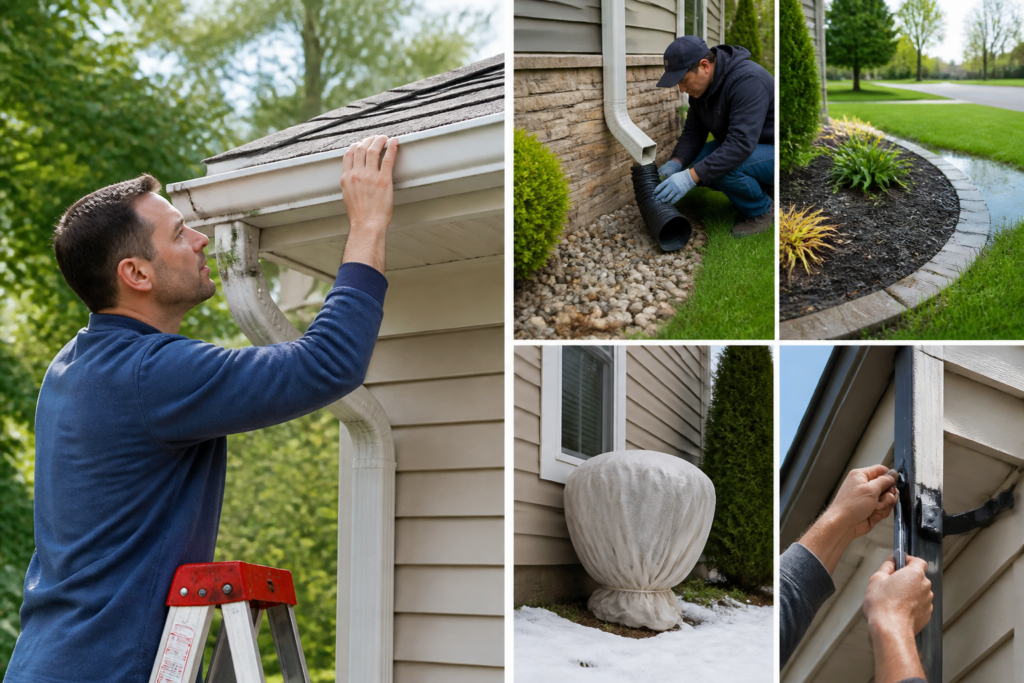
Seasonal home maintenance helps prepare the property for changes in temperature, precipitation, and outdoor use. The exact schedule depends on your climate, but the following tasks are useful starting points.
Before Winter
- Clean gutters and downspouts so rain and melting snow can move away from the home.
- Inspect the roof from the ground for missing, damaged, or displaced shingles and arrange a professional inspection if necessary.
- Disconnect and drain outdoor hoses when freezing weather is expected, following your plumbing system’s requirements.
- Protect exposed pipes in unheated areas with suitable insulation.
- Have heating equipment inspected or serviced according to the manufacturer’s recommendations.
- Seal or repair drafts around windows, doors, utility openings, and other visible gaps.
- Check that snow shovels, ice-melt products, flashlights, and emergency supplies are accessible.
Do not climb onto a roof or use a ladder in wet, icy, or windy conditions. Gutter cleaning is appropriate as a DIY task only when it can be done safely from stable ground-level equipment or a properly positioned ladder.
Before Summer and Severe Weather
Before hot weather arrives, inspect air-conditioning equipment, replace or clean filters as directed, and make sure supply and return vents are unobstructed. If the system produces weak airflow, unusual odors, ice, or repeated cycling, arrange professional service instead of continuing to operate it under strain.
Check that downspouts direct water away from the foundation and that outdoor drains are free of leaves and sediment. If your home has a sump pump, test it and confirm that the discharge line is clear. Inspect trees for dead or unstable branches near the roof, driveway, or power lines. A qualified tree professional should handle hazardous limbs.
Before severe weather, secure patio furniture, containers, tools, and other loose objects. Review emergency supplies, including water, batteries, medications, and a way to receive local alerts. Inspect fences, decks, railings, and other outdoor structures for loose boards, rust, rot, or unstable connections.
Home Maintenance Tasks You Can DIY
Many routine tasks are suitable for capable homeowners when the work is limited in scope. Changing HVAC filters, replacing alarm batteries, tightening cabinet hardware, cleaning accessible vents, lubricating hinges, and replacing worn caulk are common examples.
Small gaps around tubs, sinks, backsplashes, and windows can often be recaulked after the old material is removed and the surface is clean and dry. Use a product intended for the location, such as a bathroom sealant for areas exposed to regular moisture. Follow the curing time on the label before exposing the seal to water.
You may also be able to clean gutters, clear leaves from drains, replace weatherstripping, and tighten accessible plumbing connections. Use gloves, eye protection, a stable work platform, and the correct tools. Turn off water or electricity when the instructions require it, and never work on energized electrical components.
DIY maintenance should have clear limits. If a repair involves gas, the main electrical panel, refrigerant, structural supports, roofing at height, or concealed water damage, stop and consult a qualified professional.
When to Hire a Professional
Professional help is appropriate when a problem is persistent, dangerous, difficult to diagnose, or outside your experience. Promptly contact the right specialist for warning signs such as:
- Persistent leaks, sewage odors, flooding, or water damage that continues after a basic shutoff
- Burning smells, sparking, warm outlets, frequent breaker trips, or damaged wiring
- Gas odors or suspected carbon monoxide exposure
- Large, widening, or stair-step cracks in walls, ceilings, foundations, or masonry
- Soft roof areas, active ceiling leaks, or significant storm damage
- Visible mold covering a substantial area or returning after cleaning
- Heating or cooling failure, refrigerant concerns, or equipment that repeatedly shuts down
- Damaged trees or structures that could fall or create an immediate safety risk
For urgent hazards, leave the area if necessary and contact emergency services or the relevant utility provider. When hiring a contractor, ask about licensing requirements, insurance, written estimates, warranties, and references. Keep records of completed work and any recommendations for future service.
How to Build a Home Maintenance Schedule
A useful maintenance schedule does not need to be complicated. Divide tasks into daily or weekly observations, monthly inspections, seasonal preparations, and annual professional services. Add reminders to a calendar, phone app, or printed home maintenance checklist.
Keep a basic home file containing appliance manuals, installation dates, warranty information, filter sizes, service records, paint colors, shutoff locations, and contractor contact details. Record the date of each task and note anything that needs follow-up. This information can save time when troubleshooting or preparing to sell the home.
When several tasks compete for attention, prioritize them in this order:
- Safety risks: Gas odors, electrical hazards, unsafe structures, and nonworking alarms come first.
- Active water problems: Leaks and drainage issues can cause damage quickly.
- Threats to major systems: Address HVAC, plumbing, roofing, and foundation concerns before they fail.
- Efficiency and comfort: Seal drafts, maintain filters, and correct minor operating problems.
- Cosmetic upkeep: Paint, hardware, and appearance-related projects can follow once essential work is covered.
Frequently Asked Questions
What home maintenance tasks should be done every month?
Inspect plumbing fixtures, exposed supply lines, drains, walls, ceilings, and floors for changes. Check HVAC filters, appliance vents, and safety alarms. Also look for damaged caulk, drafts, loose hardware, and signs of pests or moisture.
Which maintenance tasks prevent the most expensive home repairs?
Early leak detection, gutter and drainage maintenance, roof inspections, HVAC filter replacement, and prompt attention to electrical or structural warning signs can help limit damage. The most valuable task is often noticing a change before it becomes an active failure.
How often should HVAC filters, smoke alarms, and appliances be checked?
Follow the manufacturer’s instructions. Check alarms monthly, replace batteries as needed, and replace the devices when they reach their stated service life. Inspect HVAC filters regularly, with replacement frequency based on the filter, system, household conditions, and usage.
What home maintenance can homeowners safely do themselves?
Many people can safely change filters and batteries, clean accessible vents and gutters, tighten hardware, replace weatherstripping, and recaulk small gaps. Use proper protective equipment and stop if the work involves gas, major electrical components, structural issues, or unsafe heights.
When should I hire a professional for a home repair?
Hire a professional for persistent leaks, gas odors, electrical problems, major roof or foundation concerns, significant mold, HVAC failure, hazardous trees, and work requiring specialized tools or permits. Prompt service can prevent a small issue from becoming a larger one.
How do I create a seasonal home maintenance checklist?
Start with tasks affected by your local weather. Before winter, focus on pipes, heating, gutters, drafts, and roof condition. Before summer, inspect cooling equipment, drainage, outdoor structures, trees, and severe-weather supplies. Add annual inspections and manufacturer-recommended services.
What warning signs indicate a small home problem is getting worse?
Growing stains or cracks, recurring odors, increasing water bills, worsening airflow, repeated breaker trips, unusual sounds, soft surfaces, and problems that return after a temporary fix all deserve attention. Document the change and seek advice if you cannot identify or safely correct the cause.
Conclusion
Preventive home maintenance is less about completing a long list of chores and more about noticing small changes early. A few minutes spent checking for leaks, testing alarms, maintaining filters, clearing drainage paths, and inspecting visible surfaces can protect major systems and reduce the chance of costly emergency repairs.
Start with a simple recurring checklist that fits your home, schedule, and skill level. Track what you complete, address safety and water issues first, and bring in a professional when the work exceeds your experience. Consistent attention today can help your home remain safer, more efficient, and more reliable for years to come.